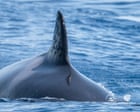
Toñi is running out of time. Known locally as la abuela—the grandmother—this matriarch of the critically endangered Iberian orca population was recently spotted swimming through the Strait of Gibraltar bearing a horrifying distinction: roughly ten entry wounds on her dorsal fin, matching the signature of a shotgun blast.
Spain's environment ministry has launched a formal investigation, tracking her path from the waters off Faro, Portugal, down to the southern tip of the Iberian Peninsula. Some of the lead pellets remain embedded in her flesh, creating a ticking clock for potential systemic infection. This is not merely an isolated case of animal cruelty. It represents the bloody boiling point of a six-year maritime conflict between humans and an apex predator that refuses to yield its home waters.
The Anatomy of a Maritime Conflict
Since 2020, the marine world has watched in a mix of awe and terror as a small subpopulation of roughly 35 to 40 Iberian killer whales began systematically targeting watercraft. They do not attack swimmers. They do not hunt humans. Instead, they home in with surgical precision on the rudders of medium-sized sailing yachts, snapping fiberglass blades and spinning vessels around with calculated shoves.
More than five hundred interactions have been officially logged. At least four boats have been sent to the ocean floor, including the Alboran Cognac and the French yacht Ti'fare. For the sailing community transiting the Gibraltar strait and the Portuguese coast, a routine passage has transformed into a high-stakes gauntlet.
Marine biologists have argued exhaustively that the behavior is cultural, a persistent juvenile fad or play-state spread among pods rather than an act of malice. To an orca, a swinging boat rudder mimics the hydrodynamic resistance of bluefin tuna tail-beats. It is a puzzle, a toy, an intellectual itch that needs scratching.
To a skipper thousands of dollars into structural repairs with water lapping at the cabin floor, the distinction between "play" and "attack" evaporates instantly.
When Patience Turns to Lead
Desperation breeds violence. As insurance premiums skyrocketed and maritime authorities issued persistent warnings to vessels under fifteen meters, a darker undercurrent took hold among frustrated mariners.
Evidence of retaliation has been mounting for years. In late 2023, marine conservation groups captured footage of a catamaran crew launching firecrackers and pyrotechnic distress signals directly at interacting cetaceans near Tarifa. Sailors have shared unverified forum posts detailing homemade acoustic deterrents, heavy object drops, and physical warding tactics meant to inflict pain.
Now, the shotgun wounds on Toñi move the conflict from digital bravado into physical reality.
Janek Andre of the WeWhale Association and Iberian Orca Guardians surveyed the matriarch just weeks prior to the discovery. The tissue was clean. The subsequent appearance of multiple projectile impacts confirms that human actors are taking the law into their own hands. Shooting an animal whose total global population hovers on the razor's edge of extinction is an ecological catastrophe masquerading as self-defense.
The Failure of Deterrence
Governments are caught flat-footed. Spanish and Portuguese maritime agencies have tried spatial bans, radio alerts, and advisory speed reductions, yet the encounters continue to march northward with the seasonal tuna migration. Acoustic pingers and chemical deterrents have largely failed, either because the habituated orcas ignore them or because the smart mammals have learned to treat the noise simply as a marker for where the boats are.
Mariners are left with inadequate tools and dwindling options. When an eighty-hectoliter sailboat is disabled fifty miles offshore, rescue operations can take hours. The psychological toll on crews facing a multi-tonne cetacean dismantling their steering gear is immense.
Yet retaliatory shooting solves nothing. Cetacean societies are matriarchal and deeply communicative. Cultural knowledge—including novel behaviors like rudder-bashing—is transmitted vertically from elders to calves. Eliminating or injuring key pod members like Toñi does not break the behavioral loop; it introduces chaotic trauma into a tight-knit family unit already suffering from heavy shipping traffic, chemical pollution, and chronic bluefin tuna scarcity.
The authorities will investigate the shooting. Forensic teams will analyze the pellet spreads. Coast guards will patrol the Strait. None of these administrative measures will bridge the widening chasm between an endangered species reclaiming its evolutionary space and a human maritime community refusing to yield an inch of the sea.