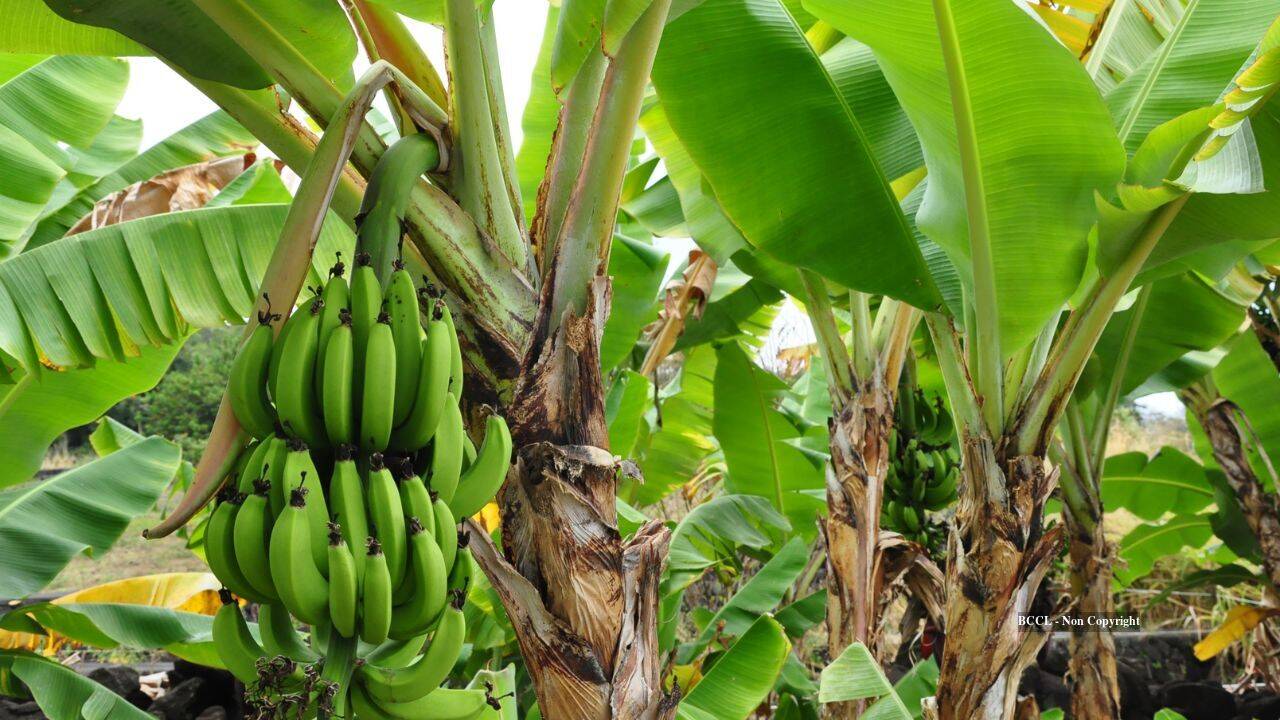
The Thermodynamic Shift in British Agriculture
Climate baseline velocity in Northern Europe has surpassed the threshold of historical variance. When reports emerge detailing banana plants successfully producing fruit in British backyards during extreme summer heatwaves, the public perceives an amusing botanical anomaly. The underlying reality is far more rigorous. This phenomenon represents a quantifiable manifestation of thermal accumulation shifts, changing growing degree days, and the geographical compression of tropical agricultural zones.
Understanding why this event occurs requires stripping away anecdotal wonder and examining the physiological mechanics of the Musa genus. Bananas are tropical perennials optimized for specific enthalpy ranges, high solar radiation integrals, and uninterrupted moisture flux. When these plants fruit in latitudes historically characterized by maritime temperate conditions, the system is signaling a fundamental disruption in accumulated thermal units. The primary driver is not a single hot afternoon, but a compounding accumulation of baseline temperatures that cross physiological thresholds previously unavailable in the British Isles.
The Physiological Cost Function of Musa Species
To comprehend the mechanics of banana fruiting outside equatorial or subtropical bounds, one must analyze the plant as a thermodynamic engine. The Musa species operates under strict biological constraints that dictate growth rate, vegetative expansion, and reproductive transitions.
Thermal Accumulation and Growing Degree Days
Plant development is rarely a function of calendar time. It is a function of thermal time, measured in growing degree days. Bananas require a consistent baseline temperature, typically above 15 degrees Celsius, to drive metabolic activity. Below this threshold, enzymatic processes slow down, and cellular division stalls.
During prolonged UK heatwaves, cumulative thermal units spike past historical averages. Consecutive days exceeding 30 degrees Celsius accelerate the developmental timeline of the pseudostem. The plant misinterprets the British summer as a tropical dry-wet season transition, triggering the meristematic shift from vegetative leaf production to inflorescence.
Water Stress and Hydraulic Failure
The paradox of heatwaves in temperate zones is the simultaneous demand for extreme transpiration and the limitation of available soil moisture. Bananas possess massive leaf surface areas designed to capture high photon flux densities, which concurrently act as massive evaporative surfaces.
- Vapor Pressure Deficit Spikes: High temperatures paired with low relative humidity create a steep vapor pressure deficit. The plant must pump massive volumes of water from the soil to cool its tissues via latent heat loss.
- Root Zone Limitations: British soils, while fertile and rich in organic matter, often lack the deep water retention capacity required to sustain tropical transpiration rates during prolonged droughts.
- Vascular Cavitation: When soil moisture drops below the critical threshold while atmospheric demand peaks, xylem vessels experience embolism. Water columns break under tension, leading to irreversible cellular damage long before the fruit can mature.
The Microclimatic Arbitrage of Urban Heat Islands
Unusual agricultural outputs in non-native zones rarely occur uniformly across a geographic area. They are localized phenomena born of microclimatic arbitrage.
Urban centers and sheltered suburban gardens create localized heat traps that insulate tender perennials from the baseline severity of temperate winters and amplify the thermal spikes of summer heatwaves. Brick walls act as thermal capacitors, absorbing solar radiation during peak daylight hours and reradiating longwave infrared radiation into the night. This thermal mass compresses the diurnal temperature range, keeping nighttime lows elevated well above regional averages.
Furthermore, wind abatement plays a critical role. The physical structure of a courtyard or a south-facing urban alleyway prevents convective cooling by high-velocity winds, preserving a boundary layer of warm, humid air around the plant canopy. Without this artificial microclimate, standard UK wind currents would strip the massive leaves of a banana plant to ribbons, inducing mechanical stress that halts photosynthesis regardless of ambient temperature.
The Lifespan Bottleneck of Incomplete Maturation
Observing a banana plant push out an inflorescence and set tiny green fingers during a heatwave is only the first phase of the biological equation. The critical failure point in temperate latitudes lies in the duration of the thermal window, not its peak intensity.
Tropical bananas require an extended, uninterrupted maturation period spanning several months after flowering. During this post-anthesis phase, starch accumulation within the fruit must occur under stable, warm conditions. In the British climate, a heatwave is a transient shock, not a permanent seasonal shift.
As autumn approaches, ambient temperatures drop precipitously. Solar radiation integrals plummet, and day length contracts rapidly. The physiological machinery of the banana plant grinds to a halt as soil temperatures drop below the critical threshold for nutrient uptake. Consequently, the fruit remains small, starchy, and unviable, trapped in a state of suspended animation until the frost arrives to lyse the cell walls and terminate the plant.
Operational Realities for Modern Micro-Cultivators
Amateur and semi-professional growers attempting to leverage these shifting thermal baselines face severe operational constraints. Relying on stochastic weather events like heatwaves to produce tropical fruit is an unstable strategy. Managing these systems requires treating the garden as a controlled-environment engineering problem rather than a traditional horticultural plot.
Soil Matrix Optimization
Standard garden loam is insufficient for high-transpiration tropicals operating at the edge of their climatic range. Growers must engineer high-porosity, high-retention root zones utilizing organic compost mixed with moisture-retentive polymers and coarse aggregates to prevent root rot during wet British winters while maximizing water holding capacity during summer surges.
Active Irrigation Interventions
Passive rainfall is entirely decoupled from the moisture demands of a heatwave-stressed banana plant. Implementing automated drip irrigation tied to soil moisture tensiometers is mandatory. Without precise, metered water delivery timed to peak solar radiation hours, the plant will prioritize cellular survival over fruit development, shedding the emerging inflorescence to conserve hydraulic integrity.
Structural Winterization Protocols
Because contemporary UK heatwaves are punctuated by traditional winter freezes, survival of the perennial mat depends entirely on aggressive root insulation. Cutting back the pseudostem, mulching heavily with insulating organic matter, and deploying temporary thermal blankets prevent the corm from freezing. The objective is perennial persistence, allowing the plant to build a larger root mass year over year, incrementally increasing its baseline capacity to push out earlier, faster inflorescences when the next thermal spike occurs.
Deploy precision frost-monitoring infrastructure across root zones and transition from passive seasonal observation to active microclimate manipulation before attempting to optimize tropical yields in temperate latitudes.