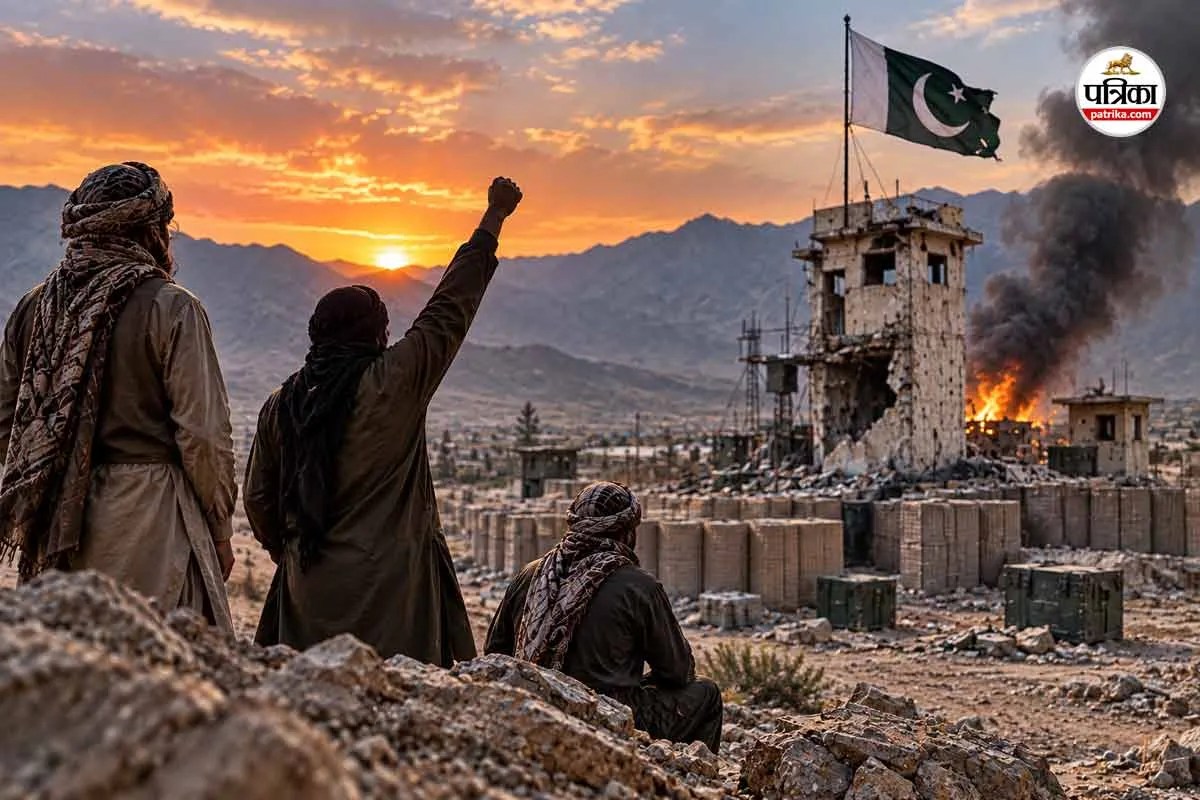
When a political worker gets killed and an organization steps up to demand immediate international protection for displaced populations, it usually signals a boiling point that mainstream headlines manage to miss entirely. The recent statement issued by Sholan Baloch, spokesperson for the Baloch Students Organization Azad (BSO Azad), cuts right through the standard diplomatic noise. It points directly at an escalating cycle of violence, political targeted killings, and the stark vulnerability of Baloch refugees who find themselves trapped in a worsening humanitarian crisis.
If you've been tracking regional developments in South Asia, you know that Balochistan's socio-political environment is heavily fractured. But what makes this recent intervention by BSO Azad notable is its sharp focus on international accountability and refugee safety. Let's break down why this statement matters, the structural issues driving these events, and what regional rights defenders are actually demanding behind closed doors.
The Core Grievances Driving the BSO Azad Statement
BSO Azad has long operated under severe state pressure, with many of its members and student activists facing prolonged crackdowns, enforced disappearances, and extrajudicial targeting. When a political worker is killed, it isn't viewed by local groups as an isolated criminal incident. Instead, regional student bodies and political fronts frame it as part of an institutional pattern aimed at silencing dissenting voices.
The spokesperson's recent appeal didn't just stop at condemning the violence. It broadened the scope to target the structural safety nets—or lack thereof—for Baloch refugees who are forced to flee their homes due to continuous security operations, forced displacements, and civil unrest. When local populations are uprooted from their native towns, they often lose access to basic legal protections, shelter, and economic stability, pushing them into precarious conditions across borders or in disjointed internal camps.
Why International Bodies Keep Missing the Mark
Human rights monitors frequently report on the systemic information blackouts surrounding Balochistan. Documenting violations is dangerous work. Local journalists, human rights defenders, and student organizers face immense risks whenever they try to bring ground realities to light.
Because of these reporting restrictions, international bodies often react sluggishly. BSO Azad’s direct call for global institutions to step up isn't just rhetoric; it is a desperate demand for independent fact-finding missions. Without external oversight, accountability remains entirely non-existent. When state apparatuses investigate themselves, transparency usually disappears.
Consider what happens to refugees caught in this vacuum. They lack formal refugee status recognition in many neighboring regions, leaving them vulnerable to arbitrary detention, refoulement, or harassment. BSO Azad's insistence that global organizations step in to legally recognize and safeguard these displaced populations highlights a glaring gap in international protection frameworks.
The Broader Humanitarian Toll
You cannot separate the political killings from the wider pattern of demographic displacement. Evictions, security sweeps, and localized conflicts routinely force families off land their ancestors farmed for generations. When people are stripped of their livelihoods, radicalization and deep-seated societal trauma follow naturally.
Independent analysts point out that economic pressures compound these political fractures. Large-scale resource extraction projects in the region have historically bypassed local communities, fueling local resentment. Activists argue that dissent is met with coercion rather than dialogue, creating a feedback loop of hostility and fear.
What Real Accountability Looks Moving Forward
Fixing a crisis of this magnitude requires more than rhetorical condemnations from student organizations or brief mentions in annual human rights summaries. Real change demands pressure from international trade partners, binding inquiries into enforced disappearances, and robust legal frameworks for refugees who have nowhere else to turn.
Until global bodies treat the rights of marginalized ethnic and political groups with the same urgency applied to other global conflicts, statements from organizations like BSO Azad will remain some of the only lifelines available to document an unfolding tragedy. The spotlight needs to stay fixed on the ground realities of Balochistan, long after the news cycle moves on.