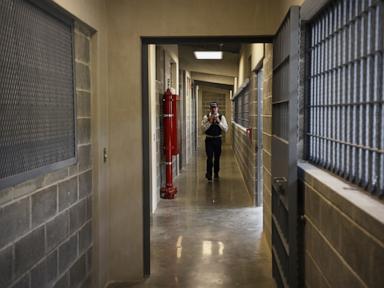
Costa Rica turned to a Bukele-style mega-prison after years of record homicides and cocaine-trafficking violence overwhelmed a traditionally peaceful democracy. A country long celebrated as an exception in Central America reached a breaking point as rival criminal factions fought for control of port routes, extortion rackets, and local drug markets. Rather than relying solely on incremental judicial and prison reforms, officials moved toward mass incarceration modeled on El Salvador's high-profile confinement strategy. That shift promises immediate containment and political resolve, yet it also tests Costa Rica's constitutional traditions, court capacity, and long-term public safety.
To understand how a nation without a standing army arrived at mega-prison politics, look first at geography. Sitting between South American coca-producing networks and North American consumer markets, Costa Rica has long functioned as a critical transit corridor. For decades, authorities managed that pressure through specialized policing, maritime patrols, and targeted seizures while keeping everyday street violence comparatively low. The turning point came when transnational cartels stopped treating Costa Rica merely as a highway and began outsourcing logistics, storage, and enforcement to local gangs. Once local groups gained steady revenue from cocaine shipments and retail distribution, turf wars intensified across coastal provinces and urban neighborhoods.
Homicide rates climbed to historic highs, shaking public confidence in institutions that citizens had long viewed as stable. Schools, small businesses, and working-class districts felt the strain as extortion and armed clashes became harder to ignore. When violent crime rises sharply in a country accustomed to relative calm, voters rarely wait patiently for multi-year policy reviews. Demand for visible, decisive action grows louder by the week, creating fertile ground for tough-on-crime rhetoric borrowed from neighboring states.
How El Salvador Became a Regional Blueprint
Nayib Bukele's confinement model gained traction across Latin America because it offered a stark, unmistakable image of state control. By building massive facilities, suspending certain procedural norms during states of exception, and locking away tens of thousands of suspected gang members, El Salvador projected rapid order after years of extreme gang terror. For political leaders elsewhere facing surging violence, that visual certainty proved tempting. A mega-prison signals that the state is no longer reacting piecemeal but imposing order from above.
Importing a foreign security template, however, is never a simple copy-and-paste exercise. El Salvador's crackdown emerged from a specific context defined by entrenched street gangs with massive territorial reach and concentrated emergency powers. Costa Rica operates under different legal constraints, judicial review mechanisms, and political norms. Adopting the outward form of a mega-prison does not automatically replicate the conditions that produced rapid short-term drops in violence elsewhere.
Critics and security analysts also point out a hidden trade-off in heavy confinement models. Warehousing thousands of people in high-security complexes can disrupt immediate command-and-control networks inside smaller jails, yet it can also turn prisons into universities for organized crime if intelligence, classification, and rehabilitation are neglected. When large numbers of inmates are grouped together without strict separation of leadership tiers and effective oversight, criminal coordination sometimes adapts rather than disappears.
The Strain Inside Costa Rica's Penal System
Even before mega-prison plans captured headlines, Costa Rica's prison system was grappling with chronic pressures. Overcrowding, understaffing, and aging infrastructure have long complicated daily operations for correctional officers. Prisons in many Latin American countries struggle with contraband, corruption vulnerabilities, and uneven access to legal defense and educational programs. Simply adding massive cell capacity addresses one bottleneck while potentially creating new operational headaches.
Consider a hypothetical example to see how capacity and justice bottlenecks interact. Suppose authorities arrest hundreds of suspects in a coordinated sweep and transfer them rapidly into a new high-security facility. If pre-trial detention expands faster than court hearings, prosecutors' offices, and public defender caseloads can absorb, facilities fill up with people awaiting trial alongside convicted offenders. Delays in adjudication breed resentment, strain budgets, and complicate risk management inside the walls.
Building a mega-prison also carries steep recurring costs that compete with other security priorities. Concrete and steel are one-time capital expenses. Paying trained guards, maintaining perimeter security, funding medical care, and running courts and police investigations are permanent obligations. In tight fiscal environments, diverting heavy resources toward large-scale detention can leave less money for municipal policing, witness protection, customs inspection, and youth prevention programs.
Ports, Money, and the Roots of Violence
A mega-prison locks up individuals, yet drug trafficking runs on incentives and supply chains. As long as high-value narcotics move through maritime containers, coastal waters, and hidden airstrips, financial rewards remain large enough to recruit new couriers, lookouts, and enforcers. Removing one set of mid-level or street-level operators often creates an opening that rival factions rush to fill.
True disruption requires targeting the financial and logistical architecture behind the violence. That means tougher port controls, better financial intelligence to trace illicit proceeds, stronger anti-corruption safeguards within public agencies, and closer regional cooperation on intelligence sharing. Without choking off money laundering and transit routes, prison walls alone cannot permanently alter the economics of the drug trade.
Political incentives often pull in the opposite direction. Construction projects and mass arrests are easy to film, announce, and campaign on. Quiet institutional reforms—modernizing courts, professionalizing investigative units, protecting judges and prosecutors, and improving border surveillance—take years and rarely produce dramatic headlines. Yet those unglamorous mechanisms determine whether arrests lead to durable convictions or revolving-door releases.
Constitutional Guardrails and Public Trust
Costa Rica's political identity has long rested on the rule of law, due process, and democratic stability. Sharp shifts toward punitive policies test how resilient those guardrails are under pressure. Courts, human rights bodies, and civil society groups frequently clash with executive officials over pre-trial detention limits, surveillance powers, and prison conditions. Those tensions are not mere legal technicalities; they shape whether citizens trust the state to wield power fairly.
Excessive force or abuse inside detention facilities can backfire over time. Mistreatment fuels anger inside prisons and across affected communities, complicating reintegration when inmates eventually return to society. Most people sent to prison do not stay there forever. If confinement strips away skills, health, and social ties without addressing criminal networks, communities may face harder problems down the road.
At the same time, dismissing public frustration ignores a real crisis. Families living in fear of stray bullets or extortion demands have every right to expect swift protection from the state. Effective security policy has to hold two truths at once: violent offenders must be incapacitated and held accountable, and the state must do so within lawful bounds that preserve democratic legitimacy.
What Separates Theater from Lasting Safety
Evaluating a Bukele-style mega-prison in Costa Rica comes down to execution and accountability. A large facility can serve a legitimate purpose if it houses high-risk offenders under strict, lawful classification, prevents escapes and inside communication, and operates under transparent oversight. It becomes a costly distraction if it becomes a political symbol substituting for slow, methodical institutional work.
Key indicators will show whether the strategy is working over time:
- Clear classification separating top cartel leaders and violent organizers from lower-level or first-time detainees.
- Court speed ensuring timely trials and evidentiary standards rather than indefinite pre-trial warehousing.
- Port and financial enforcement reducing illicit cash flows and container smuggling rather than only sweeping up street actors.
- Oversight and staffing maintaining trained personnel, anti-corruption controls, and humane conditions that withstand legal review.
Crime waves rarely have a single cause, and no single building can erase years of criminal adaptation. Real safety in Costa Rica will depend on whether tough confinement is paired with patient justice reform, sharp intelligence, and disciplined governance long after the ribbon-cutting cameras move on.