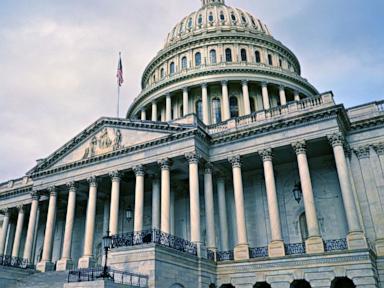
The federal investigation into hundreds of threatening letters containing suspicious white powder sent to congressional and election offices laid bare a grim reality about American civic infrastructure. While the substances inside the envelopes ultimately tested negative for biological agents like anthrax, the operation succeeded in its primary objective: terrorizing administrative staff, paralyzing regional offices, and exploiting the fragile physical gateway that connects public servants to the constituents they represent.
Federal authorities, spearheaded by the Federal Bureau of Investigation and the United States Postal Inspection Service, arrested an Oklahoma man, charging him with mailing hundreds of hoax letters targeting public officials ahead of the midterm elections. Yet the swift apprehension of a lone suspect does little to resolve the deeper systemic vulnerability. The United States postal network remains an open, high-volume artery that can easily be weaponized to inflict psychological chaos and operational gridlock on government offices across the country. In similar news, take a look at: What You Need to Know as the Federal Investigation Into Suspicious Substance Letters Widens.
The Anatomy of a Low-Tech Disruption Campaign
Modern threat assessments often fixate on sophisticated cyberattacks, foreign intelligence operations, and encrypted digital subversion. Security budgets swell to counter network breaches and infrastructure hacks. However, the weaponization of the postal service demonstrates that low-tech methodologies remain exceptionally potent.
Mailing a letter requires a postage stamp, an envelope, and an address. It demands no technical expertise, leaves minimal digital footprint, and bypasses the stringent cybersecurity barriers protecting official government intranets. When an envelope containing a suspicious substance arrives at a local congressional district office or a state election commissioner's desk, standard protocols immediately mandate emergency responses. Hazmat teams deploy, buildings evacuate, mail sorting halts, and employees face acute psychological trauma. Al Jazeera has analyzed this important subject in great detail.
The strategy relies entirely on asymmetry. The perpetrator invests pennies in flour, yeast, and paper, forcing state and federal agencies to expend thousands of man-hours and substantial financial resources verifying safety.
[Threat Origin] ──> [US Postal Network] ──> [Local District Office] ──> [Emergency Response & Evacuation]
This dynamic creates an alarming risk-to-reward ratio for bad actors seeking to disrupt democratic functions. While physical mail security has evolved significantly since the post-9/11 anthrax attacks, regional and satellite offices operate with far fewer architectural defenses than Capitol Hill facilities in Washington, D.C. Mail destined for congressional annexes in home states often passes through regional distribution centers where screening protocols vary wildly compared to the centralized mail-irradiation facilities handling capital correspondence.
Institutional Fragility at the Local Level
The letters did not just target high-profile lawmakers inside the beltway; they flooded state election administration offices, secretaries of state, and local representatives during a hyper-polarized electoral cycle. State election commissioners in places like Delaware found their offices evacuated just as early voting protocols were ramping up.
This targeted disruption highlights a critical blind spot in election security frameworks. Cybersecurity receives immense focus, with millions of dollars directed toward safeguarding voter databases and tabulation machines. Physical mail security at county and local election board offices, however, frequently relies on standard municipal trash cans and basic letter openers handled by administrative workers who receive minimal hazardous materials training.
When an election office goes into lockdown because of an unidentified powdery substance, the immediate casualty is public trust and operational momentum. Even when tests confirm the powder is harmless baking flour or yeast, the temporary paralysis of election workers introduces friction into an already overburdened system.
The Challenge of Deterrence
Prosecuting mail hoaxes under federal statutes carries serious legal penalties, but deterrence remains weak when perpetrators are driven by intense partisan animus or severe psychological instability. Court filings revealed that the suspect in the recent wave of mailings sent communications labeling public figures as traitors over policy disagreements and election outcomes.
For law enforcement, intercepting these mailings before they reach human hands is a monumental needle-in-a-haystack problem. The U.S. Postal Service handles hundreds of millions of pieces of mail daily. Automated sorting machinery can detect certain anomalies, but sorting out harmless white powders from legitimate commercial shipments without grinding interstate commerce to a halt is practically impossible.
Congressional offices have continuously tightened internal mail-handling procedures, routing letters through off-site facilities where mail is opened, inspected, or irradiated before reaching a lawmaker's desk. Yet district offices—designed to remain accessible to constituents—cannot operate like high-security military bunkers without fundamentally breaking the social contract of representative democracy.
Constituents expect to walk into a local office, hand a letter to a staffer, and know their voice is heard. When physical proximity becomes a vector for biological or chemical intimidation, institutions face an agonizing dilemma: either fortify and isolate themselves behind bulletproof glass and digital gates, or accept the persistent, jittery vulnerability of an open society.
The recent arrests provide temporary closure to a specific chapter of intimidation, but the structural vulnerability remains completely intact. Until policymakers find a viable balance between open constituent access and airtight administrative protection, the postal box will remain an easy target for anyone looking to terrorize the machinery of government.
Anxiety and Congressional Mail Security
This video provides additional context regarding the federal investigation into suspicious mailings sent to congressional and election offices nationwide.