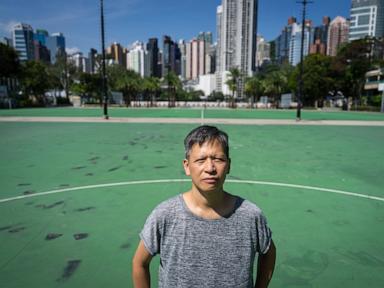
Silence is heavy in Victoria Park. For decades, candlelight pierced that darkness every June fourth. Now, authorities want that memory erased entirely.
Chow Hang-tung refuses to let that happen. Even behind bars and facing relentless legal pressure, the former Hong Kong vigil organizer keeps pushing to mark the Tiananmen Square crackdown. For another look, consider: this related article.
You might wonder why anyone keeps fighting a battle that looks completely lost. The Hong Kong Alliance in Support of Patriotic Democratic Movements of China is disbanded. Its leaders face heavy prison sentences under national security laws. Annual public vigils are banned. Yet, the defiance persists in quiet, stubborn ways.
The Cost of Remembrance
Standing up to the state carries a massive personal price. Chow and other organizers didn't just lose their freedom for a few days. They face years of detention, trials under sweeping security legislation, and constant administrative hurdles. Further coverage on this trend has been provided by Al Jazeera.
The Hong Kong Alliance used to organize the world's largest annual commemoration for the victims of the 1989 military crackdown in Beijing. Millions of people packed Victoria Park holding flickering candles. Those days are gone. The organizers stand accused of inciting subversion.
People ask me why they don't just stay quiet. Exile or silence seem like easier options. But that misses the point of what memory means to these activists. For them, forgetting isn't an option. The legal system changed overnight, but their commitment didn't.
Legal Battles From Behind Bars
Chow isn't sitting passively in her cell. She uses court appearances to speak out. She files appeals. Every legal maneuver becomes a public platform.
The government labels these efforts as disruptions. Supporters view them as acts of pure courage. When you look at the courtroom arguments, you see a sharp clash between two completely different realities. One side controls the police, the courts, and the public spaces. The other side has only their history and their voice.
It sounds exhausting. It is exhausting. Every appeal gets blocked or dismissed. New charges pile on top of old ones. Still, the legal filings keep coming.
How Memory Survives the Ban
When big public gatherings disappear, history goes underground. People find creative, quiet ways to remember.
Small gestures replace massive rallies. Individuals turn off their lights and light a single candle at home. Others wear specific clothing on June fourth. Books disappear from public libraries, but circulate through private networks.
- Digital archives spring up in foreign servers.
- Oral histories are recorded and smuggled out.
- Overseas diaspora communities pick up the torch.
The authorities know this. That is why censorship reaches further into daily life now. Books get scrutinized. Art exhibitions face cancellation. Even private conversations draw suspicion.
The Global Ripple Effect
What happens in a Hong Kong courtroom echoes far beyond the city limits. Diaspora groups in Taiwan, Canada, the United Kingdom, and the United States now host their own vigils.
Local activists who managed to leave the city keep the network alive. They coordinate global statements. They push foreign governments to hold officials accountable. The movement fractured, but it also decentralized.
You can ban a rally in a park. You can lock up the organizers. You cannot easily erase an idea shared by millions of people across continents.
What Comes Next for the Movement
The landscape grows harsher by the month. National security crackdowns tighten. Self-censorship becomes a survival skill for anyone still living in the territory.
Yet, history rarely moves in a straight line. Organizers like Chow bet on the long memory of ordinary people. They know that forced silence often breeds deep resentment.
If you want to understand modern politics, look at the persistence of memory against overwhelming state power. It is messy, painful, and relentless. The candles in Victoria Park might be gone for now, but the dark is never absolute.