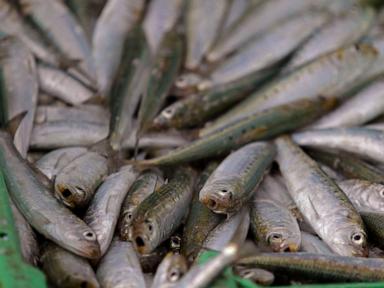
Every time thousands of silver fish wash up on a South African beach, marine biologists panic and reach for a convenient scapegoat. The current media panic fixates on a sleek, microscopic villain: the herpes virus. Scientists are currently scrambling through lab samples, pointing fingers at a pathogen as if marine ecosystems operated like a courtroom drama where a single bad actor always takes the fall.
It is clean. It makes for punchy headlines. It completely misses how apex marine disruptions actually work.
Blaming a herpes virus for mass sardine strandings is lazy science fueled by an addiction to monokey causality. When a complex biological machine breaks down, amateur mechanics look for the single stripped gear. Professionals look at systemic overload, shifting thermal baselines, pelagic predatory pressure, and industrial-scale management failures. The ocean is not a petri dish. Treating a massive ecosystem collapse like a localized outbreak of cold sores ignores the physics of the Southern African marine environment.
Let us look at the actual mechanics of what happens when millions of pilchards (Sardinops sagax) suddenly carpet the shoreline from KwaZulu-Natal down to the Western Cape.
The Fallacy of the Single Pathogen
Pathogens do not operate in a vacuum. A virus requires a susceptible host, and a host only becomes vulnerable when its immune system is utterly obliterated by environmental stress. When researchers isolate a herpesvirus from a dead sardine, they have found a corpse with a cold. They have not found the bullet.
To understand why this narrative collapses under scrutiny, look at how marine mortality events actually unfold. I have spent enough time knee-deep in fisheries data and marine policy reviews to know that coastal ecosystems do not die of single-cause diseases; they die of death by a thousand cuts.
Pelagic fish stocks face an unrelenting squeeze. Commercial purse-seine fishing outfits track shoals with sonar technology that leaves nowhere to hide. At the same time, oceanic thermal dynamics are shifting. The Agulhas Current is changing speed and temperature, compressing the thermal envelopes that pelagic species rely on for metabolic equilibrium.
When a school of sardines is chased by a wall of predatory dolphins, sharks, and gannets straight into a warm, oxygen-depleted coastal pocket, they do not die because a virus whispered in their ear. They die because they ran out of breathable water, burned through their ATP reserves, and suffocated en masse. The virus found them because they were already dying. Treating the opportunistic pathogen as the root cause is like blaming the scavenger crabs for eating the carcass.
The Complicity of Managed Decline
South Africa's marine management agencies love the virus hypothesis because it absolves human intervention. If a mysterious pathogen is to blame, nobody is at fault. It is an act of biological God.
The inconvenient truth points elsewhere. Small pelagic fisheries in South Africa operate under quotas that frequently ignore the shifting baseline syndrome. We measure stock health against historical numbers that were already degraded by decades of overextraction. When you remove the older, wiser cohort of a fish stock—the multi-year-old spawners that know historical migration routes and thermal safety zones—you leave behind a school of juveniles with terrible spatial memory and zero institutional knowledge.
Imagine a highway full of teenage drivers navigating a blizzard with broken steering wheels. That is a modern sardine stock chased by industrial fishing fleets into anomalous thermal barriers.
When these massive shoals experience sudden mortality, it is almost always a multi-factor convergence:
- Thermal Squeeze: Rapid coastal upwelling or downwelling events that trap fish in water temperatures outside their physiological tolerance.
- Dissolved Oxygen Collapse: Phytoplankton blooms fueled by agricultural runoff consume the oxygen column overnight, suffocating millions of pelagic filter-feeders before dawn.
- Predator Compression: Intensive predation from seals, cetaceans, and seabirds driving panicked schools straight into shallow, high-energy surf zones where they exhaust themselves and beach.
Pathogens are merely the cleanup crew. Pinning the blame on a herpes virus is a convenient smoke screen to protect the status quo of coastal management and industrial extraction quotas.
The Real Cost of Looking Away
By chasing viral shadows, we waste finite research capital on dead ends. While marine virologists spend months sequencing DNA fragments from decomposed tissue samples, the broader pelagic food web continues to unravel.
If the underlying driver is systemic environmental degradation paired with predatory over-compression, a viral vaccine or a quarantine zone is useless. You cannot vaccinate the Atlantic Ocean. You cannot isolate a thermal anomaly.
The solution requires radical policy shifts that nobody in the commercial fishing sector wants to fund or entertain. It means dynamic ocean management that closes fishing zones the moment environmental stress indicators spike—not after the beaches are already white with dead fish. It means factoring real-time dissolved oxygen levels and pelagic predator density into daily catch limits.
Stop looking for a microscopic smoking gun in a macroscopic crime scene. The sardines are not victims of a viral outbreak. They are casualties of an ecosystem pushed past its breaking point, gasping for air in a sea of willful ignorance.