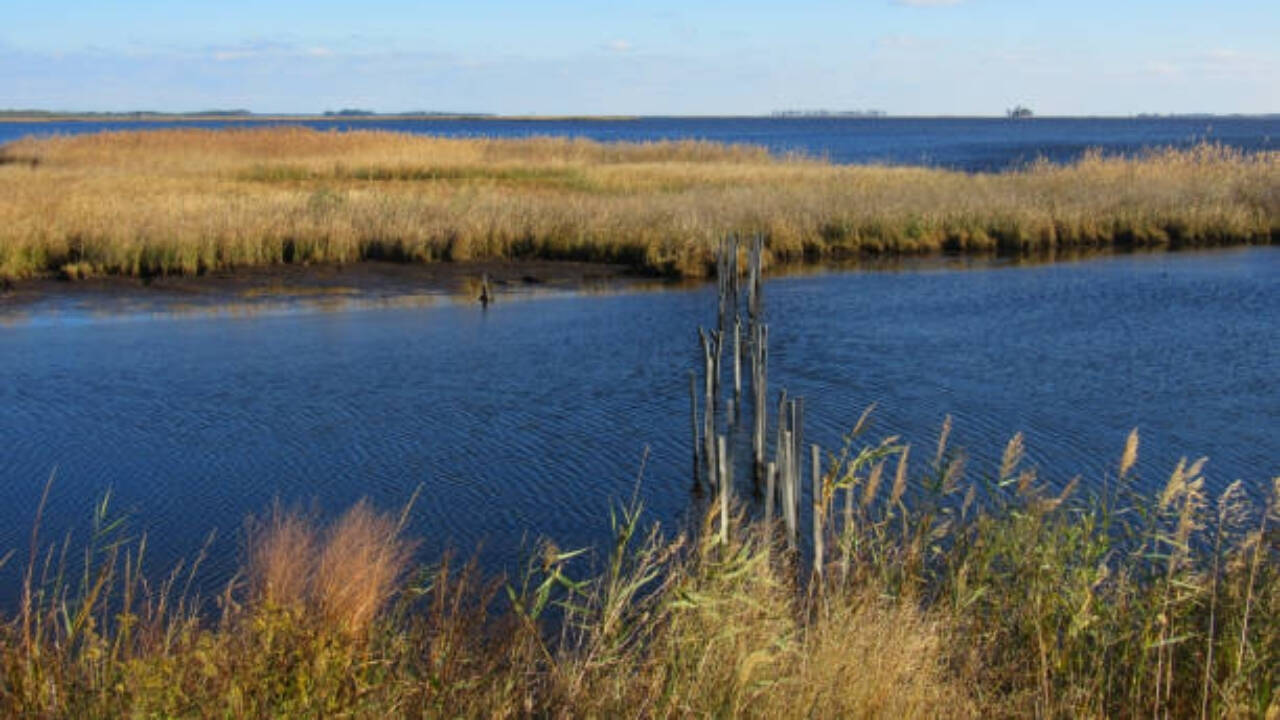
In 1954, aviation pioneer Glenn L. Martin signed over 2,569 acres of his private Chesapeake Bay hunting preserve to the federal government. Today, that single act of philanthropy anchors the Martin National Wildlife Refuge, a sprawling 4,548-acre sanctuary spanning the northern half of Smith Island and Watts Island. While public histories frame the transfer as a sudden, benevolent gift to migrating waterfowl, the underlying reality reveals a calculated intersection of post-war corporate legacy planning, shifting economic tides in American industry, and the quiet realization that the upper-crust sporting paradises of the early twentieth century were rapidly becoming financially and ecologically untenable to maintain privately.
The Industrialist and the Marshland
Glenn L. Martin was not a conservationist by trade. He was a ruthless aerospace titan whose Baltimore-based company built the bombers that shaped modern warfare and commercial aviation. By the twilight of his career, Martin had accumulated vast capital and substantial landholdings along the Chesapeake Bay. These remote tracts served as exclusive retreats where industrial executives and political elites could escape public scrutiny and gun down canvasbacks and black ducks.
Private preserves required constant upkeep. Dikes, ditching, and anti-poaching patrols drained both labor and capital. As American industry consolidated after World War II, aging founders faced difficult succession questions regarding non-commercial real estate assets. Holding thousands of acres of tidal marshland carried heavy tax burdens without yielding manufacturing output.
Transferring title to the U.S. Fish and Wildlife Service solved an expensive structural problem while cementing a public-facing legacy of environmental stewardship. Martin did not merely hand over a swamp; he divested himself of an escalating liability while insulating a critical piece of the Atlantic Flyway from commercial subdivision.
Mechanics of the Flyway Defense
To understand why the Martin donation matters decades later, look at the geography of the lower Chesapeake. Smith Island is an isolated mosaic of salt marsh, black needlerush, and shallow tidal guts. It sits directly beneath the Atlantic Flyway, a aerial superhighway utilized by millions of migratory birds navigating between northern breeding grounds and southern wintering zones.
When the federal government accepted the 1954 deed, the Fish and Wildlife Service inherited a ready-made staging ground. Unlike terrestrial forests that require active timber management or replanting, tidal marshes function as self-sustaining biological engines. Submerged aquatic vegetation—primarily eelgrass and wigeon grass—blankets the shallow offshore zones.
The ecological machinery operates through a direct food chain link:
- Submerged Vegetation: Provides the foundational caloric intake for wintering waterfowl like brant, pintails, and American black ducks.
- Benthic Invertebrates: Worms, small crabs, and mollusks thrive in the undisturbed mudflats, fueling shorebirds during critical stopover windows.
- Apex Predators: Isolated ridges and undisturbed marsh perimeters offer nesting zones for bald eagles and established colonies of brown pelicans.
Without federal protections, these marshlands would likely have succumbed to private dredging, commercial duck-hunting club expansions, or shoreline hardening projects designed to combat local erosion.
The Myth of Pure Altruism
Corporate philanthropy in the mid-twentieth century rarely operated in a vacuum of pure altruism. Industrialists frequently used land donations to offset corporate tax obligations or shape personal redemption arcs late in life. Martin had spent decades profiting from the apparatus of military aviation—an industry responsible for massive resource extraction and environmental disruption.
By dedicating a slice of his wealth to wildlife preservation, he participated in a well-worn playbook of robber-baron rehabilitation. Andrew Carnegie built libraries; John D. Rockefeller funded public health; Glenn Martin handed over a duck marsh.
This dynamic does not negate the ecological value of the refuge. Ecosystems do not care about the moral ledger of the donor who signed the deed. A black duck seeking shelter from a January nor'easter on Smith Island benefits equally whether the land was surrendered out of deep ecological devotion or calculated tax mitigation.
The Modern Vulnerability
The refuge faces an existential threat that Martin could not have anticipated in 1954: accelerated sea-level rise and severe land subsidence in the lower Chesapeake. Smith Island is sinking. As surrounding waters rise, the protective buffer of the tidal marsh slowly drowns, turning fragile emergent vegetation into open, choppy water incapable of supporting ground-nesting birds or buffering wave energy.
Federal management agencies now face a losing battle against geography. Pumping dredge spoil to rebuild elevation or installing artificial breakwaters requires millions of dollars in annual appropriations—funds that face constant political crosswinds. The original 2,500-acre nucleus is slowly shrinking in effective biological capacity even as its legal acreage expands through minor federal acquisitions.
The story of the Martin National Wildlife Refuge is a testament to the unforeseen long-term consequences of private wealth disposal. A wealthy industrialist wanted to clear a ledger and secure a legacy. Seven decades later, that administrative maneuver remains a vital shield against the total ecological collapse of the Chesapeake Bay's avian corridors. The birds got their sanctuary. The marsh got its protection. And the industrialist achieved immortality not through his airplanes, but through the mud he left behind.