Stone remembers. The ancient limestone walls of the Palace of Westminster have absorbed centuries of whispered conspiracies, furious rhetoric, and the quiet, crushing weight of decisions that alter the geography of human suffering. Outside, the Thames churns with a gray, indifferent urgency. Inside, the air is thick with the scent of old paper, damp wool, and the nervous sweat of people who hold levers they barely understand.
History does not always arrive with the thunder of falling empires. Sometimes, it slips into a wood-paneled committee room disguised as a procedural debate about trade regulations, export licenses, and the dry legal definitions of complicity.
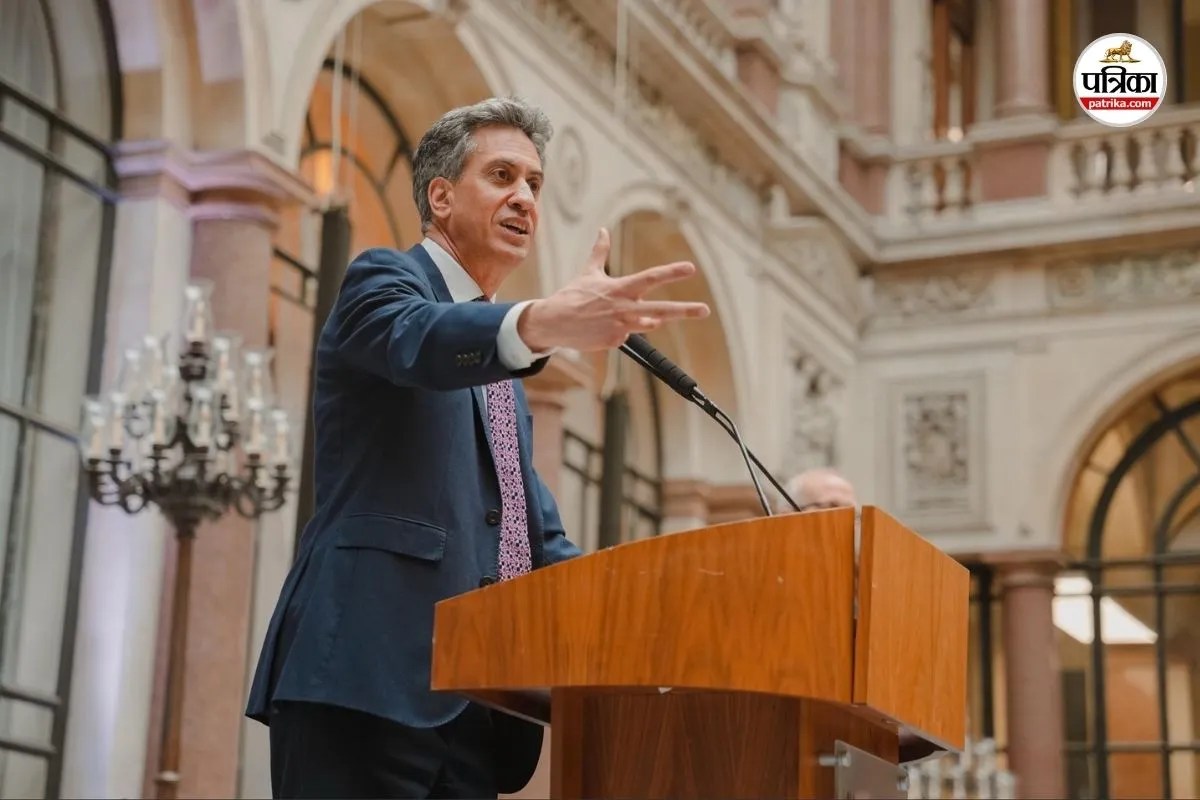
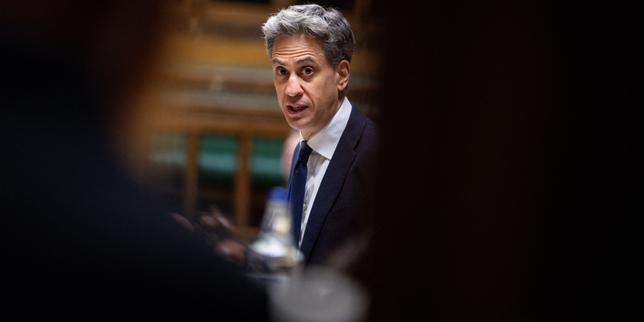
Ed Miliband stood beneath the high ceilings, adjusting his notes.
To watch modern politics from a distance is to witness a magic trick. Abstract nouns are conjured to swallow human blood. We speak of "stability," of "strategic partnerships," of "rules-based international order," as if these phrases were shields capable of deflecting falling concrete. But beneath the polished veneer of parliamentary protocol, a much older, more primitive human drama plays out.
Consider the anatomy of a sanction. On paper, it is a bureaucratic instrument. A signature on a ministerial decree. A frozen bank account. A restricted shipping lane. It sounds clean, clinical, and bloodless. Yet, every diplomatic restriction is an act of economic violence meant to force a moral reckoning. It asks a fundamental question: At what point does complicity become too heavy a tax to pay for convenience?
Miliband’s intervention at Westminster cut through the fog of diplomatic euphemism. For decades, British foreign policy toward the Middle East has operated on a steady autopilot of unshakeable alliances, inherited loyalties, and carefully managed blind spots. The machinery of state is built for continuity. It rewards the diplomat who whispers and punishes the politician who shouts.
When a prominent political figure steps off that well-trodden path to question the architecture of arms exports and the legal thresholds of international humanitarian law, the room shifts. The coughs stop. The rustle of briefing papers dies down.
There is a distinct weight that comes with heritage and identity in these moments. Miliband carries a personal history written in the ash of the twentieth century, a lineage that understands the terrifying speed with which civilization can unravel into barbarism. When he speaks about the protection of civilian life, the words do not bounce off the walls as empty rhetorical exercises. They carry the echoes of an inheritance that knows what happens when the world looks away until it is too late.
The debate centered on a brutal arithmetic. How many destroyed hospitals, how many orphaned children, how many blocked aid trucks does it take to trigger a shift in Westminster’s calculations? The United Kingdom sits in a precarious position as a minor partner in a superpower’s shadow, clutching the remnants of global influence while trying to satisfy domestic populations increasingly horrified by what they watch on glowing screens in their pockets.
Every evening, citizens in London, Manchester, and Glasgow sit down to dinner while high-definition footage of smoke rising over Gaza plays on their devices. The distance between a parliamentary dispatch box and a refugee camp shrinks to zero in the theater of human empathy. People are no longer willing to accept the excuse that foreign policy is too complex for ordinary human morality. They see the bombed schools. They hear the weeping mothers. They demand to know what their government is doing with the signatures it affixes to export licenses.
Critics argued that unilateral British sanctions or suspensions of arms components are largely symbolic, a drop of water in an ocean of global conflict. They pointed to the limits of British leverage, warning of unintended diplomatic fallout and fractured alliances.
But symbols matter in politics because symbols are the scaffolding of reality. A government's refusal to look away is its own form of power. When a state begins to condition its military cooperation on adherence to international law, it establishes a boundary line. It declares that certain acts are beyond the pale, regardless of who commits them.
The chamber listened. Some shifted uncomfortably in their red leather benches, calculating the political cost of alignment or dissent. Others leaned forward, hungry for a language that matched the moral urgency of the crisis outside.
Governance is often described as the art of the possible, but true leadership is the stubborn insistence on the necessary. Westminster is designed to temper passion with procedure, to cool hot tempers in the vast halls of tradition. Yet, there are moments when the fire underneath the floorboards becomes too hot to ignore.
The debate ended, as parliamentary debates often do, without a sudden cinematic resolution. Votes were counted, motions were filed, and the machinery of state ground forward into the evening fog. No borders shifted instantly. No ceasefire was signed because of a single speech.
Yet, something shifted in the room. The illusion that policy can be divorced from morality took a heavy blow. The silence that followed the final remarks was not the quiet of agreement, but the heavy, pregnant quiet of a room forced to look into a mirror it had avoided for too long.
Outside, the Thames continued its slow, heavy pull toward the sea, washing past the stone towers, indifferent to the speeches, the arguments, and the trembling balance of human conscience.