Foreign interference isn't just about hackers typing in dark rooms or diplomats whispering in corridors. Sometimes it looks like a firebomb exploding at your local suburban deli.
That reality hit home when ASIO Director-General Mike Burgess delivered his annual threat assessment. Australia’s top spy chief dropped a bombshell, confirming that Iran's Islamic Revolutionary Guard Corps (IRGC) directly orchestrated a wave of arson attacks on Australian soil. The most chilling part? The puppet masters pulling the strings from the Middle East are people who used to live right here in our communities.
This isn't an isolated geopolitical spat playing out safely on the evening news. It's an active, dangerous campaign hitting Australian suburbs, driven by local assets who flipped their allegiances to foreign regimes.
The Attack on Bondi and the Melbourne Synagogue
For months, federal authorities investigated the sudden spike in antisemitic violence following the October 2023 outbreak of the Israel-Gaza war. We now know that the IRGC targeted Australia deliberately, treating our suburbs as a legitimate battleground for foreign proxy warfare.
Burgess identified two specific offshore individuals with deep local ties who masterminded the worst of the local violence.
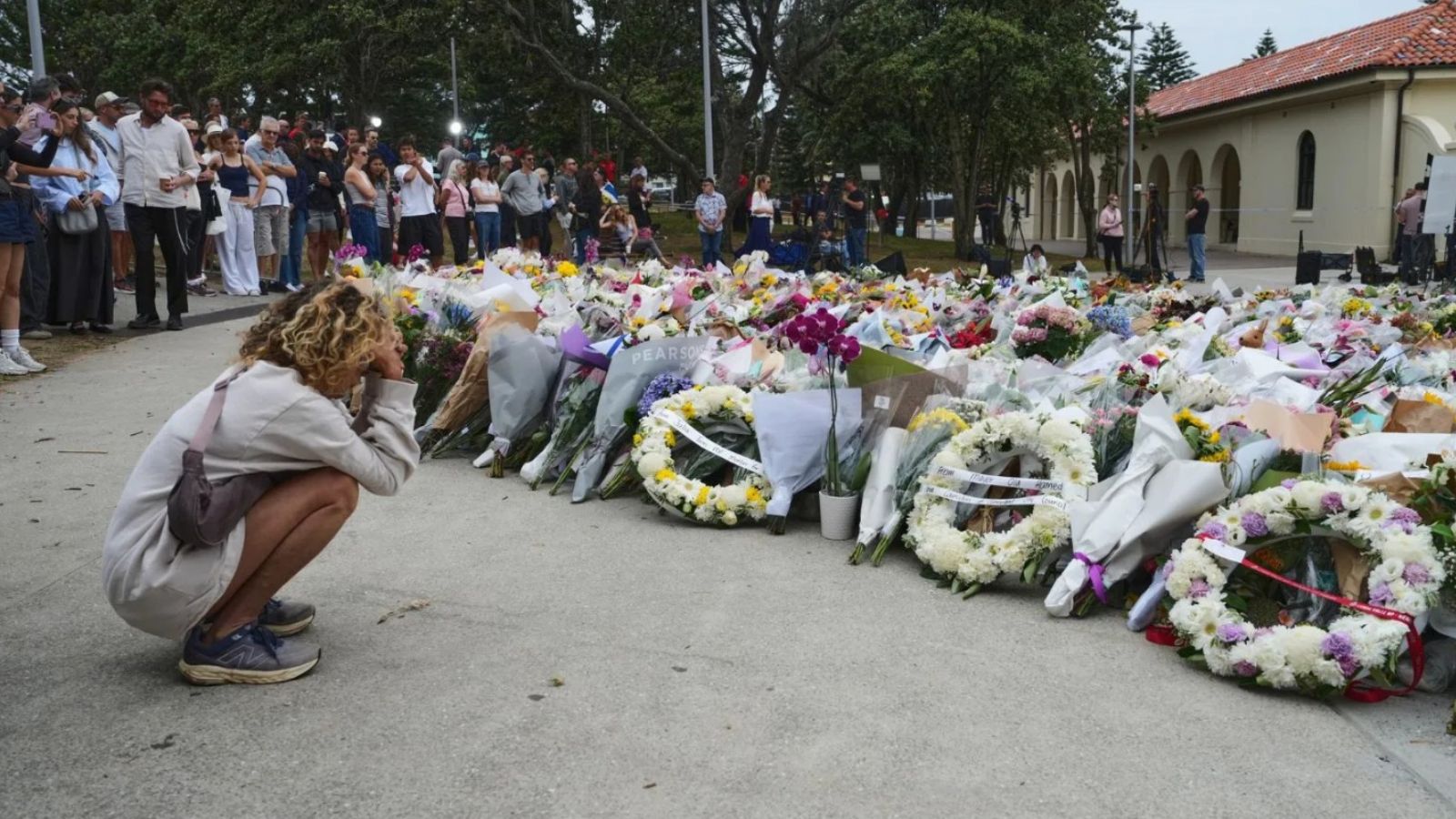
The first is an Australian citizen currently based in Iran. He operates as a senior intelligence officer within a covert unit of the IRGC Quds Force. ASIO intelligence proved this individual personally orchestrated the October 2024 firebombing of Lewis Continental Kitchen, a well-known kosher eatery in Bondi. Burgess described this hit as the initial major attack in what became a prolonged "summer of antisemitism" across the country.
The second asset is a former Australian resident who relocated to Iraq. Iran recruited him through a messy network of Iraqi-based militia groups, specifically exploiting his massive personal wealth and deep criminal connections. From his base in Iraq, he directed the December 2024 firebombing of the Adass Israel Synagogue in Melbourne.
While Burgess kept their names hidden to protect active prosecutions, his public message to the operatives was raw and direct.
"We know who you are, we know what you've done, and we know who you work for," Burgess declared. "We know more about him than he realises, including the name of his superior in Iran and the department he works for."
How Australia Fought Back
The diplomatic fallout from these attacks already triggered massive geopolitical shifts behind closed doors. Last year, the federal government took the extraordinary step of publicly naming Iran as the state actor behind the arson campaign and promptly expelled the Iranian ambassador.
That public "name and shame" strategy actually worked. Once Australia put the spotlight directly on Tehran, the IRGC lost enthusiasm for their wealthy asset in Iraq. Stripped of his state-sponsored protection and facing relentless heat from Australian federal agents and local Middle Eastern law enforcement, the individual was arrested and thrown into an Iraqi prison.
However, the threat hasn't evaporated. Several local foot soldiers are currently facing criminal charges in Australian courts for executing the physical firebombings. What's deeply troubling is that investigators still don't know if these local operatives actually knew they were taking orders directly from Iranian state intelligence, or if they thought they were just working for local criminal syndicates.
Security Threats Hitting from Every Direction
The Iranian firebombing campaign is just one symptom of a rapidly degrading domestic security landscape. Burgess warned that ASIO is currently forced to track concurrent, compounding threats that are hitting the agency all at once. The timeline of escalating domestic tension over the last few years shows how fast things are shifting.
Beyond state-sponsored arson, the spy agency is battling a severe rise in "coerced repatriations." This occurs when foreign regimes use intimidation, fake corruption charges, or threats against offshore family members to force critics living in Australia to return to their birth countries.
At least five separate foreign regimes are actively running these corporate-style kidnapping and intimidation schemes on Australian soil right now. In one single year, one aggressive state asset successfully coerced eight people into leaving Australia. Five of those targets were Australian citizens or permanent residents. Three of them vanished completely and have never returned.
Protecting Yourself in an Age of Online Radicalisation
The threat vectors have changed fundamentally. Extremists aren't gathering in backyards or secret brick-and-mortar meeting halls anymore. They are radicalising inside algorithms. Burgess noted that individual radicalisation timelines have shrunk from months down to mere weeks, powered entirely by online spaces that accelerate grievance narratives.
This means everyday Australians must remain hyper-vigilant about their personal security, digital footprints, and community environments.
First, secure your professional digital presence. ASIO explicitly warned that foreign intelligence agencies are heavily targeting Australians with security clearances via professional networking sites like LinkedIn. Spies pose as consultants, recruiters, or think-tank researchers, offering cash for seemingly harmless reports regarding regional relationships or defense programs like the AUKUS submarine pact. If an online contact starts digging for non-public insights on domestic infrastructure, defense partnerships, or supply chains, report it to your organization's security officer immediately.
Second, understand that the current threat profile leans heavily toward low-capability, high-impact acts like vandalism and arson. Business owners, community centers, and faith-based institutions must audit their physical security immediately. Ensure high-definition CCTV arrays cover every entry point, install fire-resistant security film on ground-floor glass, and coordinate directly with local police commands to share risk assessments.
National security isn't just the government's job anymore. Turning down the temperature of our domestic environment requires communities to actively reject online echo chambers that permit violence as a valid form of political commentary.