Establishment Democrats thought they could safely contain the democratic socialist movement inside City Hall. They figured that once Zohran Mamdani won the mayoral race last year, the messy reality of governing America’s biggest city would quiet the left-wing insurgency down. They were wrong.
The June 2026 primary results just proved that New York politics didn't hit a progressive ceiling. Instead, Mamdani leveraged his massive political capital to stage a full-scale takeover of the state’s congressional delegation, completely upending the status quo. By backing three insurgent candidates against powerful incumbents and establishment favorites, the 34-year-old mayor didn't just win a few races. He transformed the baseline of what it takes to survive a Democratic primary in New York.
If you're looking at these results as a typical midterm primary blip, you're missing the real shift. This wasn't a passive vote. It was an organized, aggressive rejection of moderate, corporate-friendly politics.
The Trio That Upended the New York Establishment
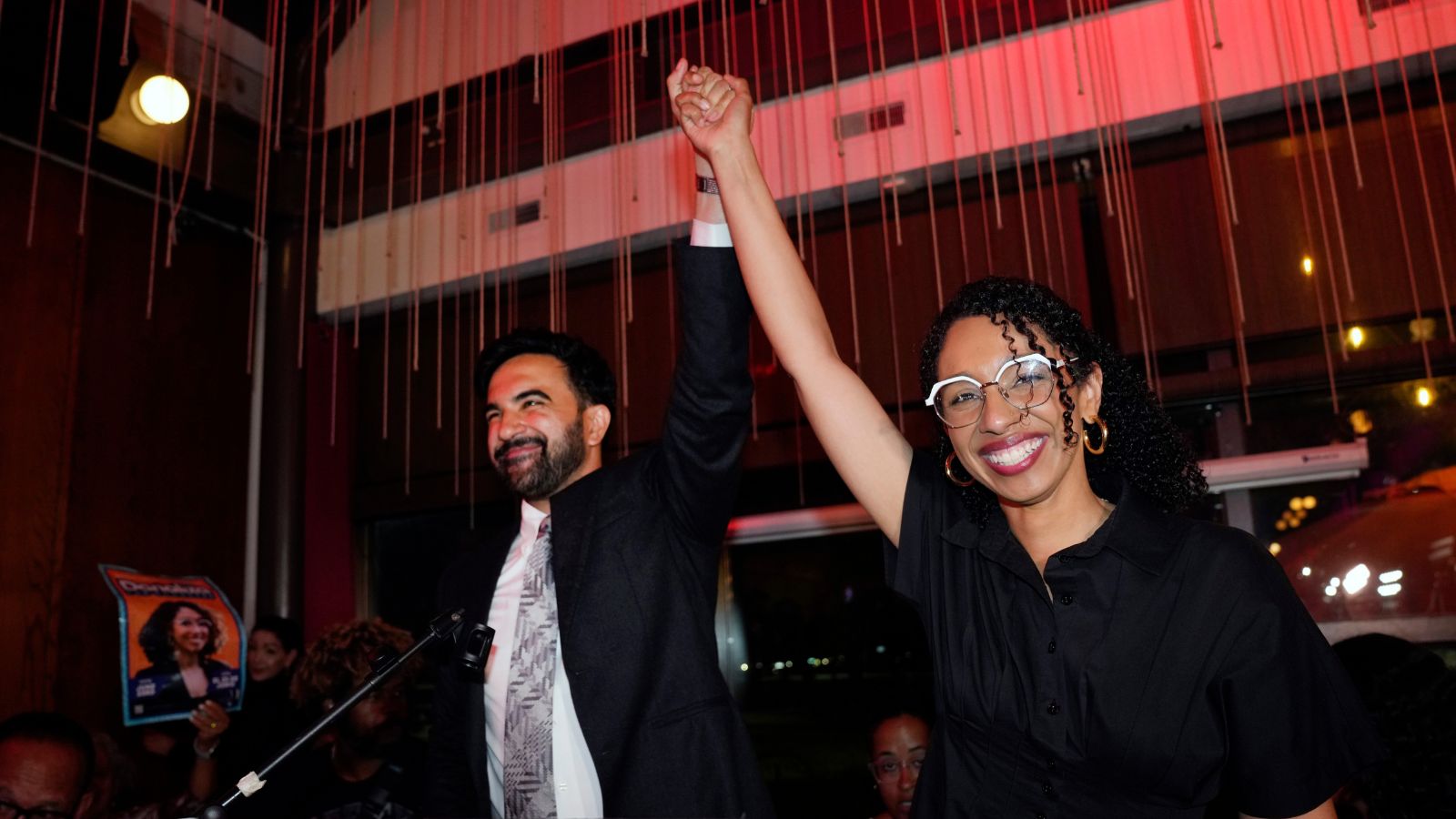
Mamdani didn't play it safe by staying neutral. He gambled big by endorsing Brad Lander, Claire Valdez, and Darializa Avila Chevalier. All three swept their primaries, sending shockwaves straight to Washington.
The most stunning upset came from Darializa Avila Chevalier. A 32-year-old CUNY doctoral student and activist who had never held public office, Chevalier went head-to-head with Adriano Espaillat. Espaillat wasn't just any incumbent; he was a five-term congressman and the powerful chair of the Congressional Hispanic Caucus. Backed heavily by the NYC-DSA and Justice Democrats, Chevalier focused her platform on expanding the social safety net and affordable housing. Mamdani's active presence on the campaign trail amplified her reach, leading to a narrow but historic victory in a district stretching across upper Manhattan and the Bronx.
Then there’s the landslide in the 10th District. Former City Comptroller Brad Lander totally dominated two-term Representative Dan Goldman, pulling in 65.7% of the vote compared to Goldman's 34.1%. Goldman, a former federal prosecutor who served as lead counsel during Donald Trump’s first impeachment, had deep establishment support and significant financial backing. Lander ran hard to Goldman's left, keeping affordability at the center of his message while zeroing in on the heavy financial support Goldman received from groups like the American Israel Public Affairs Committee (AIPAC).
Rounding out the sweep, state Assemblymember Claire Valdez won the race to succeed retiring Representative Nydia Velázquez in the 7th District. Valdez defeated Brooklyn Borough President Antonio Reynoso, who carried Velázquez’s personal endorsement. Valdez’s victory speech captured the raw ambition of this cycle, stating that working people are no longer just looking for a seat at the table, but are ready to run the table.
Why the Moderate Playbook Failed
For years, establishment leaders like House Democratic Leader Hakeem Jeffries argued that a far-left shift hurts the party's national prospects. Jeffries tried to minimize the primary tension before the polls closed, telling reporters on Capitol Hill that a handful of primaries wouldn't reshape the House Democratic caucus.
But downplaying these wins ignores the changing reality of the base. The winning candidates didn't soften their edges to appeal to centrist voters. They ran on explicit, uncompromising platforms:
- Pledging to tax the rich to fund local infrastructure.
- Calling to abolish ICE (Immigration and Customs Enforcement).
- Launching direct criticisms of U.S. military and financial support for Israel's war in Gaza.
The focus on foreign policy turned out to be a massive motivator for progressive turnout. Voters used their ballots to voice sharp frustration with the status quo, and the traditional defense mechanisms used by moderate Democrats simply didn't work this time around.
When millions of dollars from super PACs flooded into city races to counter progressive momentum, it didn't scare off voters. It gave Mamdani's movement a clear foil. The narrative became working-class New Yorkers versus big-money interests, and in districts where Mamdani performed best during his own mayoral run, that narrative won easily.
The Durable Power of the New New York Machine
It's tempting to view Mamdani as an isolated political celebrity, but these victories demonstrate a durable, institutional machine. When Mamdani and Brad Lander ran for mayor last year, they utilized the city's ranked-choice voting system to form a cross-endorsement alliance that kept progressives united. That cooperation paid off massively in this primary cycle.
The data shows this isn't just an outer-borough anomaly. According to national polling highlighted by CNN, the DSA holds a higher net favorability among Democratic voters than Democrats in Congress by 13 points. Furthermore, long-term Gallup data reveals that 66% of Democrats now view socialism more positively than capitalism, a massive jump from 50% back in 2010.
Mamdani's team isn't just winning elections anymore; they are creating a new blueprint for legislative power. By sending ideologically aligned allies to Washington, the mayor ensures he has a direct line to federal resources and a shield against state-level pushback from moderate governors or suburban lawmakers.
If you want to understand where the national party is heading, stop looking at national committees and start looking at the ground game in New York City. The political center of gravity has officially shifted, and any candidate running in a deep-blue district across America will have to answer to this new standard. Moderate incumbents can no longer rely on name recognition and institutional backing to keep their seats secure. If they don't deliver on core progressive priorities, the new kingmaker in City Hall has shown he has both the willingness and the infrastructure to replace them.
NYC Mayor Mamdani's candidates prevail with bold ideas gives a detailed breakdown of how the progressive wing plans to utilize these primary victories to reshape the broader party strategy ahead of the general election.