Southern California views rain like an insult. The region is built on an architectural premise of eternal sunshine, a perpetual motion machine of dry heat, palm trees, and asphalt that treats precipitation as an administrative error. Then a storm system pulls moisture northward from a distant tropical disturbance, and the illusion collapses into standing water. Hurricane Marie did not just drop anomalous September water on Los Angeles. It exposed a fundamental vulnerability in how coastal municipalities handle storm surges that arrive completely out of season.
Weather anomalies in the American Southwest are rarely isolated anomalies anymore. They are stress tests for infrastructure designed in the middle of the twentieth century for a climate system that no longer exists. When heavy surf and unseasonal downpours converge on the Pacific Coast, the resulting crisis is not merely meteorological. It is an engineering failure born of complacency. Municipal planners built a drainage network optimized for brief, predictable winter storms, leaving the coastline defenseless against high-energy southern swells paired with heavy convective rainfall. Building on this theme, you can find more in: Why Iran Threats Are Just Empty Noise and the Media Loves the Panic.
The Physics of a Rogue September Swell
Most people assume West Coast flood risks originate from direct hurricane landfalls. That is a misunderstanding of Pacific geography. Hurricanes tracking off the coast of Baja California rarely make landfall in California as tropical cyclones because cold ocean currents sap their energy before they cross the border. Instead, they act as massive atmospheric pumps. They generate tremendous long-period southern swells that travel thousands of miles up the coast, arriving with destructive force long before any rain begins to fall.
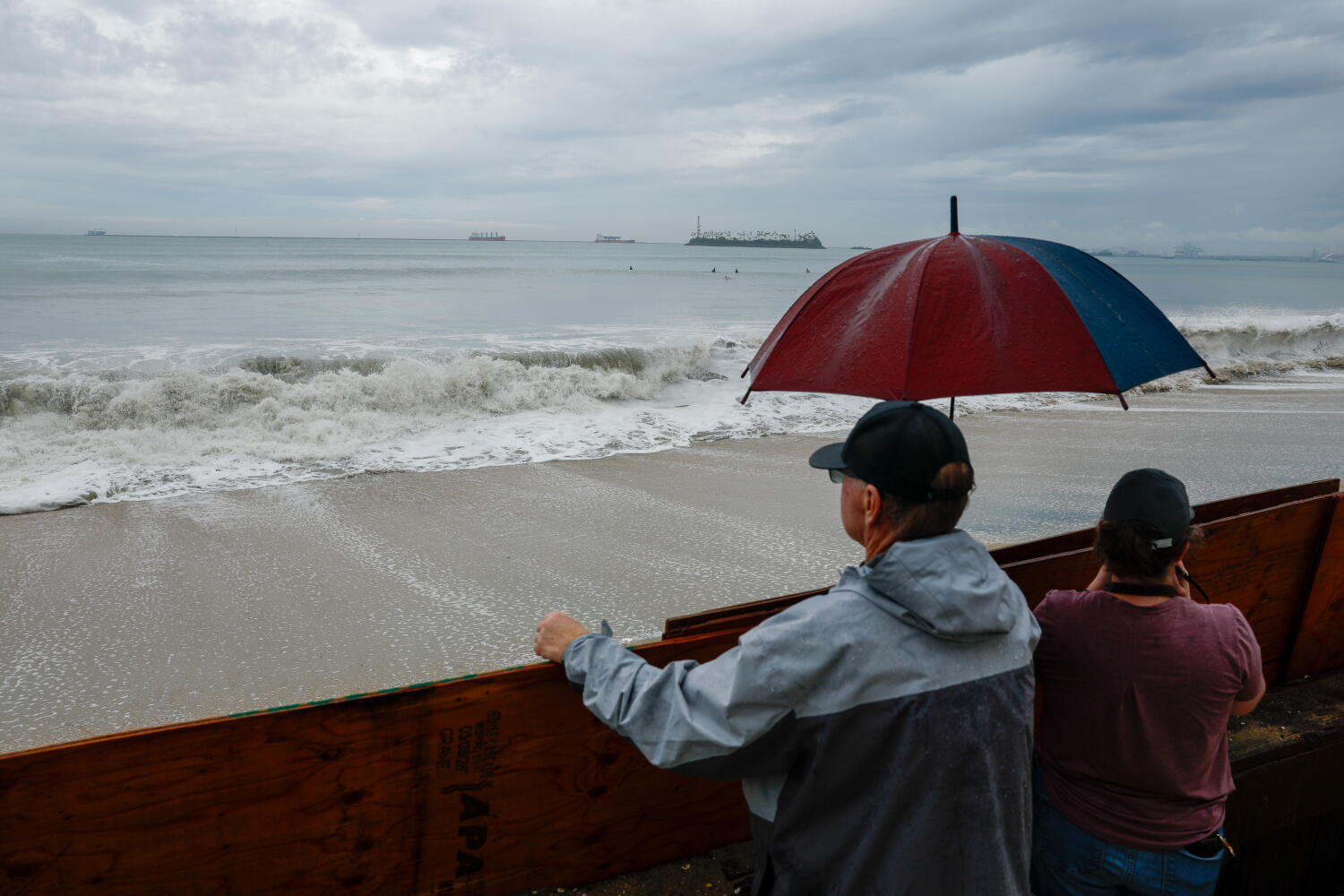
When Hurricane Marie churned off Mexico, it generated ocean swells reaching twenty feet at coastal markers. These waves did not just look impressive on local news broadcasts. They coincided with high astronomical tides, creating a compounding hydraulic pressure against coastal defenses. Seawalls built decades ago to withstand standard winter wave heights found themselves overwhelmed by sheer kinetic energy. Analysts at The Guardian have shared their thoughts on this situation.
- Wave Run-Up: High-frequency waves breached standard rock revetments, pushing tons of saltwater across Pacific Coast Highway.
- Tidal Locking: High tides prevented municipal storm drains from emptying into the ocean, forcing stormwater backward up through manhole covers.
- Sub-Surface Saturation: Sandy soils along Malibu and Long Beach reached liquid saturation points within hours, causing localized structural undermining.
The timing made everything worse. September in Los Angeles is typically the peak of dry-season heat. Beachgoers crowd the sand, soil is baked dry and hydrophobic, and municipal stormwater retention basins are often cleared for maintenance or left unmonitored. When heavy rain hits baked earth, infiltration rates plummet. The water stays on the surface, moving rapidly across impervious concrete surfaces until it hits the ocean or pools in low-lying coastal intersections.
Aging Concrete and Deferred Maintenance
Drive down the Pacific Coast Highway during a high-surf event, and you are witnessing a multi-billion-dollar game of financial chicken. The infrastructure protecting California's shoreline was largely financed during the post-war boom. Civil engineers of the nineteen-fifties used historical precipitation records that modern climate data has rendered obsolete. They designed concrete channels like the Los Angeles River to rush water away from inland neighborhoods as fast as possible, converting a natural river network into a fast-flowing industrial flume.
That system works efficiently when water flows downhill toward the sea. It breaks down entirely when the sea pushes uphill against the drainage outlets.
During events like the Marie surge, ocean water pushes inland through the same concrete conduits meant to drain the streets. The Los Angeles County Department of Public Works operates dozens of tidal gates designed to prevent seawater from flooding inland neighborhoods. Many of these gates are decades old, mechanically complex, and vulnerable to blockage from marine debris, kelp, and urban trash swept down the channels by the initial flush of rain.
When a tidal gate fails to seal properly, seawater inundates underground utility vaults, corrodes electrical grid connections, and floods subterranean parking structures miles inland. Property owners discover too late that their basement drainage pumps are designed to expel freshwater, not corrosive saltwater laden with sand and grit. Insurance policies rarely cover coastal storm surge damage adequately, leaving homeowners to absorb the cost of a municipal failure disguised as an act of God.
The Cost of Building on Shifting Sand
Southern California's coastline is not a static geological feature. It is a dynamic boundary zone constantly reshaped by longshore sediment transport. Decades of damming rivers upstream have choked off the natural supply of sand that replenishes Southern California beaches. Without a steady influx of new sediment from inland mountains, beaches narrow, leaving coastal structures closer to the surf line than they were when originally built.
When a high-surf event strips sand away from the base of a seawall, the foundation of the wall is exposed to direct wave attack. Municipalities respond by dumping massive boulders or pumping sand back onto the beach in expensive, temporary replenishment projects. These measures treat the symptoms while ignoring the structural driver.
[Deep Ocean Swell] ---> [Undermined Seawall] ---> [Overtopped PCH] ---> [Inland Flooding]
This cycle creates a perverse incentive structure. Federal disaster relief funds frequently cover the emergency repair of coastal infrastructure damaged by storms, encouraging local governments to rebuild in place rather than orchestrating managed retreat or investing in resilient redesigns. Every time a storm like Marie batters the coast, taxpayers subsidize the reconstruction of multimillion-dollar properties sitting precariously on eroding bluffs and low-lying barrier spits.
Rethinking Urban Hydrology in an Era of Extremes
Fixing the vulnerability of coastal metropolitan areas requires abandoning the twentieth-century paradigm of trying to control water through sheer concrete dominance. The goal must shift from rapid drainage to managed retention and hydraulic flexibility. Sponge city concepts, long championed in densely populated Asian and European urban centers, offer a blueprint that American cities have been agonizingly slow to adopt.
- Permeable Pavements: Replacing traditional asphalt in coastal parking lots with porous materials allows rainwater to infiltrate local aquifers rather than overwhelming surface drainage systems.
- Living Shorelines: Integrating restored wetlands, dune grasses, and oyster reefs absorbs wave energy naturally, reducing the kinetic impact of rogue swells before they reach hard infrastructure.
- Smart Tidal Valves: Upgrading mechanical flap gates with sensor-driven, automated actuators ensures rapid closure during simultaneous high tides and storm surges.
Yet, these solutions face intense political friction. Retrofitting dense urban corridors is astronomically expensive. Property owners fight against zoning changes that acknowledge sea-level rise and increased storm frequency because such disclosures destroy property values overnight. As long as real estate markets reward short-term proximity to the ocean over long-term structural resilience, municipalities will continue to rely on emergency sandbags and reactive crisis management.
The next anomalous September storm is not a question of if, but when. The atmospheric conditions that channeled moisture and generated massive southern swells during Hurricane Marie are part of a broader, more volatile climatic baseline. Until Southern California stops treating water as an unwelcome disruption and starts treating coastal geography with engineering humility, every unseasonal downpour will remain a crisis waiting to happen.