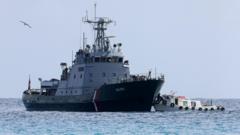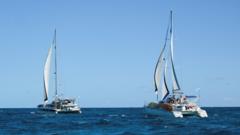
Two ships vanish in the Caribbean. A few days later, they "reappear." The media breathes a sigh of relief. The narrative is set: a harrowing maritime mystery with a happy ending.
Except that isn't what happened.
The "disappearance" of aid ships bound for Cuba isn’t a mystery of the Bermuda Triangle or a freak weather event. It is a symptom of a decaying, state-run logistics apparatus and a global maritime tracking system that is being intentionally manipulated to bypass sanctions and hide the true scale of a humanitarian disaster. While everyone else is busy celebrating the "rescue," they’re missing the fact that these ships are ghosts by design.
In the shipping world, vessels don't just lose contact for days in one of the most heavily monitored corridors on the planet unless someone wants them to.
The AIS Myth and the Illusion of Ghost Ships
Modern shipping doesn't allow for ships to just "disappear." Every significant vessel on the water is equipped with an Automatic Identification System (AIS). It's a GPS-based tracking system that broadcasts its position, speed, and heading to other ships and shore-based stations. It’s the digital heartbeat of the ocean.
When a ship goes "dark," it’s almost always for one of two reasons:
- Equipment failure (exceedingly rare on two ships simultaneously).
- The crew turned it off.
Turning off AIS is a classic tactic used to hide cargo movements, avoid piracy, or—as is the case in the Caribbean—sidestep the heavy hand of international sanctions. The competitor's story frames this as a terrifying incident of maritime isolation. I've spent enough time in port logistics to tell you that when a ship goes dark in a sensitive political zone, it isn't "lost." It's hiding.
The media portrays the reappearance of these vessels as a miraculous recovery. It isn't. It's a calculated re-emergence once the "dark" portion of the voyage is complete. The real story isn't that they were found; it's why they felt the need to hide in the first place.
Why "Aid" is a Logistics Disaster in Disguise
The standard narrative tells you that sending aid ships to Cuba is the solution to its growing food and medicine shortages. It sounds noble. It looks great in a press release. But it's a logistical nightmare that ignores the reality of the island's crumbling infrastructure.
Sending massive shipments of perishable goods into a country with a failing power grid is like pouring water into a bucket full of holes. Cuba’s internal distribution network is a wreck. The fuel shortages are so severe that even if the ships docked yesterday, the goods would rot in the containers before they reached the people who need them.
If you want to actually help, you don't send a massive ship that can be tracked, delayed, or used as a political pawn. You fix the last-mile delivery. You invest in decentralization. But decentralization is the one thing the Cuban government—and its international partners—cannot afford. It would mean losing control.
The Cost of "Dark" Shipping
Operating a ship without AIS is incredibly dangerous. It increases the risk of collisions and prevents search and rescue teams from locating the vessel in a genuine emergency. By forcing these aid ships to operate in the shadows, the organizations involved are playing a high-stakes game of chicken with human lives.
This isn't just about the cargo. It's about the crews. Imagine being a merchant mariner on a ship that has "disappeared" from global maps. You are a ghost. If something goes wrong—a fire, a mechanical failure, a medical emergency—no one knows where you are.
The organizations sending this aid will tell you the risk is necessary to bypass "blockades" or "sanctions." This is a convenient lie. Most humanitarian aid is legally exempt from these restrictions. The "dark" voyages are often more about hiding the origin of the goods or the identities of the companies profiting from the transport.
The Flawed Premise of "People Also Ask"
When people search for information on missing ships, they ask: "Are the crews safe?" or "Was it a storm?"
They are asking the wrong questions. The questions should be:
- "Who owns the vessels that went dark?"
- "What was the actual cargo manifest versus the public aid list?"
- "Why did the AIS transponders stop transmitting at a specific latitude?"
If you want the truth, follow the money, not the feel-good headlines. The "disappearance" of these ships was likely a planned maneuver that went slightly off-script, forcing a public "rescue" narrative to cover the tracks of a clandestine delivery.
The Brutal Reality of Caribbean Logistics
In my years analyzing maritime trade, I've seen how "aid" is often used as a smokescreen. Large-scale shipments allow for the movement of other, less-monitored goods. When a ship goes dark, it provides a window of opportunity to offload or exchange cargo without a digital trail.
To believe that two separate aid ships simply "lost contact" due to technical issues is to ignore every basic principle of modern maritime operations.
The Actionable Truth
If you are a donor or an advocate looking to support humanitarian efforts in Cuba, stop looking at the ships. Stop cheering for the "safe return" of vessels that were never truly lost.
Instead, demand transparency in the supply chain. Ask why these ships aren't using Starlink-based secondary tracking or why they aren't partnering with transparent logistics firms that operate in the light. If an aid organization tells you their ships "disappeared," they are either incompetent or they are lying to you.
The Caribbean isn't a void where things go missing. It is a highway. And on this highway, if you aren't broadcasting your location, it's because you're trying to outrun the cops or the competition.
Don't buy the "miracle at sea" headline. It’s a cover-up for a broken system that values secrecy over the very people it claims to feed.
Stop looking at the horizon for ships. Start looking at the manifest for the truth.