The neon glow of Beijing’s Wangjing district hums with the predictable energy of a modern mega-city. Traffic crawls along the ring roads. Delivery drivers on electric scooters weave through crowds of tech workers glued to their smartphones. It is an ocean of hyper-connectivity. But if you step through the heavy glass doors of a certain multi-story restaurant tucked away from the main drag, the signal dies. Not the cellular signal, but the cultural one.
The air inside smells instantly of toasted sesame oil, fermented cabbage, and charcoal. A woman steps forward to greet you. She wears a traditional, vibrant chima jeogori—a high-waisted wrap skirt and structured jacket—in shades of pastel pink and teal that feel curiously suspended in the late twentieth century. Her smile is flawless. Her posture is military-grade. When she speaks, her Mandarin is heavily accented, precise, and polite. Learn more on a similar issue: this related article.
This is not your average hotpot joint or casual noodle bar. This is a state-run North Korean restaurant, operating legally in the heart of China’s capital. It is a living anomaly, a highly coordinated diplomatic and economic bridge between Pyongyang and the outside world. Here, the food is authentic, the performance is dazzling, and every single interaction is governed by an invisible script.
The Choreography of Capitalism and State Control
To understand this space, you have to look past the superficial novelty of the dining room. Every North Korean eatery abroad serves a dual purpose. On the surface, it is a hospitality venture designed to offer global diners a taste of Pyongyang cold noodles and live entertainment. Beneath that veneer, it operates as a vital source of hard foreign currency for the North Korean government, sending millions in cash back across the border annually. Further journalism by National Geographic Travel explores comparable views on this issue.
The staff represents a meticulously vetted elite. The young women working the floor are not ordinary citizens who stumbled into a hospitality gig. They are chosen from privileged families in Pyongyang, selected for their musical talent, political loyalty, and physical appearance.
Consider a hypothetical waitress we will call Sun-hwa. In Pyongyang, Sun-hwa studied traditional dance and foreign languages at a top university. Landing a deployment to Beijing is considered an immense honor, a rare chance to see the world beyond the hermetic seal of her homeland. Yet, her reality in China is tightly bound.
Sun-hwa and her colleagues do not wander the streets of Beijing freely after their shifts. They live together in heavily monitored dormitories, travel to and from work in designated vans, and observe strict curfews. They watch a changing world through the tinted windows of a commuter bus. They are in the world, but completely separated from it.
The Show Begins
The transition from dinner to theater happens without warning. One moment, the waitresses are pouring glasses of Taedonggang beer and clearing empty plates of kimchi. The next, the house lights dim, and a synth-heavy pop track explodes from the sound system.
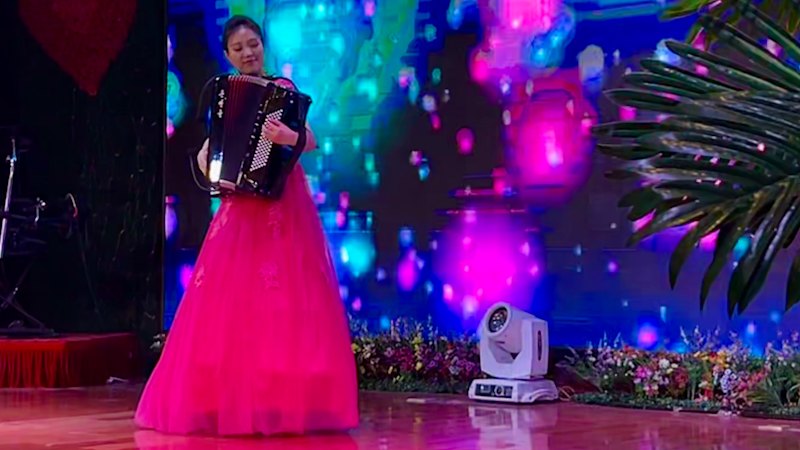
The same women who just served your pork belly are now on stage. They handle electric guitars, bass, drums, and traditional instruments with astonishing proficiency. They belt out sweeping, emotional ballads about homeland, longing, and revolutionary pride. Their expressions bounce between intense, theatrical passion and broad, static smiles.
The audience is a mix of South Korean expats living in Beijing, Chinese businessmen, and curious Western tourists. The atmosphere is thick with a strange, layered tension. South Koreans hear their own language sung with an unfamiliar, northern cadence. They watch performers who feel like distant cousins, separated by a geopolitical chasm that has lasted generations.
It is a dizzying display of talent. The musical arrangements are complex, blending traditional Korean folk melodies with Soviet-style march rhythms and 1980s Western pop aesthetics. The performers never drop their energy. They move with absolute synchronization, a testament to years of grueling training in state academies.
The Invisible Boundary at the Table
When the performance ends, the women immediately return to their floor duties. They wipe down tables, take orders, and chat politely with guests. But if you try to pull back the curtain, the conversation hits an immediate wall.
Ask about their lives back home, and the answers are perfectly uniform. Pyongyang is beautiful. The weather is always pleasant. Life is joyful. If a diner asks about the current political climate or mentions news from the outside world, the waitress will offer a blank, polite nod, deftly change the subject, or suddenly remember another table needs her attention.
This polite evasion is a survival mechanism. The staff operates under a system of collective responsibility. If one person steps out of line, expresses a subversive thought, or displays unapproved curiosity about foreign life, the consequences ripple back to their families in North Korea. The stakes of a casual conversation over dinner are impossibly high.
Diners often come searching for a glimpse behind the geopolitical veil, expecting to find a stark caricature of totalitarian gloom. Instead, they find exceptional hospitality, delicious food, and genuine human warmth. That juxtaposition is the real friction of the experience. It forces you to confront the reality that the individuals representing a deeply isolated state are remarkably human, navigating an extraordinarily restrictive existence with grace and immense skill.
The evening eventually winds down. The final bills are paid in Chinese yuan or digital transactions that will ultimately be processed and channeled through state-run banking networks. The diners slip back out into the humid Beijing night, logging back onto their phones, checking notifications, and hailing rides through apps.
Inside the restaurant, the house lights fade to a dull standby glow. The microphones are placed back on their stands. The pastels of the traditional dresses are packed away for the night, ready for the exact same performance to begin again tomorrow.