The financial press is obsessing over a rounding error. April’s Purchasing Managers’ Index (PMI) data out of Beijing just hit the wires, and the consensus is already settling into its usual, comfortable rut. Analysts are pearl-clutching because the official manufacturing PMI dipped to 50.4 from 50.8, while the Caixin private survey "topped expectations" at 51.4. They call it a "slowdown." They call it "softening demand."
They are looking at the wrong map. Recently making headlines in this space: The Brutal Economic Calculus Behind the New European Union Middle East Framework.
If you are tracking 0.4-point fluctuations in a survey-based sentiment index to gauge the health of the world’s second-largest economy, you have already lost. These indices measure the rate of change in perception, not the absolute magnitude of industrial might. China isn’t "slowing down" in any sense that matters to your portfolio or the global supply chain. It is undergoing a violent, intentional structural pivot that makes traditional PMI data about as useful as a sundial in a thunderstorm.
The PMI Trap: Why Sentiment is Not Reality
The "lazy consensus" views a 50-point PMI threshold as a binary switch between life and death. Above 50 is growth; below 50 is a recession. This is a fundamental misunderstanding of how industrial cycles work in a command-heavy economy. Further insights into this topic are explored by Harvard Business Review.
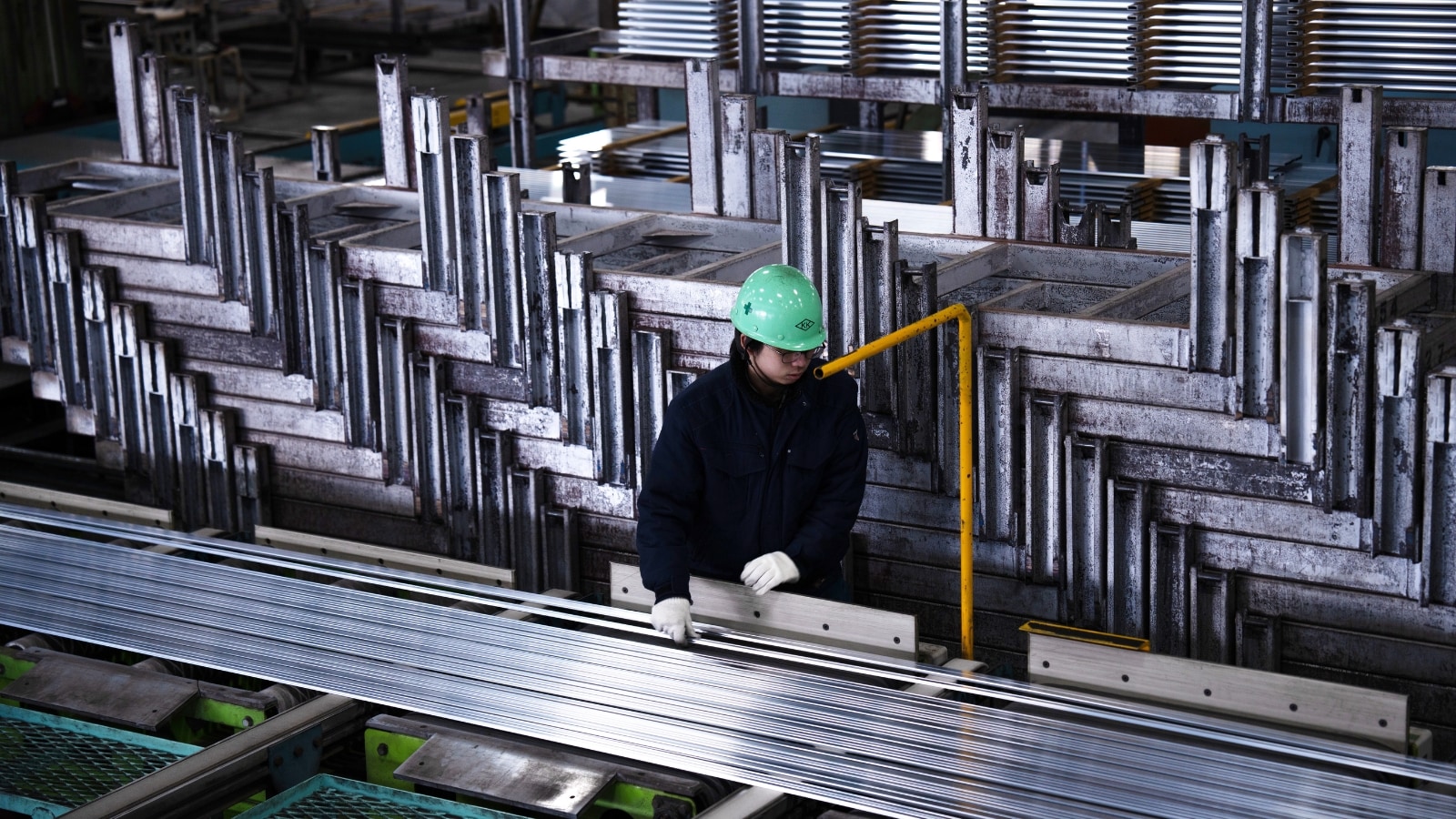
PMI is a survey of managers. When a manager says things are "slower," they are comparing today to thirty days ago. They aren't telling you about the three million square feet of high-end semiconductor capacity that just broke ground. They aren't telling you about the massive overcapacity being built into the electric vehicle (EV) sector specifically to crush international competition through sheer scale.
The mainstream narrative suggests that "new orders" are softening. This assumes a demand-side problem. In reality, China has shifted to a supply-side shock strategy. They aren't waiting for the world to ask for more goods; they are producing so much volume at such low price points that the world has no choice but to absorb it. This is "New Three" economics: EVs, lithium-ion batteries, and photovoltaics.
Stop Looking for a Consumer Recovery
The biggest mistake analysts make is waiting for the Chinese consumer to "save" the manufacturing sector. It won't happen. The CCP has made a deliberate choice to prioritize "High-Quality Productive Forces" over retail therapy for the masses.
While Western economists scream for stimulus checks and consumer subsidies to boost domestic demand, Beijing is doubling down on the factory floor. They are subsidizing the machine, not the person. This creates a disconnect: the PMI looks "soft" because domestic retail isn't humming, but the export engines are being tuned for a decade of dominance.
I’ve spent twenty years watching capital flows into Shenzhen and Ningbo. I’ve seen firms burn through billions trying to predict "the turn" in Chinese consumer sentiment. They missed the fact that the money isn't going into the pockets of the middle class—it’s going into automated robotics and green energy infrastructure.
The Export Deflation Exported
The "softening" growth mentioned in the headlines is actually a symptom of falling factory-gate prices. Producer Price Index (PPI) data has been in negative territory for over a year. To a standard economist, deflation is a monster. To a Chinese factory owner backed by state credit, deflation is a weapon.
By lowering the cost of production, China is exporting its deflation to the rest of the world. This forces manufacturers in the US, Germany, and Japan to either cut their own margins to zero or cede market share entirely. When the PMI "misses expectations," it often reflects the stress of this price war on individual factory managers. But for the state, the mission is being accomplished.
The competition isn't between Chinese factories; it's between the Chinese industrial ecosystem and everyone else.
The Quality Lie
"But Chinese goods are low quality," the skeptics say.
This is the most dangerous cope in modern business. In 2010, that was a valid criticism. In 2026, it’s a death wish. If you look at the technical specifications of contemporary Chinese power grid equipment or Tier-1 EV platforms, the "quality gap" has evaporated. In many cases, it has reversed.
The PMI doesn't capture the shift from low-end textiles to high-end precision engineering. A factory making $2 T-shirts and a factory making $20,000 hydrogen fuel cells both count as "one factory" in a survey. If the T-shirt factory closes and the fuel cell plant expands, the PMI might stay flat. The economic reality, however, is a massive leap forward in complexity and value.
The Real Risk: Not Growth, But Geopolitics
The obsession with 50.4 versus 50.8 ignores the only metric that actually matters: the friction of trade barriers.
As China’s manufacturing output continues to outpace its domestic consumption, that surplus must go somewhere. It is hitting the shores of Europe and North America like a tidal wave. The "softening" growth analysts see is the result of factories hitting the ceiling of what the world will allow them to export without triggering massive tariffs.
We are entering an era of "Fortress Economics."
The PMI is a measure of a world that no longer exists—a world of free-flowing trade and predictable demand cycles. Today, the data is dominated by state-directed investment and the looming threat of Section 301 investigations.
How to Actually Read the Data
If you want to know what’s happening in China, stop reading the PMI. Start looking at:
- Electricity Consumption by Sector: High-tech manufacturing uses orders of magnitude more power than traditional assembly. If industrial power use is up while PMI is flat, the "value" of production is skyrocketing.
- Port Throughput in TEUs (Twenty-foot Equivalent Units): Don't listen to what managers say about orders. Look at what is actually being loaded onto ships in Shanghai and Port of Zhoushan.
- Fixed Asset Investment (FAI) in High-Tech: This tells you where the economy will be in three years, not where it was last month.
Imagine a scenario where the PMI drops to 48.0, sending global markets into a tailspin. Simultaneously, Chinese exports of high-end semiconductors double. The headline says "Contraction." The reality is "Domination." Which one are you betting on?
The Actionable Pivot
For the executive or investor, the advice is simple: ignore the "slowdown" narrative. It is a statistical ghost.
The real story is the relentless specialization of the Chinese industrial base. If you are competing on price against a sector that Beijing has deemed a "High-Quality Productive Force," you have already lost. You cannot out-subsidize a state that views manufacturing as a matter of national survival rather than a quarterly profit center.
Stop waiting for China to become a consumer-led economy like the United States. It isn't going to happen. They aren't building a mall; they are building a global machine shop.
The growth isn't slowing. It's just getting harder to see through the fog of outdated metrics.
Get off the sidelines and stop quoting the PMI. Start looking at the tonnage.