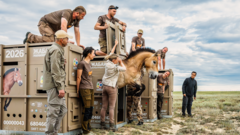
The glossy press releases always feature the same triumphant image. A heavy wooden crate opens, and a sleek, primitive-looking horse bolts onto the Mongolian steppe, its mane standing straight and proud. This is the Przewalski’s horse, the only true wild horse remaining on Earth, returning to its ancestral home after a 3,000-mile journey from European zoos. But the photographic narrative of a flawless rescue operation hides a much darker, riskier, and fiercely debated reality. These transcontinental airlift operations are highly volatile gambles where a single drop in aircraft cabin pressure, a delayed customs stamp, or an unexpected heatwave can turn a conservation triumph into a tragedy.
Moving large, flighty, undomesticated beasts across multiple time zones is a logistical nightmare that pushes veterinarians, pilots, and the animals themselves to their absolute limits.
Beyond the immediate physical dangers of the journey lies a deeper crisis that the feel-good headlines ignore. The global effort to rewild the Przewalski’s horse is battling a suffocating genetic bottleneck, severe habitat degradation, and a structural funding imbalance that raises hard questions about how we allocate conservation resources. While shipping a handful of photogenic horses across the globe makes for spectacular public relations, it often diverts attention and money from the quiet, unglamorous work of protecting the ecosystems these animals need to survive.
Inside the Flying Pressure Cooker
The journey begins long before the engines of a military transport plane roar to life. For a wild horse, the process of translocation is a series of terrifying, incomprehensible events.
First comes the selection. Conservationists cannot simply grab any horse from a zoo paddock. They must select individuals that are genetically diverse, young enough to adapt, and physically capable of enduring extreme stress. Once chosen, the animals must undergo weeks of quarantine. They are habituated to the custom-built transport crates, narrow wooden boxes that restrict their movement just enough to prevent them from kicking or thrashing, but are spacious enough to avoid cutting off their circulation.
An unrestrained wild horse in an airplane is a lethal hazard to itself and the crew. If a horse panics at 20,000 feet, the sheer force of its thrashing can damage the fuselage or destabilize the aircraft.
To mitigate this, veterinarians monitor the horses constantly. Yet, chemical sedation is a double-edged sword. Heavy tranquilizers can suppress a horse's respiratory system or cause its body temperature to spike. Instead, the team relies on low-dose, long-acting sedatives designed to take the edge off their wild anxiety without knocking them unconscious. The horses must remain standing for the entire journey. If a horse lies down in its crate, its own body weight can restrict blood flow to its limbs, leading to muscle damage so severe that the animal may never stand again.
The flight itself, often conducted in uninsulated military cargo planes like the Czech Air Force CASA C-295, is an exercise in endurance. The air inside the cargo hold is dry, loud, and constantly fluctuating in temperature. During refueling stops in places like Siberia or Central Asia, the tarmac temperatures can soar, turning the metal hull of the plane into an oven. Teams must scramble to manual pump water into the crates, using sponges to cool the horses' sweating necks while negotiating with local customs officials who rarely share the flight crew’s sense of urgency.
The Invisible Threat of the Genetic Bottleneck
Even if every horse lands safely, the species faces an internal enemy that no amount of logistical precision can solve.
By the mid-twentieth century, the Przewalski’s horse was entirely extinct in the wild. The last wild individual was sighted in the Gobi Desert in 1969. The entire global population alive today, numbering around 3,000 animals, descends from just 12 individuals captured at the turn of the twentieth century, along with a single domestic hybrid.
[Original Wild Population]
          │
          ▼ (Extreme Population Crash)
[12 Ancestral Founders + 1 Domestic Hybrid]
          │
          ▼ (Captive Breeding Bottleneck)
[~3,000 Modern Przewalski's Horses]
This extreme genetic bottleneck means that every Przewalski’s horse on the planet is closely related to every other. Inbreeding depression is a silent predator. It manifests in reduced fertility, compromised immune systems, and physical abnormalities that can weaken a herd's ability to survive the brutal realities of the wild.
Zoo biologists use complex studbook algorithms to manage matings, carefully calculating kinship coefficients to keep the gene pool as clean as possible. Yet, when these horses are released into the vast, unmanaged expanses of Mongolia or Kazakhstan, human control vanishes. Dominant stallions form harems based on strength and aggression, not genetic compatibility. A single highly successful stallion can sire dozens of offspring, inadvertently concentrating specific genetic traits and narrowing the local gene pool even further.
Furthermore, the threat of hybridization is constant. As domestic horses roam freely across the same Eurasian steppes, they inevitably cross paths with their wild cousins. If Przewalski’s horses breed with domestic stock, the unique genetic identity that scientists have spent decades preserving in captivity could be diluted and lost within a few generations.
The Skewed Economics of Charismatic Conservation
The cost of these reintroduction programs is staggering. A single airlift operation, transporting just four to eight horses from Europe to Central Asia, can run into hundreds of thousands of dollars. This figure includes aircraft charter fees, specialized veterinary teams, custom crates, satellite tracking collars, and years of post-release monitoring.
Many field conservationists quietly argue that this is a highly inefficient use of scarce funds.
+------------------------------------------+------------------------------------------+
| High-Profile Reintroduction (Airlifts)  | Local Ecosystem Protection (In-Situ)     |
+------------------------------------------+------------------------------------------+
| * Cost: $100k+ per individual horse      | * Cost: Low to moderate per acre         |
| * Output: High media visibility, PR      | * Output: Sustained biodiversity growth  |
| * Risk: High mortality, genetic drift    | * Risk: Politically complex, low profile |
+------------------------------------------+------------------------------------------+
While a photo of a wild horse running free can easily secure corporate sponsorships and government grants, the unglamorous work of habitat protection goes underfunded. Anti-poaching patrols, community pasture management, and the establishment of water points receive a fraction of the capital showered on high-profile airlifts.
Without a secure habitat, releasing captive-bred animals is merely an expensive exercise in futility. The steppes of Mongolia and Central Asia are changing rapidly. Overgrazing by millions of domestic cashmere goats and sheep has severely degraded the grasslands. Climate change has intensified the zud, a brutal winter phenomenon where a summer drought is followed by extreme cold and deep snow. A single severe zud can wipe out more than half of a wild herd in a matter of weeks, rendering years of expensive translocation efforts meaningless in a single season.
Survival Is Not Guaranteed on the Steppe
When the crate doors finally open on the Eurasian steppe, the horses do not immediately live happily ever after. They step into an environment that is radically different from the manicured, predator-free enclosures of European zoos.
The transition from soft zoo pellet food to dry, fibrous steppe grasses is a severe shock to the equine digestive system. Captive-bred horses lack the hardened gut microbiome required to extract nutrients from sparse winter vegetation. Many lose significant body weight during their first year in the wild, leaving them vulnerable to parasites and disease.
Then there are the predators. In the wild, wolves are a constant threat. While wild-born Przewalski’s horses have retained their natural defensive instincts, standing in a tight circle with their heads inward and kicking outward to protect their foals, zoo-born individuals often lack this collective defense mechanism. They are naive to the hunting tactics of wolf packs, making them easy targets during their first winter.
To survive, these horses must quickly unlearn generations of captive safety. They must learn to dig through feet of hard-packed snow to find grass, locate natural water sources hidden in dry valleys, and recognize the warning scent of a predator on the wind.
The success of these programs cannot be measured by the number of horses we put on planes. It must be measured by the slow, painful buildup of self-sustaining, genetically viable wild populations that can survive without human intervention. Until we address the systemic threats of habitat loss, genetic decay, and the commercial pressures on the steppe, these dramatic 3,000-mile journeys remain a fragile sticking plaster on a much deeper wound.