The warning came not from a sophisticated federal wiretap or a multi-agency intelligence fusion center, but from the drive-thru lane of a suburban fast-food restaurant.
On a Sunday afternoon, a 19-year-old named Alexandros Paporakis sat behind the counter working shifts at a local establishment, while quietly plotting the execution of dozens of worshippers at a prominent Hindu temple in Aurora, Illinois. According to a Cook County grand jury indictment, Paporakis had meticulously structured an eight-page manifesto titled "Why I Fought," filled with explicit white supremacist ideology and focused violently on individuals of South Asian descent.
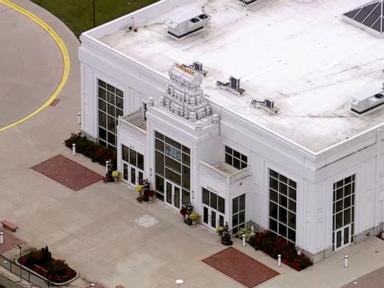
When a coworker received electronic communications detailing the horrific plan, they did what modern protocol demands: they reported it immediately. That single civilian intervention short-circuited a catastrophe. When law enforcement raided Paporakis’s Palatine residence, they uncovered body armor, tactical vests, a rifle lacking a serial number, and an operational blueprint targeting the Sri Venkateswara Swami Balaji Temple on October 11, the opening day of the Navaratri holiday. Investigators later learned that fate intervened before human intervention could: when the suspect allegedly attempted to carry out the attack, his rifle jammed.
The legal system has since responded with overwhelming force. A grand jury formally returned a 27-count indictment against Paporakis, featuring six counts of terrorism, ten counts of making a terrorist threat, and multiple weapons violations classified as Class X felonies. Yet, the legal categorization of these charges highlights a persistent structural fracture in how the United States handles domestic extremist plots targeting specific ethnic or religious minorities.
The Mechanics of Radicalization in the Suburbs
We often visualize domestic terrorism as an organized conspiracy with hidden training camps and structured cells. Reality is far more mundane and far more terrifying. Radicalization happens behind bedroom doors, mediated through anonymous chat forums, encrypted messaging apps, and ideological echo chambers that require no physical proximity to a movement to radicalize an isolated individual.
Paporakis operated as a classic lone wolf. He was a young man working an ordinary job in a quiet Chicago suburb, living a double life shaped by digital extremism. The manifesto recovered by detectives was not a sophisticated political treatise; it was a patchwork of downloaded hatred, borrowing talking points from historical mass shooters and neo-Nazi propaganda networks.
This brings us to an uncomfortable institutional reality. Local law enforcement agencies, while effective at rapid response and tactical apprehension, are routinely forced to piece together digital forensics and ideological backgrounds that span global networks. The Palatine Police Department and local prosecutors acted swiftly to secure the initial arrests and escalate the charges. However, community leaders and federal legislators, including U.S. Representative Raja Krishnamoorthi, have repeatedly pressed for federal hate crime indictments.
Federal statutes carry distinct investigative tools, cross-jurisdictional reach, and symbolic weight that local prosecution cannot fully replicate. When a place of worship is targeted because of the ethnicity and faith of its congregation, designating the act for what it is—an explicit bias-motivated terrorist attack—shapes the broader legal and cultural deterrence mechanism.
The Vulnerability of Open Sanctuaries
Places of worship represent a unique architectural and philosophical challenge in modern security planning. By design, Hindu temples, churches, synagogues, and mosques are meant to be open, welcoming sanctuaries. They rely on hospitality, community gathering, and accessibility.
When a plot targets a holy site during a major religious festival like Navaratri, the psychological objective extends far beyond the immediate loss of life. It is designed to fracture a community's sense of safety, to signal to immigrant and minority populations that their cultural spaces are porous and vulnerable.
For years, security analysts have warned that houses of worship are soft targets. Upgrading physical security—installing reinforced entry points, professional surveillance systems, and active threat response protocols—remains an ongoing financial and cultural burden for congregations that view their buildings as houses of peace rather than fortresses.
The Aurora temple averted a massacre because a coworker spoke up and a mechanical failure bought precious minutes. Relying on a jammed rifle and a fortunate tip is not a security strategy. It is a lucky escape.
The Broader Climate of Hostility
The plot against the Illinois temple does not exist in a vacuum. Human rights advocates and civil rights organizations have documented a steady, measurable rise in anti-South Asian rhetoric and bias-motivated incidents across North America. This escalation is fueled by a volatile mix of harsh political rhetoric surrounding immigration, economic anxieties, and the mainstreaming of white supremacist narratives online.
When extremist rhetoric is routinely injected into public discourse, it lowers the barrier to entry for alienated young individuals looking for a target for their grievances. They find online communities that validate their worst impulses, transforming abstract hatred into concrete operational plans.
The legal proceedings moving through the courthouse in Rolling Meadows will determine the immediate fate of the accused. Defense counsel has signaled plans to contest the charges, and the trial will unfold under intense public and international scrutiny.
Yet, the court case is merely the final stage of a systemic failure that allowed a teenager to quietly arm himself, draft a blueprint for mass murder, and come within seconds of execution. The quiet suburbs of Illinois are no longer insulated from the ideological violence bleeding through digital screens. Until law enforcement, digital platforms, and communities confront the early indicators of radicalization before they materialize into tactical vests and rifles, every open sanctuary remains vulnerable to the next individual who decides to act on the hatred he absorbed online.