The air didn't smell like rain. It smelled like frozen iron.
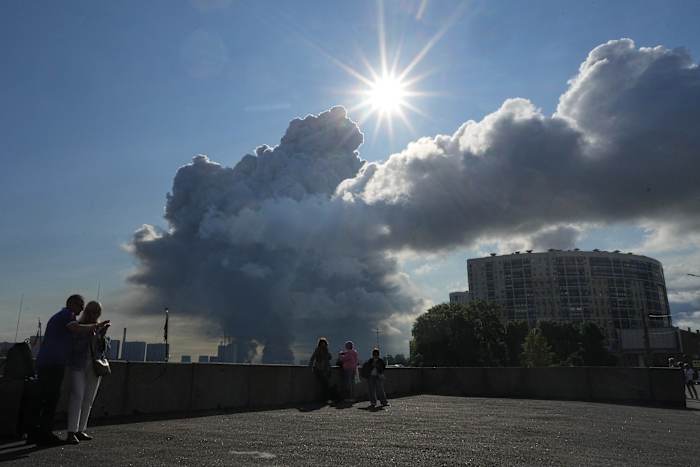
Mateo stood on his small balcony in northeastern Spain, watching the olive trees in the valley shift from a dusty, sun-baked silver to a bruised, violent violet. Summer storms here were loud, theatrical affairs that usually blew in over the Pyrenees, dropped a flurry of harmless water, and vanished before dusk. But this was different. The atmosphere felt heavy, compressed, almost greasy.
He remembers the silence. That was the most unsettling part. Right before the assault began, every cicada, every stray dog, every distant engine went entirely dead. Nature held its breath.
Then came the first impact. A sharp, metallic crack against the terracotta railing.
Within seconds, the afternoon dissolved into white chaos.
When the Sky Turns to Glass
Ice doesn't usually fall in grapefruit sizes over Catalonia. Not like this. Not with the ballistic velocity of stones fired from a trebuchet. Mateo pulled his young daughter away from the glass just as a jagged chunk of frozen water smashed through the kitchen window, showering the linoleum with diamond shards and dark earth.
Outside, the world was obscured by a blinding fog of pulverized ice. Roof tiles shattered like cheap plates. Car alarms wailed in a chaotic, overlapping chorus across the neighborhood, shorting out one by one as water flooded their electrical cores. It lasted less than ten minutes. Ten minutes of percussion so loud it rattled teeth inside jaws.
When the white noise finally subsided and the clouds tore open to reveal a mocking, pale sun, the neighborhood looked like a war zone.
Smashed windshields. Stripped vines. Dented siding.
And then, the quiet horror on the ground.
The Silence Below the Trees
Mateo walked out into the street, his sneakers crunching on a carpet of fresh slush. At first, he thought the lawn of the community park was littered with dark, wet leaves stripped from the weeping willows during the gale.
He took two steps closer. And stopped.
They weren't leaves.
Starlings, sparrows, and migratory swifts lay scattered across the asphalt, the grass, and the hoods of battered sedans. Hundreds of them. Some were completely motionless, caught mid-flight by blocks of ice heavy enough to fracture a human skull, let alone crush a hollow-boned creature of the air. Others twitched weakly, their iridescent feathers matted with mud and blood, blinking up at a sky that had betrayed them.
(Note: While individual storm casualties are rarely tracked in comprehensive real-time national censuses, regional agricultural departments in Catalonia later confirmed localized mortality events involving hundreds of migratory and resident birds caught out in the open during the severe convective cell.)
It is one thing to watch a windshield shatter. Glass can be replaced. Insurance checks can be written. Steel can be hammered back into shape. But watching the delicate, fragile machinery of life extinguished in an instant by a meteorological tantrum hits a completely different nerve.
These birds didn't have radar apps. They didn't have concrete overhangs or double-paned glass or storm shelters. They had instincts refined over millions of years—instincts that told them how to ride wind currents, how to dodge hawks, how to find shelter in a leafy canopy.
None of those instincts prepared them for chunks of ice traveling at terminal velocity out of a cloud that looked like ink.
The Invisible Architecture of a Changing Sky
We like to think of weather as an inconvenience. We check our phones, see a little cloud icon with a lightning bolt, and grab an umbrella or cancel a weekend picnic. We treat climate events like movie trailers—spectacular, distant, and ultimately harmless to our core existence.
We forget that we share this fragile crust with billions of wild things that have no backup plan.
When extreme weather events intensify—driven by warmer Mediterranean waters feeding heavier, more volatile atmospheric moisture—the collateral damage extends far beyond property values and crop yields. The vineyard owners in the Girona province wept that afternoon, looking at shattered grapevines that represented a year of labor. That was the economic story. That is what makes the evening news.
The deeper story is the ecological toll written in silence across the grass.
Consider what happens to the local insect population when thousands of avian predators are wiped out in a single square mile. Consider the disrupted nesting cycles, the abandoned chicks waiting in hollowed-out branches for parents that will never return from the storm line. Nature operates as a deeply intricate, frayed web. Pull hard enough on one thread, and the whole tapestry sags.
Mateo crouched down in the slush. A small starling lay near the curb. Its eye was still bright, dark, and entirely uncomprehending. He reached out with a calloused thumb and gently closed its eyelid, a small, foolish act of dignity for a creature that had no business being caught in the middle of humanity's changing world.
The storm is over. The broken windows are boarded up with plywood. The cars have been towed to body shops, their owners arguing with adjusters about deductibles and replacement parts.
But out in the fields, beneath the recovering canopy of the olive trees, the silence remains. The sky has proven its point. And we are left walking among the fallen, wondering just how much more weight the air can hold before it breaks us all.