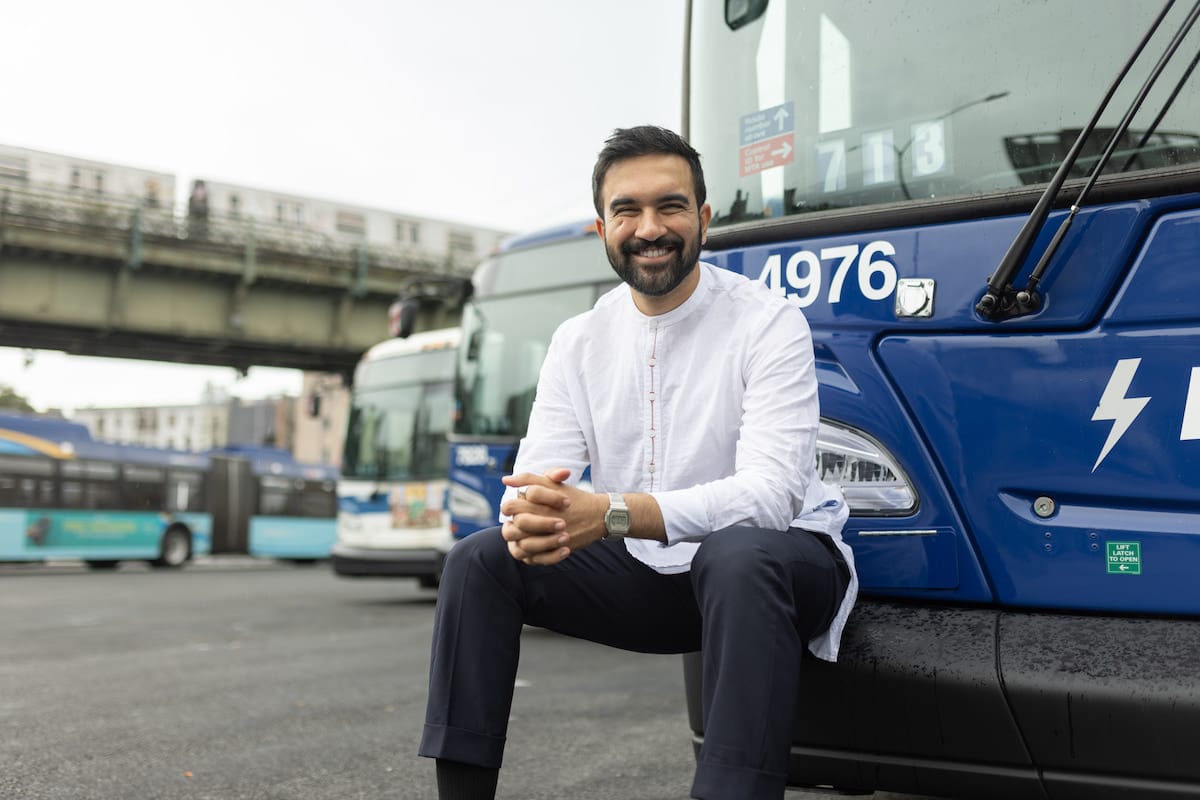
New York City's real estate market has long been a piggy bank for the world’s elite. Billionaires like Jeff Bezos and Michael Bloomberg own palatial estates that often sit empty while the city’s working class struggles to find a decent studio. Mayor Zohran Mamdani, the city's first socialist mayor, just decided the party’s over. He’s teamed up with Governor Kathy Hochul to propose a "pied-à-terre" tax that specifically targets luxury second homes.
If you own a $5 million condo on Billionaires' Row but don't actually live there, Mamdani is sending you a bill. It’s a move that has the real estate lobby screaming and progressives cheering. Honestly, it’s about time someone looked at those vacant glowing towers and saw a revenue stream instead of just a skyline.
The end of the luxury vacancy loophole
For years, the "pied-à-terre" (a fancy French term for a secondary home) has been a massive tax dodge in NYC. Because of the way New York’s property tax laws are structured, ultra-expensive condos are often taxed at a much lower effective rate than modest homes in Queens or the Bronx.
Mamdani’s plan flips the script. The tax applies to one-to-three family homes, condos, and co-ops valued at over $5 million where the owner doesn't use it as their primary residence. We aren't talking about your grandmother’s apartment; we're talking about properties like Ken Griffin’s $238 million penthouse.
- The Threshold: Properties valued over $5 million.
- The Target: Owners who live outside the city most of the year.
- The Revenue: Projected to bring in $500 million annually.
This isn't just about fairness; it's about a $5.4 billion budget hole that needs plugging. Mamdani wants to use this cash to fund universal childcare and expand the 3K program. Basically, he’s asking Jeff Bezos to pay for your neighbor’s daycare.
Bezos Bloomberg and the billionaire backlash
It’s no surprise that the richest men in the world aren't fans of this. During the 2025 election, Michael Bloomberg and hedge fund giant Bill Ackman poured millions into super PACs to keep Mamdani out of City Hall. They failed. Now, Mamdani is sitting in the big chair with a mandate to "tax the rich."
Opponents argue this tax will spark a "millionaire flight." They claim that if you tax the rich too much, they’ll just pack up their Picassos and move to Miami. But here’s the reality: these are secondary homes. These billionaires aren't "leaving" NYC because they don't live here to begin with. They're just using our real estate as a high-yield savings account.
The critics also say this will hurt the construction industry. They worry that if nobody wants to buy $10 million ghost apartments, developers will stop building. But maybe that's the point. If developers stop building glass towers for people who don't live here, perhaps they’ll start building apartments for the people who actually do.
Why this tax is different this time
We’ve heard about pied-à-terre taxes before. Every few years, a politician brings it up, the real estate lobby spends a fortune on ads, and the bill dies in Albany. But the 2026 political landscape is different.
- The Mamdani-Hochul Alliance: Governor Hochul previously balked at income tax hikes. This luxury property tax is the "middle ground" they’ve landed on to avoid across-the-board property tax increases that would hit regular homeowners.
- Public Support: Recent polling suggests a staggering 93% of New Yorkers support this tax. In a city where the median rent is over $3,700, people have zero sympathy for someone owning a $20 million "occasional" apartment.
- The Budget Crisis: NYC is facing a massive deficit. With federal COVID-era funding dried up, the city is desperate for cash. It’s either tax the empty penthouses or cut library hours and trash collection.
What this means for the real estate market
If you’re a regular New Yorker, you won't feel a thing. This tax is laser-focused on the top 0.1%. Around 13,000 properties are expected to be hit. For the global elite, this turns a "free" asset into one with a recurring cost.
Some analysts predict a slight cooling at the very top of the luxury market. We might see a rush of listings for $5 million to $10 million units as owners decide the annual surcharge isn't worth it. This could actually be good for the city. If these owners sell, those units might be bought by people who actually plan to reside in New York, pay local income taxes, and spend money in local shops.
Next steps for the proposal
The bill still needs to clear the final hurdles in the State Legislature, but with Mamdani and Hochul in lockstep, it’s closer to reality than ever. If you're a luxury property owner, now is the time to check your primary residency status. For everyone else, keep an eye on how this revenue gets allocated. If Mamdani delivers on universal childcare, this tax might just become the blueprint for every major city struggling with a housing crisis.
Don't expect the billionaires to go quietly. Expect more lawsuits and more dire warnings about the "death of New York." But as Mamdani puts it, the city should belong to the people who live in it, not just the people who own it.