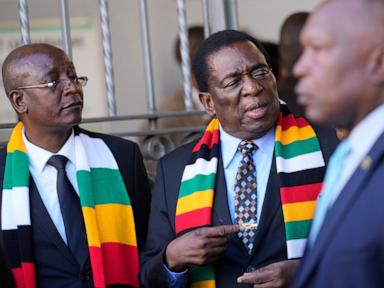
The international commentary surrounding Zimbabwe’s latest constitutional maneuvering reads like a recycled script from 2008. When the justice minister tables a bill that could theoretically allow an 83-year-old president to extend his tenure, Western media outlets trigger their mandatory panic sequence. They warn of democratic backsliding, impending economic collapse, and the consolidation of absolute power.
They are missing the entire point.
Focusing on the age of the executive or the text of a constitutional amendment treats a lagging indicator as a root cause. The obsessive fixation on whether an octogenarian stays in office ignores the structural mechanics of power in Harare. This isn't a story about one man's ego. It is a calculated stress test of institutional consensus. If you think removing or replacing the individual at the top instantly corrects the trajectory of a state built on military-bureaucratic fusion, you do not understand how African liberation movements govern.
The Illusion of the All-Powerful Executive
Mainstream analysis treats African presidencies as absolute autocracies where a single decree shifts the cosmos. I have spent years tracking constitutional crises across sub-Saharan regimes, watching foreign analysts predict immediate implosion the moment a term-limit clause is tinkered with. It rarely happens the way they predict. Why? Because they mistake the frontman for the entire orchestra.
In Zimbabwe, power does not reside entirely in the state house. It resides in the delicate, often volatile equilibrium between the ruling party’s central committee, the military high command, and the war veterans' structures.
- The Constitutional Smokescreen: Amendments are not passed to shock the system; they are floated to measure internal friction.
- The Litmus Test: By proposing an extension, the political elite forces hidden factions to reveal their positions. Who opposes it? Who hesitates? That data is far more valuable to the ruling class than the actual legislative outcome.
- The Regime Survival Mechanism: Liberation movements function through a collective survival instinct. The individual at the podium is secondary to the preservation of the party-state apparatus.
When the Western press screams about a "dictator extending his grip," they fail to see that the regime is actually managing its own internal transition. It is a controlled burn designed to prevent a wildfire.
Dismantling the People Also Ask Premise
Look at the standard questions driving the digital traffic on this topic. They are fundamentally flawed because they apply Westminster democratic assumptions to a revolutionary party framework.
Will extending the president's term ruin the economy?
The premise assumes Zimbabwe’s economic volatility is tied to constitutional timelines. It isn't. The economic architecture—characterized by currency experimentation, resource-backed loans, and sanctions evasion—runs on a track completely independent of whether an election happens in two years or five. Investors who operate in high-risk frontiers do not look at term limits; they look at contract enforcement and elite stability. A predictable regime, even an aging one, is often preferred by capital markets over a volatile democratic transition that risks civil unrest.
Why doesn't the opposition stop the amendment?
Because the opposition is playing a game of parliamentary mathematics in a system where the rules are defined by structural incumbency. The focus on legislative resistance is a waste of energy. True political shifts in Zimbabwe historically happen through internal party realignments, not parliamentary debates. The opposition’s failure isn't a lack of effort; it is their adherence to a playbook that the ruling apparatus neutralized decades ago.
The Cost of the Counter-Intuitive Approach
Let’s be brutally honest about the alternative. The conventional wisdom demands an immediate, clean transition to a younger leader to "restore confidence."
But sudden vacuums in systems built on patronage are dangerous. I have watched speculative capital flee faster during an unmanaged transition than during a prolonged autocracy. When a long-standing executive exits without a hyper-negotiated, military-backed successor, the result isn't a sudden burst of freedom. It is a factional scramble for resources.
The downside of acknowledging this reality is uncomfortable. It means accepting that stability in the short term often requires tolerating the extension of political architectures that Western liberals find abhorrent. It means admitting that the continuity of a regime, even under an aging figurehead, provides a predictable framework for basic state functions, whereas a chaotic push for immediate leadership change can yield localized collapse.
Stop Misreading the Horizon
The obsessed commentators will keep writing obituaries for Zimbabwean democracy. They will keep tracking the birth certificates of African leaders as if biology dictates political outcomes.
If you want to understand where the power actually shifts, stop reading the draft bills introduced in parliament. Stop looking at the podium. Look at the promotions within the military brigade commands. Look at the lithium mining concessions granted to foreign consortia. Look at the liquidity of the central bank.
The bill to extend a term is a distraction. The real architecture of power is being reinforced quietly, away from the cameras, while the world fights over a piece of paper.