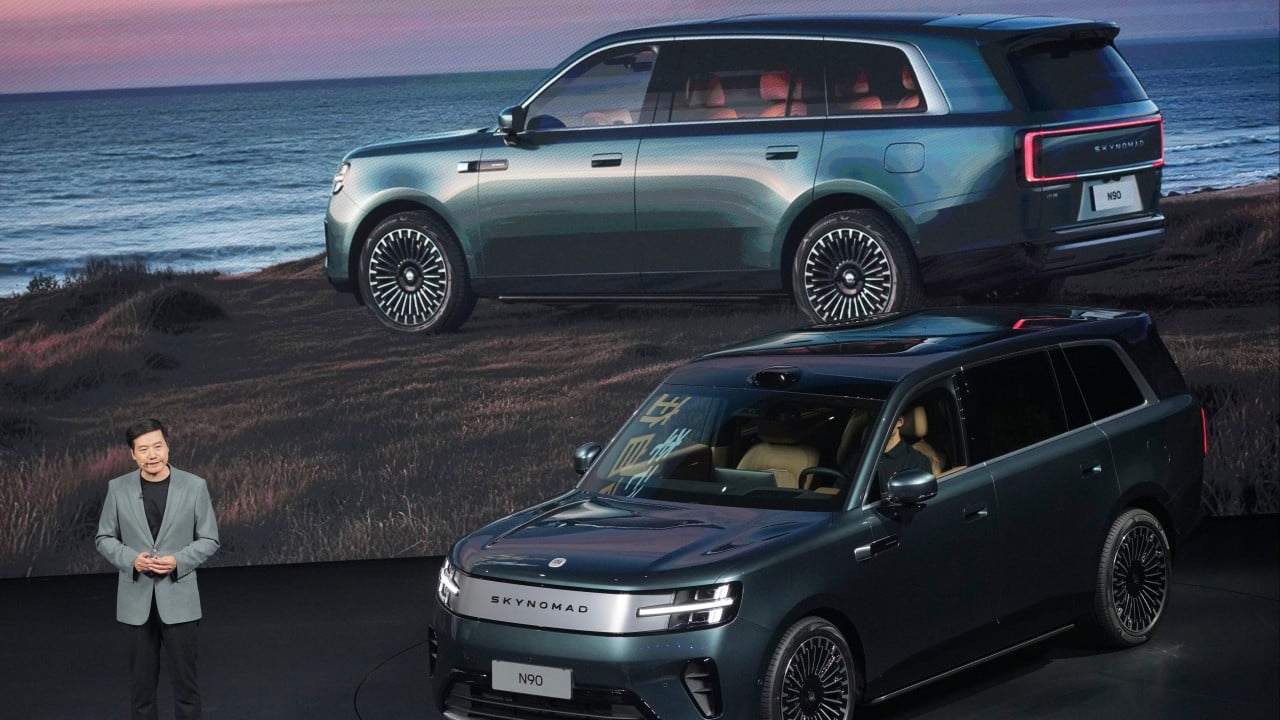
Everyone is hyperventilating over a price tag.
The lazy consensus across every tech and automotive desk right now is simple: Xiaomi built a premium electric SUV, priced it twenty-three percent lower than a Tesla Model Y, and therefore Elon Musk should start packing his bags. It is a surface-level narrative designed for quick clicks and superficial analysis. It assumes that car buying is a spreadsheet exercise where the lower number always wins.
I have watched legacy manufacturers and ambitious consumer electronics giants blow hundreds of millions of dollars chasing this exact delusion. They look at a spec sheet, compare a battery capacity, note a lower sticker price, and declare victory for the underdog.
They are missing the entire point of what makes a modern vehicle desirable.
Xiaomi did not build a Tesla killer. They built an expensive marketing stunt packaged in sheet metal, relying on a playbook that works wonderfully for smartphones but fails catastrophically when applied to two tons of rolling aluminum moving at seventy miles per hour.
The Margin Delusion
Let us look at the financial reality that the headline writers conveniently ignored. Tesla did not reach its current market position by accident or by simply burning cash to subsidize hardware. They built an integrated manufacturing ecosystem from the ground up, squeezing every penny out of supply chains, structural battery packs, and mega-casting techniques.
When a smartphone manufacturer enters the automotive space with a twenty-three percent discount out of the gate, they are not out-engineering the competition. They are subsidizing the vehicle with corporate cash reserves, treating the car as a loss-leader acquisition tool for their broader ecosystem of smart home gadgets and phones.
That works until the macro environment shifts.
Imagine a scenario where capital costs remain high, consumer demand for electric vehicles cools from its initial parabolic curve, and shareholders demand actual profitability from the automotive division rather than just delivery unit volume. A hardware business operating on razor-thin automotive margins cannot sustain heavy subsidies forever. When the subsidy dries up, the real cost of engineering, servicing, and maintaining a complex vehicle network comes due.
Tesla's advantage is not just the badge on the steering wheel. It is a vertically integrated software and manufacturing stack that allows them to absorb price wars without bleeding out. Xiaomi is playing a short-term volume game in a long-term endurance sport.
Software Is Not an App Store
The second major flaw in the prevailing narrative is the belief that because a company makes great phone interfaces, they automatically understand vehicular operating systems.
This is a dangerous category error.
Your smartphone freezes, you restart it. Your phone drops a connection, you wait five seconds. If the infotainment system in a high-performance electric SUV crashes while you are navigating a complex highway interchange at night, you do not experience a minor inconvenience. You experience a safety hazard.
Automotive software requires a level of deterministic reliability, functional safety compliance, and real-time processing guarantees that consumer electronics companies rarely master on their first or second try. Adding flashy displays, high refresh rates, and deep integration with smart home appliances does not make a car smarter. It often just creates more attack vectors for distraction and system instability.
The industry loves to talk about software-defined vehicles as if writing code for a car is identical to shipping an over-the-air update for an app. It is not. The liability profile alone changes the equation entirely. When a tech giant steps into this arena, they underestimate the sheer brutality of regulatory compliance and edge-case validation.
The Resale Value Trap
Let us talk about the consumer side of the equation, because this is where the twenty-three percent discount turns into an expensive illusion.
Who buys a premium electric vehicle? Increasingly, sophisticated buyers who care deeply about total cost of ownership, charging infrastructure reliability, and secondary market residual values.
Tesla has established a global benchmark for residual value tracking, supercharger network access, and brand ubiquity. Even with price fluctuations, a used Tesla has a known market velocity.
What happens to the resale value of a tech-brand SUV three years down the line when the manufacturer releases a completely new generation of hardware, updates their smartphone ecosystem compatibility, and moves on to the next shiny object? Consumer electronics obsolescence cycles move every twelve to twenty-five months. Automotive cycles operate on five to seven-year plateaus.
When a phone maker builds a car, they inevitably treat the vehicle like consumer hardware. They load it with bleeding-edge gadgets that date rapidly. Three years from now, a used Xiaomi SUV will not feel like a classic luxury car; it will feel like an outdated smartphone with wheels attached to it. The depreciation curve on tech-first vehicles is going to shock buyers who thought they got a bargain on day one.
The Service Desert
Hardware is easy to sell. Fixing it is where companies die.
Establishing a robust, responsive, and geographically dense service network is one of the most capital-intensive undertakings in global industry. Tesla spent over a decade building out mobile service fleets, dedicated collision centers, and proprietary service hubs.
When a consumer electronics brand scales vehicle deliveries rapidly without a matching physical service infrastructure, customer satisfaction craters. You cannot ship a broken SUV back to the warehouse in a cardboard box for a replacement unit. You need physical lifts, specialized diagnostic tools, certified high-voltage technicians, and parts availability that spans continents.
Cutting price by twenty-three percent usually means cutting something else. More often than not, the knife slices straight through the back-end support structure. The initial wave of early adopters will forgive growing pains because they love novelty. The mainstream buyers required to sustain volume will not.
Stop Asking the Wrong Questions
The media keeps asking: "Can Xiaomi beat Tesla on price?"
That is the wrong question. It completely misunderstands how brand equity, manufacturing moats, and long-term asset value work in the transport sector.
The right question is: "Can a consumer electronics company sustain heavy hardware subsidies while building a profitable, trusted, long-term automotive brand without destroying its own margins or alienating mainstream buyers when the novelty wears off?"
The history of consumer brands pivoting into heavy industry suggests a very different outcome than the tech blogs want to admit.
Do not look at the sticker price. Look at who is paying the difference when the hype fades.