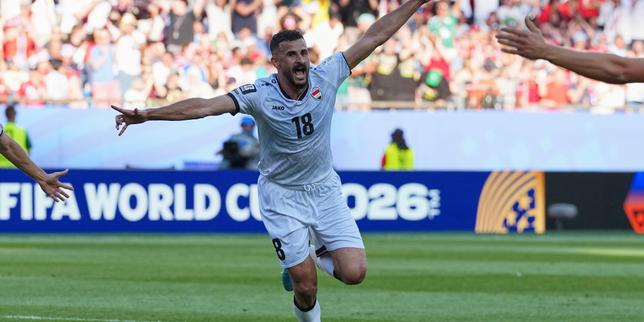
You see the 0-0 scoreline against Belgium at the Los Angeles Stadium and think it's just another gritty, defensive stalemate. You see Alireza Beiranvand making seven spectacular saves, earning his Superior Player of the Match honors, and you assume it's business as usual for a well-drilled under-dog.
It isn't. Not even close.
While the soccer world watches the pitch, the real drama surrounding Iran's challenges at World Cup operations is unfolding in airport customs lines, cross-border bus rides, and hotel lobbies. Team Melli is currently surviving the most logistically hostile tournament campaign in modern sports history. They aren't just fighting for points in Group G. They're fighting an uphill battle against visa bans, exhaustion, and geopolitics.
The Logistics Nightmare Outside the Ninety Minutes
Most World Cup squads travel with roughly 120 people, including specialized medical staff, analysts, and recovery experts. Iran? The U.S. government capped their travel delegation at just 53 people.
U.S. Homeland Security official Markwayne Mullin publicly claimed that the individuals denied visas had direct ties to the Islamic Revolutionary Guard Corps (IRGC). The Iranian Football Federation bit back immediately, calling the allegations an outright lie designed to mask discriminatory restrictions.
What this means for the players is brutal. They are severely short-staffed. The standard luxury infrastructure that elite athletes rely on to recover during a grueling tournament simply isn't there.
It gets worse. After their opening 2-2 draw with New Zealand, coach Amir Ghalenoei and his team expected to spend the night in California to sleep and undergo medical reviews. Instead, local authorities ordered the team to leave the United States immediately after the final whistle.
Iran's Brutal Group Stage Commute:
Tijuana Training Base <---> Los Angeles Stadium (140 Miles)
Includes: Intensive border checks, security screening, immediate post-game eviction.
They had to board a flight back to their makeshift training camp in Tijuana, Mexico, just hours after running themselves into the ground. Captain Mehdi Taremi revealed the team endured five hours of travel and security checks just to make the short trip from Mexico to Los Angeles before the match.
Imagine sprinting for 90 minutes against Romelu Lukaku and Kevin De Bruyne, suffering from severe muscle cramps, and then being forced straight onto a bus to cross an international border instead of hitting a cold plunge. Ghalenoei didn't mince words. He called his squad the most oppressed team in the World Cup. It's hard to argue with him.
When the Terraces Turn Into a Political Arena
Playing in Los Angeles—often called "Tehrangeles" due to its massive Iranian diaspora community—was always going to be an emotional powder keg. The stands during the Belgium game reflected a deeply fractured identity.
Outside the arena, hundreds of demonstrators gathered to voice their anger against the regime in Tehran. Inside, the historical pre-revolutionary lion-and-sun flags were just as prominent as the official national flag. The official banner was even snatched from a fan and trampled outside the gates.
For the players on the field, the noise is a double-edged sword. Some fans inside the stadium actively booed the national anthem, viewing the players as symbols of the government. Others, like local resident Shamira Ghaemmaghami, argued that sports should unite people and that these athletes worked their entire lives to get here.
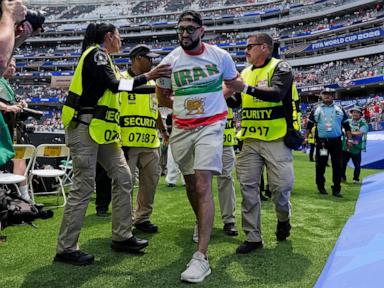
Taremi has tried desperately to keep the focus on soccer, pleading for unity among Iranians both inside and outside the country. But when security guards are detaining pitch-invaders in pre-revolutionary shirts and ambulances are carting away fans after post-match scuffles, staying neutral is practically impossible.
How the Chaos is Fueling Defiance on the Pitch
Despite the lack of sleep and the bare-bones support staff, Iran is executing a masterclass in tactical discipline. Against Belgium, they held only 32% of the possession. They allowed 22 shots. Yet, they walked away with a valuable point.
Beiranvand's reflex stop against Maxim De Cuyper from point-blank range kept them alive. Up front, Taremi was a constant nuisance. He actually put the ball in the back of the net in the 25th minute off a brilliant free-kick routine from Ehsan Hajsafi, only for VAR to rule it offside. Later, in the 66th minute, Taremi's sharp anticipation forced young Belgian defender Nathan Ngoy into a catastrophic error, earning Ngoy a straight red card.
Iran couldn't quite find the winner against 10-man Belgium, but their performance proved they can block out the external noise when the whistle blows. They now sit on two points from two matches, with everything left to play for.
The Path to the Knockouts Under Extreme Duress
Next up is a decisive journey to Seattle to face Egypt on June 28. If you want to see how this operational chaos impacts their actual tournament life, look at the physical toll. Ghalenoei has already had to make multiple substitutions due to severe cramping rather than tactical adjustments.
To pull off an historic advancement out of Group G, the Iranian coaching staff must focus immediately on improvised recovery protocols within their Mexico base. Every hour spent at the border check points is an hour lost to muscle repair.
Watch the opening 15 minutes of the Egypt match closely. If Team Melli looks heavy-legged or struggles to keep up with transitional play, it won't be a failure of talent or desire. It will be the direct consequence of a tournament environment that has forced them to play on a completely different, uneven field.