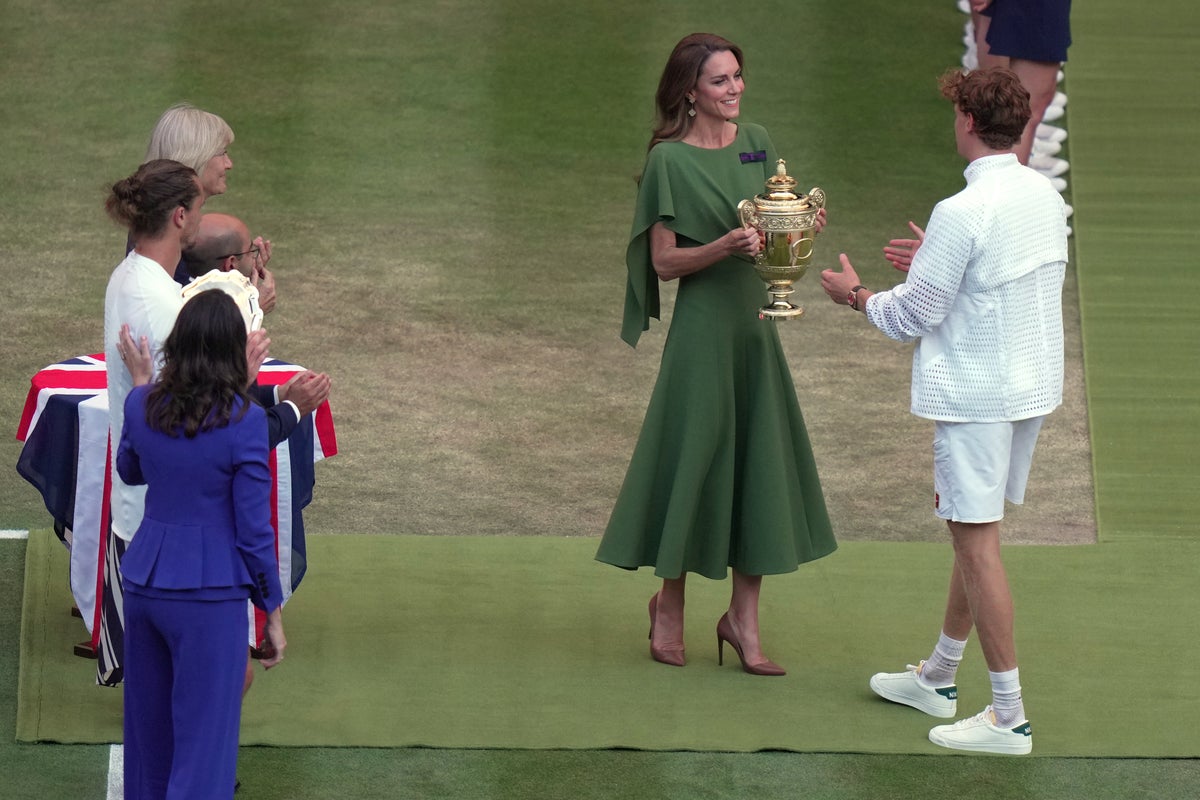
The tennis world collectively swooned when the cameras caught the Prince and Princess of Wales exchanging pleasantries with Jannik Sinner after his triumphs on the grass. The establishment media immediately went to work, churning out predictable fluff pieces about "royal validation," "passing the torch," and the "timeless dignity" of the All England Club. It is a tired, decades-old script written by traditional PR firms to maintain a hierarchy that no longer serves the modern athlete.
The lazy consensus says a royal nod elevates a tennis player from a mere sports star to a cultural icon. That is a myth.
The reality is entirely transactional, and the math favors the palace, not the player. When a young champion stands in the clubhouse corridors waiting for a handshake, they are not being elevated. They are lending their hard-earned, authentic cultural currency to a centuries-old institution desperate to remain relevant to a generation that does not care about crowns. It is time for elite athletes to stop playing the role of grateful subjects and start realizing they are the ones holding all the leverage.
The Royal Subsidization of Legacy Institutions
Let us break down the actual economics of attention in modern sports.
Elite tennis operates on a global, decentralized, digital scale. A champion like Sinner commands an audience built on raw athletic merit, YouTube highlights, TikTok edits, and direct-to-consumer digital engagement. The traditional gatekeepers do not manufacture this stardom anymore; they merely attempt to tax it.
When the royal family appears in the exclusive enclosures of SW19, they are seeking a highly specific commodity: unscripted, merit-based relevance. The crown cannot buy a grueling five-set victory. It cannot simulate the genuine drama of a tiebreak. By embedding themselves into the post-match narrative, the royals absorb the reflected glow of peak human achievement.
The Attention Arbitrage: The athlete trades a moment of peak global attention—where their personal brand is at its absolute zenith—for a polite nod from an institution whose reach is localized and structurally declining among younger demographics.
I have watched sports agencies advise clients for over a decade to bow, scrape, and wait in line for these photo ops. The justification is always the same: “It establishes you as a household name.” Nonsense. Winning the tournament makes you a household name. The handshake is just free content for the royal social media feeds.
The Myth of the "Wimbledon Bump"
Look at the data behind athlete marketability. The value of a modern sports star lies in authenticity and global appeal.
The standard PR playbook argues that royal association unlocks high-net-worth endorsements—luxury watches, high-end fashion, heritage automotive brands. But a look at the actual sponsorship landscape reveals a completely different mechanism. Brands like Gucci, Rolex, and Nike do not sign athletes because they stood in a line for a princess. They sign them because of their performance metrics, their demographic reach, and their digital engagement rates.
Consider the following breakdown of what actually drives an athlete's valuation versus what the traditional media fixates on:
| Driver of Athlete Value | Real Impact on Valuation | The Media Perception |
|---|---|---|
| Grand Slam Titles | Exponential increase in baseline contract guarantees | Expected, but secondary to "charm" |
| Social Media Engagement | Direct correlation with shoe and apparel sales | Dismissed as vanity metrics |
| On-Court Persona | Drives global fan clubs and merchandise | Often policed by traditionalists |
| Royal Photo Ops | Zero measurable impact on global contract renewals | Treated as the pinnacle of achievement |
The downside of this obsession with establishment approval is subtle but damaging. It sanitizes the athlete. It strips away the raw, competitive edge that makes modern sports compelling in the first place. By forcing athletes into a mold of mid-century British decorum, the sport alienates the very audience it needs to attract: young, global fans who value disruption over deference.
Dismantling the Deference Culture
Why do athletes continue to participate in this lopsided exchange? Because the tennis ecosystem is built on a culture of inherited deference.
From the strict white clothing requirements to the archaic scheduling quirks, Wimbledon functions as a machine designed to make the individual player feel small in comparison to the event. The message is clear: The tournament made you, not the other way around.
This is a structural lie. Without the players—without the grueling hours of training, the torn ligaments, the mental grit required to survive a fortnight of grand slam tennis—the All England Club is just an expensive patch of grass in South London. The players provide the entirety of the value.
The argument often raised against this stance is obvious: “It is about tradition and showing respect for the history of the game.” Let us be completely honest. Respecting the history of the game means honoring the players who broke barriers, changed the strategic framework of the sport, and pushed human performance to its limits. It does not mean participating in a PR exercise designed to validate a political institution that has nothing to do with athletic excellence.
There is an inherent risk in rejecting the establishment. The British press is notoriously vindictive toward athletes who refuse to play the game. They will label you arrogant, difficult, or ungrateful. But the modern sports landscape is no longer controlled by a handful of fleet street columnists. A global superstar answers to a global audience.
The Blueprint for the Modern Champion
If an athlete wants to maximize their cultural impact and retain total ownership of their brand, the strategy needs to shift from compliance to leverage.
Stop playing by the rules of 1950s public relations. If the establishment wants access to the cultural power of elite athletes, make them earn it on modern terms.
- Own the Narrative: Do not wait for a curated palace photograph to fill the news cycle. Control the post-match space via your own media channels, focusing on the team, the tactical battle, and the raw emotion of the win.
- Prioritize Global Reach Over Local Prestige: A handshake at SW19 moves the needle in a very specific, shrinking demographic. Focus your energy on platforms and partnerships that resonate across Asia, the Americas, and digital-native communities worldwide.
- Demand Reciprocity: If legacy institutions want the star power of the world's best tennis players to validate their events, the players should demand structural changes—better profit sharing, modernized facilities, and an end to the archaic rules that limit player expression.
The next generation of champions must realize that the power dynamic has fundamentally shifted. The crown needs the racket far more than the racket needs the crown. Stop bowing to the past when you are the ones writing the future. Deliver the performance, collect the trophy, and leave the palace PR team wondering why their phone calls are no longer being returned.