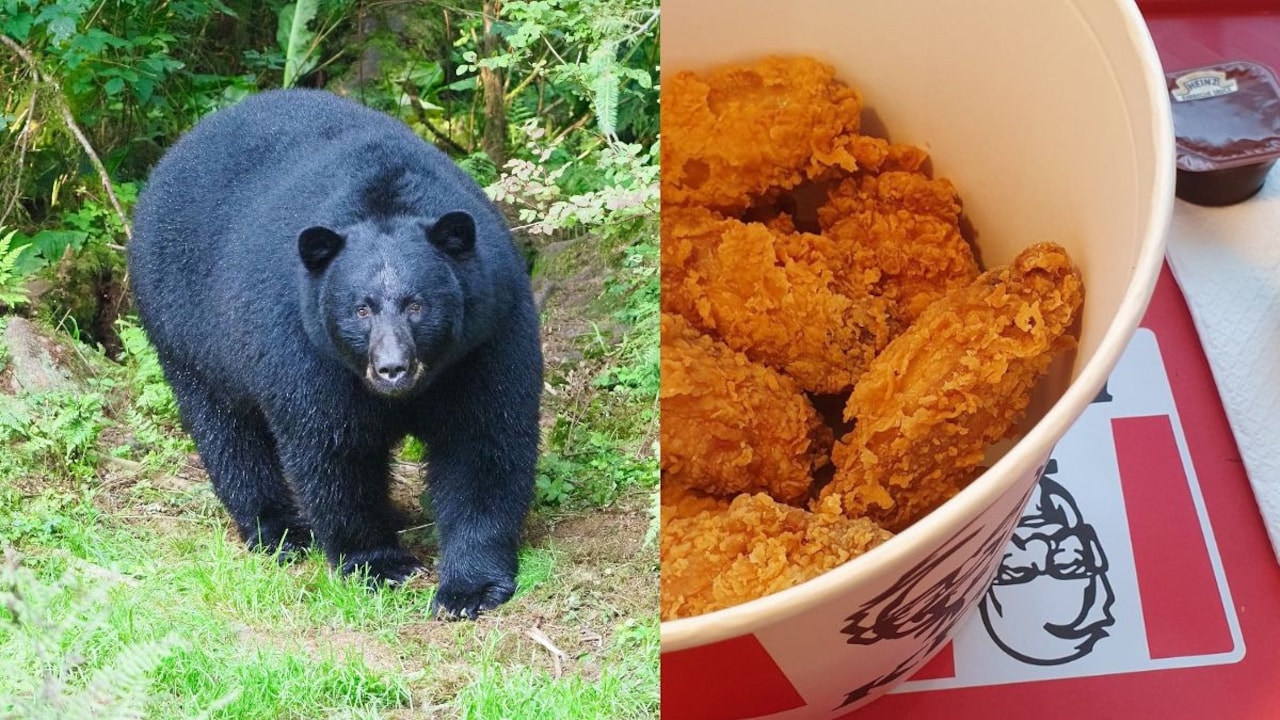
Residential food security breaches involving apex wildlife are typically evaluated through the lens of anomalous local events rather than systemic environmental management failures. When an ursine intruder breached a Kentucky residence to consume leftover commercial poultry, public commentary defaulted to sensationalism. This singular incident provides a valuable operational case study for examining the intersection of residential perimeter defense, wildlife behavioral economics, and municipal waste management strategies.
Understanding this event requires shifting away from anecdotal reporting and toward a structured framework that maps human-wildlife conflict vectors. Urban expansion into traditional wildlife corridors creates predictable pressure points. Animals operating under high caloric expenditure optimization will continually test anthropogenic barriers if the reward function—in this case, dense, high-lipid fast food—exceeds the energy expenditure and perceived risk of the breach.
The Economic Model of Ursine Foraging Strategy
Wildlife foraging behavior is governed by optimal foraging theory, an ecological model that predicts how an animal behaves when searching for food. Every calorie consumed must be weighed against the calories expended in acquisition and the environmental risk incurred.
Residential zones present an artificial, highly concentrated caloric yield that completely disrupts natural foraging curves. A standard commercial fast-food meal contains significant concentrations of lipids, sodium, and proteins packaged in containers that retain intense olfactory markers. For a black bear with a sense of smell capable of detecting volatile organic compounds over great distances, a paper and cardboard container holding residual poultry grease acts as a high-value signal.
The barrier friction encountered by the animal consists of three distinct phases:
- Olfactory detection of the target resource across an extended perimeter.
- Physical penetration of the building envelope, usually targeting weak structural points like screened windows, poorly latched exterior doors, or compromised garage access.
- Resource extraction and consumption followed by egress before human intervention occurs.
When the reward magnitude is extreme—such as cooked, processed fats and proteins—the threshold for enduring physical barriers drops significantly. Standard residential construction materials, including vinyl siding, aluminum screens, and hollow-core wooden doors, fail to provide adequate mechanical resistance against an animal driven by high-incentive caloric targets.
Perimeter Vulnerability and Structural Failure Modes
Residential architecture in suburban and rural fringes is rarely engineered to withstand incursions by large mammalian wildlife. The physical breach of the Kentucky residence highlights specific structural failure modes that recur across similar incidents nationwide.
Exterior doors equipped with standard residential deadbolts and latch guards frequently fail when subjected to lateral static loads exceeding standard human entry force. Bears utilize claws and immense shoulder power to compromise jambs rather than locks. Windows present an even lower threshold of resistance; standard single-pane or double-hung windows with basic latches offer negligible resistance to a sustained push or strike.
Furthermore, waste management practices directly dictate perimeter pressure. Storing leftover food in non-secure packaging inside standard kitchen receptacles creates an internal olfactory beacon. If a residence fails to utilize certified wildlife-resistant containers or fails to isolate food waste in airtight receptacles prior to disposal, the structural envelope of the home becomes secondary to the internal scent plume escaping through passive ventilation, exhaust fans, and minor envelope gaps.
The remediation of these vulnerabilities requires a shift in architectural standards for properties situated within the wildlife urban interface. Homeowners must treat perimeter defense not merely as a matter of property security against human intrusion, but as a biological exclusion problem requiring reinforced materials, heavy-duty latching mechanisms, and strict internal odor containment protocols.
Municipal Waste Logistics and Corridor Management
Individual residential breaches are downstream symptoms of broader systemic failures in municipal waste logistics and wildlife corridor management. When wild populations experience resource compression in natural habitats due to seasonal shifts, habitat fragmentation, or overpopulation, they naturally expand their search radii into human-dominated landscapes.
Municipalities often treat wildlife incursions as reactive enforcement issues—dispatching wildlife officers or issuing warnings after an incident occurs—rather than proactive infrastructure challenges. A resilient municipal framework requires the implementation of several systemic controls:
- Mandatory deployment of certified bear-resistant commercial waste containers across all properties within designated high-risk zones.
- Strict temporal enforcement of waste placement schedules to minimize the duration that high-odor attractants sit curbside.
- Ecological zoning policies that limit residential development directly adjacent to primary wildlife transit corridors or mandate physical buffer zones such as heavy-duty exclusion fencing.
Without these macro-level interventions, individual homeowners are left in an asymmetric defensive posture. No amount of residential hardening will completely neutralize the threat if municipal-level attractants continue to draw high densities of wildlife into residential neighborhoods on a nightly basis.
Operational Protocol for High-Risk Residential Zones
Mitigating the recurrence of such incidents demands a rigorous, multi-tiered operational protocol for property owners located in high-risk zones. Reliance on casual deterrents such as motion-activated lights or standard domestic animal fencing yields statistically negligible long-term results once an animal has successfully mapped a high-calorie food source to a specific structure.
The immediate priority is the complete elimination of internal and external olfactory gradients. Leftover food must be treated as hazardous material requiring immediate chemical neutralization or secure thermal containment prior to disposal. Structural hardening must transition from cosmetic security to heavy-duty impact resistance, incorporating steel-reinforced door frames, laminated security glass, and automated mechanical locks that engage immediately upon closure.
Municipalities and residents must abandon the paradigm that wildlife intrusions are random anomalies. They are predictable, quantifiable outcomes of economic optimization by wildlife responding to high-value anthropogenic attractants within poorly buffered interfaces. The ultimate metric of success is the systematic reduction of the reward-to-risk ratio for urban wildlife, achieved exclusively through rigorous perimeter engineering and uncompromising waste containment discipline.


