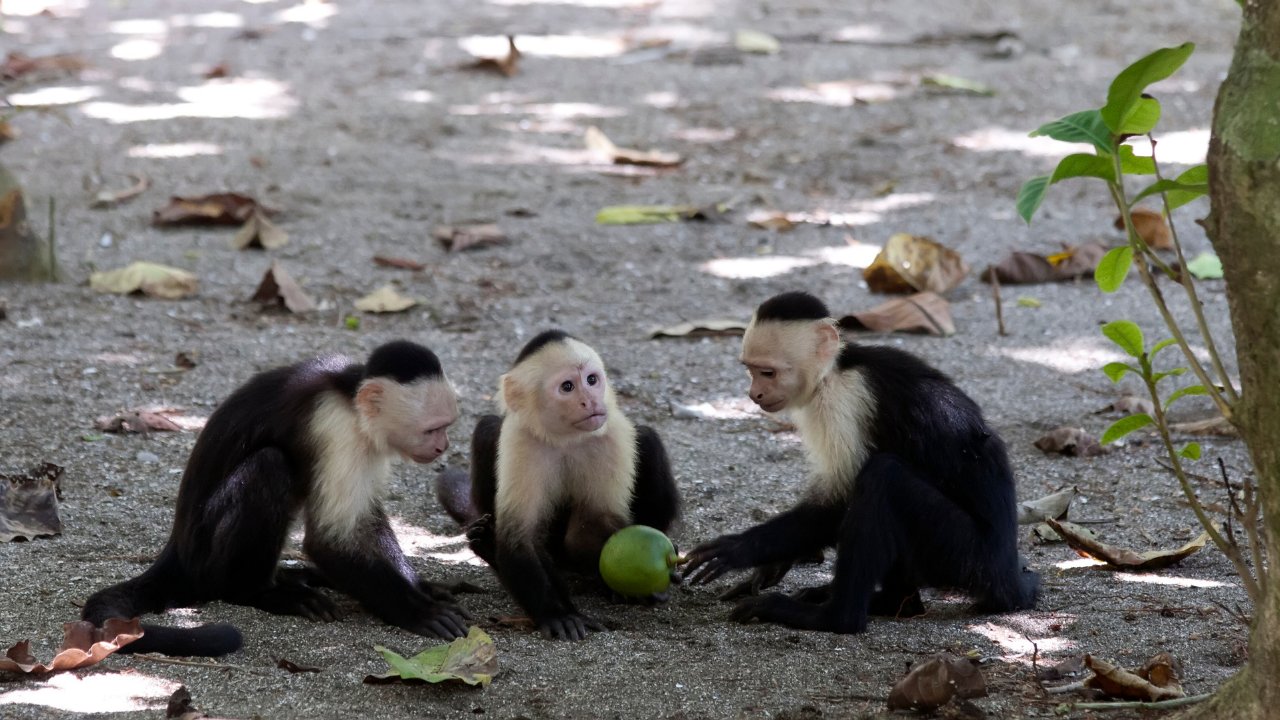
Primatologists have long debated what drives flexible foraging strategies in wild primates, and a landmark long-term study gives us a remarkably clear answer. When primary food sources vanish, smart animals adapt. For white-faced capuchin monkeys, surviving a dry season or a lean patch means shifting focus from sweet pulp to vertebrate prey.
That behavioral shift isn't just a minor dietary tweak. It changes ecological pressures across entire forest floors. For a different perspective, see: this related article.
For nearly four years—specifically 45 months of intensive observation—researchers tracked capuchin troops to see how their hunting habits changed alongside seasonal food availability. The findings completely upend the old assumption that primates hunt purely for recreation or as a rare dietary bonus. Instead, meat becomes a critical fallback food.
The Reality of Primate Resource Crunch
Fruit scarcity hits tropical forest dwellers hard. When trees drop fewer figs and berries, energy budgets tighten rapidly. Capuchins face a stark choice: spend more hours searching for scarce vegetation or switch tactics. Further analysis on the subject has been shared by Nature.
Meat offers a dense packet of protein and fat. Catching a lizard, a bird, or a rodent takes explosive energy, but the payoff keeps the animal going when plant sugars dry up.
Most field studies capture only short snapshots of animal behavior. They might look at a single dry season and draw broad conclusions. That approach misses the nuance of multi-year cycles. The 45-month window allowed biologists to watch groups transition repeatedly between abundance and scarcity.
You see distinct behavioral ripples through the troop during these lean months. Dominant males often secure the largest protein shares, but juveniles learn fast. They watch, they try their luck with small frogs or insects, and they pick up the complex mechanics of tree-cavity probing.
How Capuchins Hunt With Purpose
Hunting small vertebrates takes serious cognitive power. These monkeys don't just wander around hoping to stumble onto a meal. They systematically dismantle rotten logs, peer into crevices, and coordinate movements.
Let's look at the mechanics of what happens when fruit drops below baseline thresholds.
- Tree Cavity Probing: Monkeys use fingers and specialized sticks to flush out resting frogs or lizards.
- Canopy Sweeps: Troops move faster and wider through the upper layers, scanning bark and leaf clusters for hidden prey.
- Cooperative Flushing: While capuchins aren't pack hunters like wolves, individuals often position themselves to block escape routes for fleeing prey.
The transition happens almost automatically once fruit yields drop past a certain percentage. It's a calculated energy trade-off. Chasing a squirrel burns calories, but a successful capture yields far more energy than hours of picking through bare branches.
What This Tells Us About Primate Evolution
Behavioral flexibility separates species that survive habitat fragmentation from those that quietly vanish. Capuchins thrive across Central and South America precisely because they refuse to be picky eaters.
When human encroachment shrinks forest patches, fruit-bearing trees often disappear first. Watching how these monkeys pivot toward vertebrate hunting gives conservationists a window into evolutionary resilience. They aren't helpless victims of environmental shifts. They are active problem-solvers.
Of course, increased predation puts pressure on local populations of small vertebrates, too. Lizards, nesting birds, and small rodents experience heavy localized spikes in mortality when a hungry capuchin troop moves through their territory. Nature operates as a web of shifting pressures, and pulling on one string alters the entire structure.
Applying Behavioral Insights to Conservation
We need to stop viewing wildlife reserves as static postcard scenes. Animals change their habits based on seasonal stress, climate shifts, and food availability. Protecting a primate population means protecting the entire ecosystem they rely on, including the small prey species that sustain them through lean months.
If you study wildlife management or support habitat preservation, keep this dynamic in mind. Saving a few fruit trees isn't enough. The complex behavioral toolkit of a wild animal depends on a rich, messy landscape full of diverse resources.
Track the changes over years, not months. The real story of survival always happens in the margins when the easy food is gone.