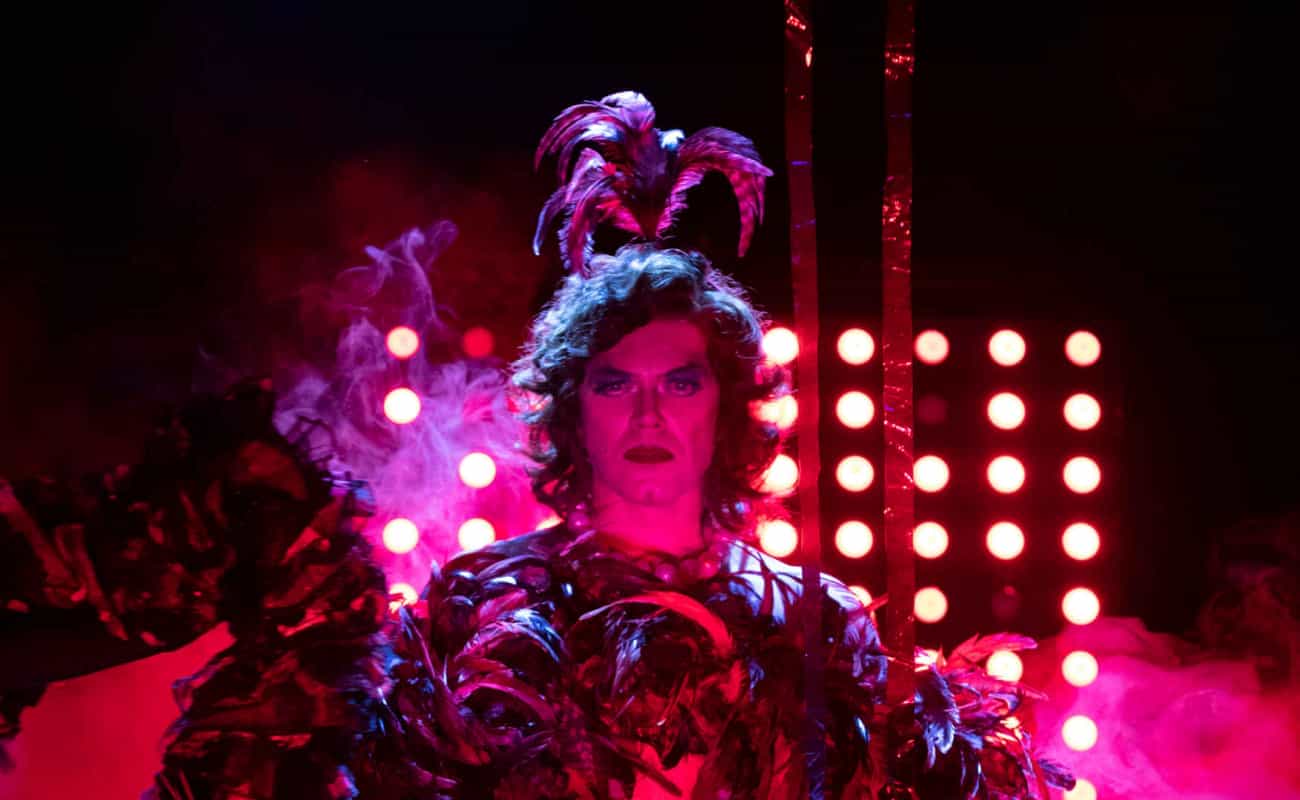
You’re sitting in a darkened theater. The velvet curtains haven't even parted yet. Suddenly, some guy in the third row screams, "Where's your neck, lips?" at the screen. To a total newcomer, this looks like a mental breakdown or a very specific type of harassment. But if you’ve been around the block, you know exactly what’s happening. You’re witnessing the Rocky Horror audience script in its natural, chaotic habitat. It’s not just a movie. It’s a decades-long conversation between a screen and a crowd that refuses to be quiet.
The 1975 film The Rocky Horror Picture Show actually flopped when it first hit theaters. Hard. It wasn't until it moved to the midnight circuit at the Waverly Theatre in New York that things got weird in the best way possible. People started talking back. They started throwing toast. They turned a mediocre-performing musical into a living, breathing organism. Honestly, if you watch the movie at home alone without the callbacks, it’s a completely different (and much quieter) experience.
The Birth of the Callbacks
Where did all these insults come from? It wasn't a marketing department. There was no "official" script handed out by 20th Century Fox in the seventies. It started with Louis Farese Jr., a teacher from Staten Island who is widely credited with the first recorded callback. He yelled at the screen during a rainy scene, and the rest is history. From there, it snowballed. Local "shadow casts"—groups of performers who act out the movie in front of the screen—began codifying these jokes.
The beauty of the Rocky Horror audience script is that it’s never actually finished. It’s a "living" document. While the "classic" lines like "Asshole!" for Brad and "Slut!" for Janet are universal, every city adds its own flavor. If you go to a screening in London, the jokes hit differently than they do in a basement theater in Chicago. It’s a weird mix of tradition and improv.
Why the Script Changes (And Why It Stays the Same)
Tradition matters. You can't just go in and yell whatever you want. Well, you can, but if it isn't funny, the "regulars" will let you know. The core of the script relies on timing. You have to find the "dead air" between the actors' lines. If you step on a line of dialogue, you're ruining the flow.
Wait.
There’s a specific rhythm to it. For example, when the Criminologist (the narrator) starts talking, the audience usually shouts, "No neck!" because, well, the actor Charles Gray famously appears to have no neck in certain shots. It’s a meta-joke that has survived for fifty years. But modern scripts now include references to current events, TikTok trends, or local politics. It’s how the community keeps a 1975 film relevant in 2026.
Essential Props and Their Cues
You can't talk about the script without talking about the props. They are the physical manifestation of the dialogue. It's basically 4D cinema before 4D cinema was a thing.
- Rice: You toss it during the wedding scene at the beginning. Just be careful not to hit the shadow cast in the eyes. It’s a mess to clean up.
- Water Pistols: Used by the audience to simulate the rainstorm Brad and Janet get stuck in. This is why experienced fans bring newspapers—to cover their heads.
- Newspapers: See above. Also, Janet covers her head with one, so you're basically "in" the movie.
- Flashlights or Glowsticks: Used during the "There’s a Light" sequence. In the old days, people used lighters, but fire marshals generally frown upon that now.
- Rubber Gloves: During the creation speech, Frank-N-Furter snaps his surgical gloves. The audience does the same. The sound of three hundred people snapping latex at once is oddly satisfying.
- Noisemakers: Used at the end of the creation speech to celebrate Rocky’s "birth."
- Confetti: Tossed at the end of the "Charles Atlas Song" reprise.
- Toast: This is the big one. When Frank proposes a toast at dinner, you throw unbuttered toast into the air.
- Party Hats: Put yours on when Frank puts his on during the dinner scene.
- Bell: Ring it when Frank sings "Did you hear a bell ring?" in "Planet Schmanet Janet."
- Cards: During "I'm Going Home," Frank sings "Cards for sorrow, cards for pain." You throw cards.
The Unwritten Rules of Participation
Don’t be that person. You know, the one who tries to lead the entire theater or screams over the best songs. The Rocky Horror audience script is a collective effort, not a solo performance.
First, if you're a "virgin" (the community term for someone seeing it in a theater for the first time), just listen. Soak it in. You don't need to know every line of the script to have fun. Most theaters will have a pre-show ritual for virgins—usually involves a lipstick "V" on the forehead and some light-hearted embarrassment on stage. It's a rite of passage.
Second, safety is actually a thing. Most modern theaters have banned rice and hot dogs (yes, people used to throw hot dogs during the "hot dog" line). They usually sell "prop bags" at the door. Buy one. It supports the local cast and ensures you aren't bringing in anything that will permanently damage the screen or the velvet seats.
Third, the script is often vulgar. Very vulgar. If you’re easily offended by sexual humor, crude insults, or gender-bending themes, you’re in the wrong place. The script is designed to be transgressive. It’s a celebration of the "other."
Breaking Down the Key Callbacks
Let's look at a few specific moments where the Rocky Horror audience script really shines. These are the beats that every shadow cast expects the audience to hit.
The "Brad and Janet" Dynamic
Every single time Brad Majors (Barry Bostwick) is mentioned or appears on screen, the audience yells "Asshole!" Every time Janet Weiss (Susan Sarandon) is mentioned, the audience yells "Slut!" It sounds harsh, but in the context of the film’s exploration of repressed 1950s morality vs. 1970s liberation, it’s a subversion of those labels. It's become so standard that Barry Bostwick often signs autographs with "Asshole" and Susan Sarandon has embraced the "Slut" moniker in the context of the fandom.
The Criminologist's Lack of Anatomy
As mentioned, the Narrator is a prime target. Beyond the "No neck!" shouts, there are complex back-and-forths. Narrator: "I would like, if I may, to take you on a strange journey." Audience: "How strange was it?" This "How [Adjective] was it?" trope is a staple of Vaudeville comedy, and it fits perfectly here.
The Dinner Scene
This is arguably the peak of the script. It’s quiet, tense, and full of long pauses—perfect for audience interjection. When Frank-N-Furter reveals the "meat" they are eating is actually Eddie (Meat Loaf), the callbacks reach a fever pitch. There are jokes about "Eddie-bles" and puns that would make a dad-joke enthusiast cringe.
The Evolution of the Script in the Digital Age
You can find the "official" Rocky Horror audience script on websites like Cosmo’s Factory or various fan forums. But reading it on a PDF is like reading the lyrics to a song without hearing the music. You miss the energy.
In the 2020s, the script has had to navigate a changing cultural landscape. Some of the older, more "edgy" lines from the 70s and 80s have been swapped out for jokes that reflect modern sensibilities, while others remain as a sort of time capsule. The fandom is fiercely protective of its "safe space" for LGBTQ+ individuals and misfits of all stripes. The script isn't just about being loud; it's about claiming the space.
Interestingly, the script has also leaked into other media. You see the influence in The Perks of Being a Wallflower, where the characters find their identity through the Rocky Horror shadow cast. It’s a testament to the fact that the "script" is actually a community bond.
How to Prepare for Your Next Screening
If you want to be more than just a spectator, you've got to do a little homework. But not too much. Over-rehearsing makes it feel fake.
- Watch the movie once at home. Just once. Understand the plot (what little there is) so you aren't confused when people start screaming.
- Learn the Time Warp. It’s literally an instruction manual. "Jump to the left," "Step to the right." If you mess this up, you're on your own.
- Buy the prop bag. Don't try to sneak in a bag of Minute Rice. It’s a pain to clean, and theaters have actually shut down Rocky screenings because of the cleaning costs.
- Listen to the room. Every theater has a "lead" caller—usually someone who has been coming for twenty years and has a voice like a foghorn. Follow their lead.
- Don't be a jerk. There’s a difference between a witty callback and just being loud and annoying. If people around you are cringing (and not in the "good" way), dial it back.
The Rocky Horror audience script is a weird, beautiful, vulgar piece of Americana. It’s proof that art doesn't have to be a one-way street. It’s a reminder that sometimes, the best way to enjoy a movie is to talk all the way through it.
Actionable Next Steps for Fans
- Find a local shadow cast: Use sites like the official Rocky Horror fan site to find a theater near you that hosts midnight screenings. This is the only way to experience the script authentically.
- Study the "Dead Air": Watch a clip of the dinner scene on YouTube and try to identify the pauses where a joke might fit. It’s great practice for timing.
- Support the cast: These performers are almost always volunteers. If they have a tip jar or sell merch, throw a few bucks their way to keep the tradition alive.
- Bring a friend: The best way to learn the script is to have someone to laugh with when you inevitably miss a cue.
The script isn't just words; it's the heartbeat of the cult film phenomenon. Without the audience talking back, Frank-N-Furter is just a guy in a corset. With the script, he’s a legend. Get out there, get loud, and don't forget your toast.