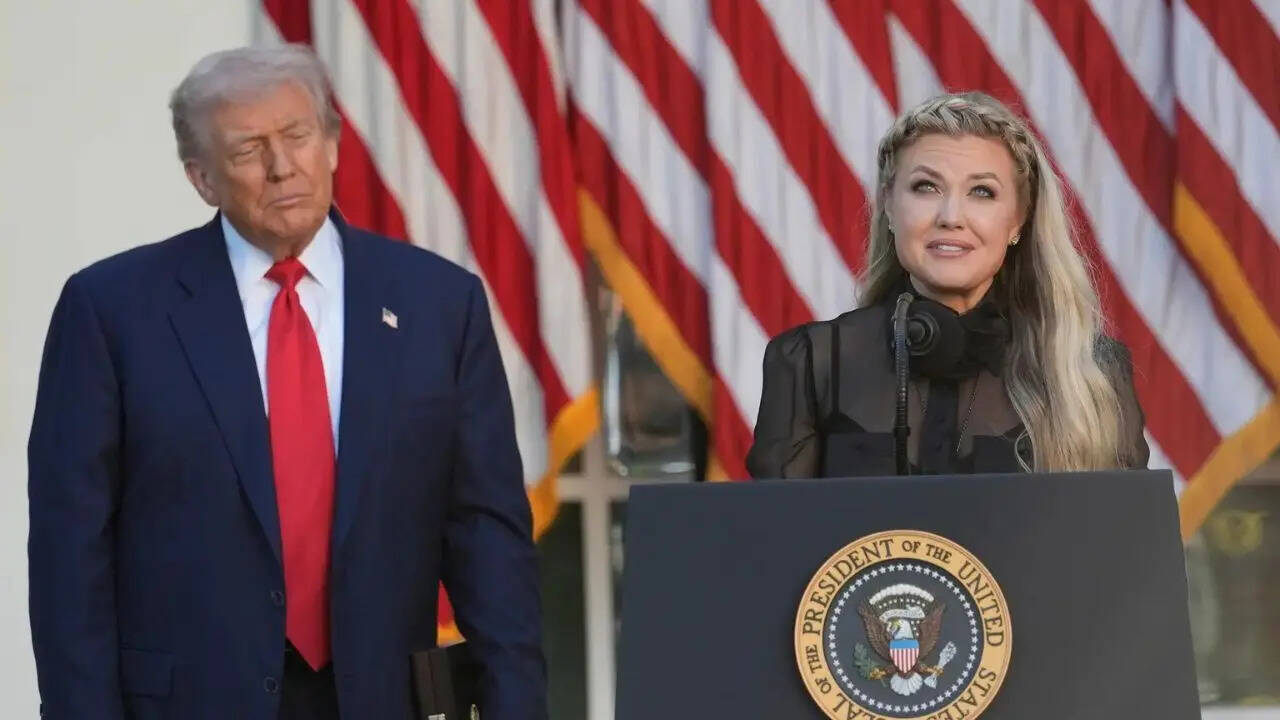
Erika Kirk is wrong, but not for the reasons the blue-checks on X want to believe. Her viral takedown of the White House Correspondents’ Association (WHCA) dinner—claiming that journalists are "hypocrites" for breaking bread with a man they’ve labeled a threat to democracy—is a shallow reading of power dynamics. It assumes that the dinner is a social event. It isn’t. It’s a trade show for access, and Kirk’s critique ignores the brutal, transactional reality of political survival.
The "lazy consensus" here is that if you believe someone is a "Nazi" or a "Hitler-esque" figure, you must boycott them. That is the logic of an activist, not a strategist. In the beltway, proximity is the only currency that doesn't deflate. To walk away from the table isn't taking a moral stand; it's a voluntary lobotomy of your own influence.
The Myth of the Moral High Ground
The outrage machine loves a purity test. Kirk’s argument suggests that journalists should stay home to prove their integrity. This is a fundamental misunderstanding of the Fourth Estate’s function. If a reporter truly believes the executive branch is veering toward autocracy, the worst possible move is to retreat into a silo of righteous silence.
Journalism is not a cheering section; it is a contact sport. You do not win by refusing to enter the stadium. I’ve watched newsrooms burn through credibility because they prioritized "vibes" over presence. When you vacate the room, you don't leave a hole—you leave a vacuum that someone far less scrupulous will fill.
Access Is Not Approval
Let’s dismantle the term "hypocrisy." Kirk uses it as a blunt instrument. She sees journalists laughing in the same room as the targets of their vitriol and screams "fake."
In reality, the WHCD is a pressure cooker. It is the one night where the people who write the scripts and the people who live them are forced to stare each other down without a teleprompter between them.
- The Psychological Edge: There is a tactical advantage to looking your "enemy" in the eye. It humanizes the stakes and clarifies the intent.
- The Information Pipeline: The best tips don't come from formal briefings; they come from a 30-second interaction at a pre-party where a disgruntled staffer lets a detail slip.
- The Deterrence Factor: A press corps that disappears is a press corps that can be ignored. A press corps that shows up in force, tuxedo-clad and armed with notebooks, reminds the administration that they are being watched.
To call this hypocrisy is like calling a defense attorney a hypocrite for shaking hands with a prosecutor. It’s the ritual of the adversarial system. Without the ritual, the system collapses into raw, unchecked tribalism.
The Trump Paradox
The critique specifically targets the rhetoric surrounding Donald Trump. If the media labels him a "threat to the Republic," why share a meal?
Because the "threat" doesn't disappear if you stop eating the rubber chicken.
Imagine a scenario where the entire DC press corps boycotted the dinner in 2016 or 2024. Would the rhetoric change? No. Would the "threat" diminish? No. You would simply have a president-elect or incumbent with zero tether to the mainstream information ecosystem.
The contrarian truth is that the "Hitler" comparisons make the dinner more necessary, not less. If the stakes are truly that high, you don't go home and tweet about it. You get in the room. You maintain the line of communication. You stay in the orbit of power because the moment you spin out, you lose the ability to impact the trajectory.
The Audience Is the Problem, Not the Journalists
The real failure isn't the "hypocrisy" of the reporters; it’s the voyeurism of the public. The WHCD has morphed from a trade dinner into a televised spectacle. That’s the rot.
When the cameras are off, these interactions are professional. When the cameras are on, they become "content." Kirk’s critique is a byproduct of a culture that demands performers, not professionals. She wants journalists to "act" out their outrage. She wants them to perform their hatred.
But real power doesn't perform. It negotiates.
Why We Need The Friction
The "status quo" is to view the WHCD as a cozy "nerd prom." The "contrarian" view is to see it as a frontline.
I’ve seen reporters lose their jobs because they got too close, and I’ve seen them lose their relevance because they stayed too far away. The sweet spot is the friction. You want the politician to feel uncomfortable seeing the person who broke the scandal sitting three tables away. You want the journalist to feel the weight of the person they are criticizing.
If we move to a world where we only share space with people we "approve" of, we are no longer a society; we are a collection of warring sects.
- Stop looking for consistency in politics. Consistency is for the powerless.
- Stop valuing "optics" over "outcomes." A journalist who boycotts a dinner but misses a scoop has failed their audience.
- Recognize the difference between a social club and a workspace. The Hilton ballroom is a factory floor.
The dinner isn't about friendship. It’s about the uncomfortable, messy, often disgusting necessity of coexistence in a divided state. Erika Kirk wants a world where the lines are clearly drawn and nobody crosses them. That world is a war zone.
If you want the truth, stop looking at who is laughing at the jokes and start looking at who is still in the room when the lights go down. The ones who stayed are the ones doing the work. The ones who left are just shouting at the rain.
Stop asking why they attend. Start asking what would happen if they didn't. The answer is a darkness that no "principled" boycott could ever fix.
The dinner is the last thread of a fraying social contract. You don't cut the thread because you don't like the color of the fabric. You hold on until your fingers bleed.