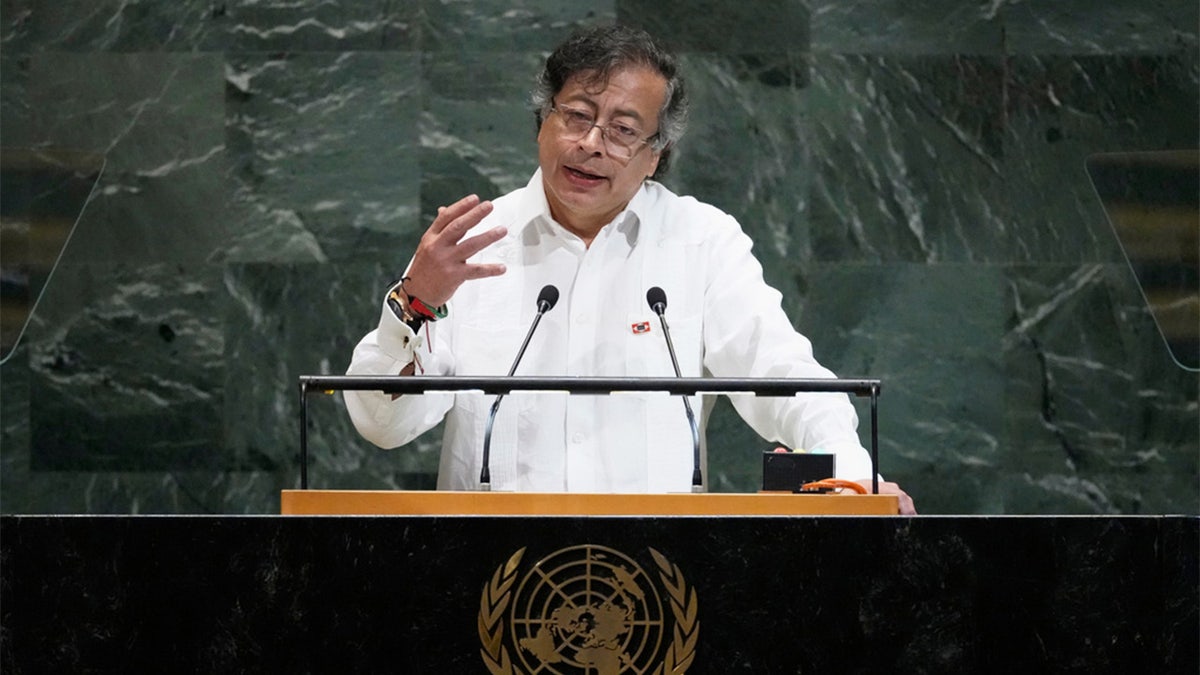
The air in Islamabad during the transition into spring carries a specific, heavy stillness. It is the kind of quiet that precedes a monsoon, where the humidity clings to the skin and every distant sound—the honk of a rickshaw, the call to prayer—seems to vibrate with extra significance. On a nondescript Tuesday, Pakistan’s Defence Minister, Khawaja Asif, stood before a microphone and dropped a stone into the pond of global diplomacy. He spoke of a "next round." He spoke of Iran. He spoke of the United States.
To the casual observer scanning a news ticker, it was a routine update on regional logistics. To those whose lives are governed by the invisible borders of the Middle East and South Asia, it was a heartbeat.
Consider a merchant in the border town of Taftan. Let’s call him Hamza. Hamza doesn’t care about the high-altitude posturing of diplomats in Geneva or the sterile briefing rooms of the Pentagon. He cares about the price of fuel. He cares about the electricity that flickers and dies because the pipelines that should carry energy across the desert are choked by the red tape of international sanctions. When the Defence Minister suggests that Tehran and Washington might sit across from one another again, Hamza isn't thinking about grand strategy. He is thinking about whether he can finally afford to expand his storefront.
The stakes are not abstract. They are made of steel, oil, and the desperate need for stability in a corner of the world that has forgotten what "normal" feels like.
The Geography of Anxiety
Pakistan occupies a precarious piece of earth. To the west lies Iran, a neighbor with whom it shares a complex, often strained, but deeply intertwined history. To the far west and across the oceans lies the United States, a superpower that has been Pakistan’s most volatile benefactor for decades. For years, Islamabad has been forced to play a high-stakes game of musical chairs. Every time the music stops, someone is left out in the cold.
When the Defence Minister announced that a fresh wave of negotiations is expected soon, he wasn't just reporting a schedule. He was signaling a potential thaw in a permafrost that has frozen regional progress for a generation.
The tension isn't just about nuclear centrifuges or maritime security. It is about the "energy corridor." This is a phrase that sounds like corporate jargon until you realize it means the difference between a hospital having power during a heatwave and a city plunging into darkness. Pakistan needs Iranian gas. Iran needs a market that isn't under the thumb of Western restrictions. The United States, meanwhile, watches every mile of pipe laid in the sand with a hawk’s eye, wary of anything that might strengthen Tehran’s hand.
It is a triangular tragedy.
The Ghost at the Table
In every diplomatic meeting, there is a ghost at the table: the memory of 2015. That was the year of the Joint Comprehensive Plan of Action, a moment when it felt like the world had finally found a way to talk to Iran without shouting. When that deal was dismantled, the ripple effect wasn't just felt in the halls of power; it was felt in the markets of Lahore and the shipping docks of Karachi.
Sanctions are often described as "targeted." This is a polite fiction. Sanctions are a blanket. They cover everything. They make it impossible for a father in Tehran to buy specific medicines for his daughter. They make it impossible for a contractor in Islamabad to secure the parts needed to fix a failing power grid.
The Defence Minister’s words carry weight because they suggest that the "blanket" might finally be lifted, even if only by a corner.
History shows us that these negotiations rarely follow a straight line. They are more like a dance on a tightrope. One side demands a gesture of good faith; the other side demands a removal of a specific penalty. They move in inches while the rest of the world waits in miles. But the fact that they are willing to return to the table at all suggests a quiet realization: the status quo is no longer sustainable for anyone involved.
The Invisible Bridge
The role of Pakistan in this narrative is often overlooked. We are not just a bystander. We are the bridge.
When Khawaja Asif speaks about these negotiations, he is speaking as a representative of a nation that has mastered the art of the middle ground. Pakistan has spent years trying to convince Washington that a stable, economically integrated Iran is better than an isolated, desperate one. Simultaneously, it has tried to convince Tehran that its path to prosperity must eventually involve a reconciliation with the global financial system.
It is exhausting work. It is the work of a mediator who knows that if the two giants in the room start swinging, the mediator is the first one to get hit.
The "next round" represents more than just a meeting. It represents a chance to pivot away from the rhetoric of confrontation. Imagine a map where the lines of trade actually connect. A map where a truck can leave a warehouse in Turkey, pass through Iran, and deliver goods to a port in Pakistan without triggering a dozen different international alarms. That is the world these negotiations are trying to build, even if the participants are too cynical to admit it.
The Friction of Reality
Of course, the path is littered with wreckage. There are factions in Washington who view any talk with Tehran as a betrayal. There are hardliners in Tehran who view any deal with the West as a surrender. These groups thrive on the friction. They use the "threat" of the other side to justify their own existence.
This is why the human element is so vital. If we only listen to the hawks, we hear only the sound of drums. If we listen to the people—the Hamzas of the world—we hear a different song. We hear the sound of a mother hoping her son doesn't have to emigrate to find work. We hear the sound of a teacher who wants his students to grow up in a country that isn't a permanent "geopolitical flashpoint."
The Defence Minister’s announcement was brief, but its brevity belies the complexity of what comes next. These talks will likely be grueling. They will be filled with setbacks, "walk-outs," and midnight sessions where no one can agree on the wording of a single sentence.
But consider the alternative.
The alternative is a continuation of the silent war. It is more years of "maximum pressure" that fails to change policy but succeeds in crushing the middle class. It is more years of Pakistan standing on the sidelines, watching its own economic potential wither because its neighbors can’t find a way to coexist.
The Weight of the Silence
There is a specific kind of hope that is born of desperation. It is a quiet, cautious hope. It doesn't throw parades or hang banners. It simply waits.
As the world turns its eyes toward the upcoming discussions, the residents of the borderlands will be watching with a specialized intensity. They know that a single signature in a room thousands of miles away can change the trajectory of their lives. They know that the "next round" isn't about points on a scoreboard. It’s about whether the shadow that has hung over the region since 1979 might finally begin to recede.
The Defence Minister didn't give a date. He didn't give a list of demands. He simply confirmed that the door is still unlocked.
In a world that seems increasingly intent on building walls, the simple act of leaving a door unlocked is a radical gesture. It is an admission that despite the grievances, despite the decades of mistrust, and despite the blood and the rhetoric, there is still something left to say.
The clouds over Islamabad haven't broken yet. The heat is still rising, and the air is still thick with the scent of jasmine and exhaust. But for the first time in a long time, the silence doesn't feel quite so heavy. It feels like a pause. A breath before the next word is spoken.
The stone has been dropped. The ripples are moving. Somewhere on the border, a merchant looks at the horizon and wonders if the wind is finally about to change.