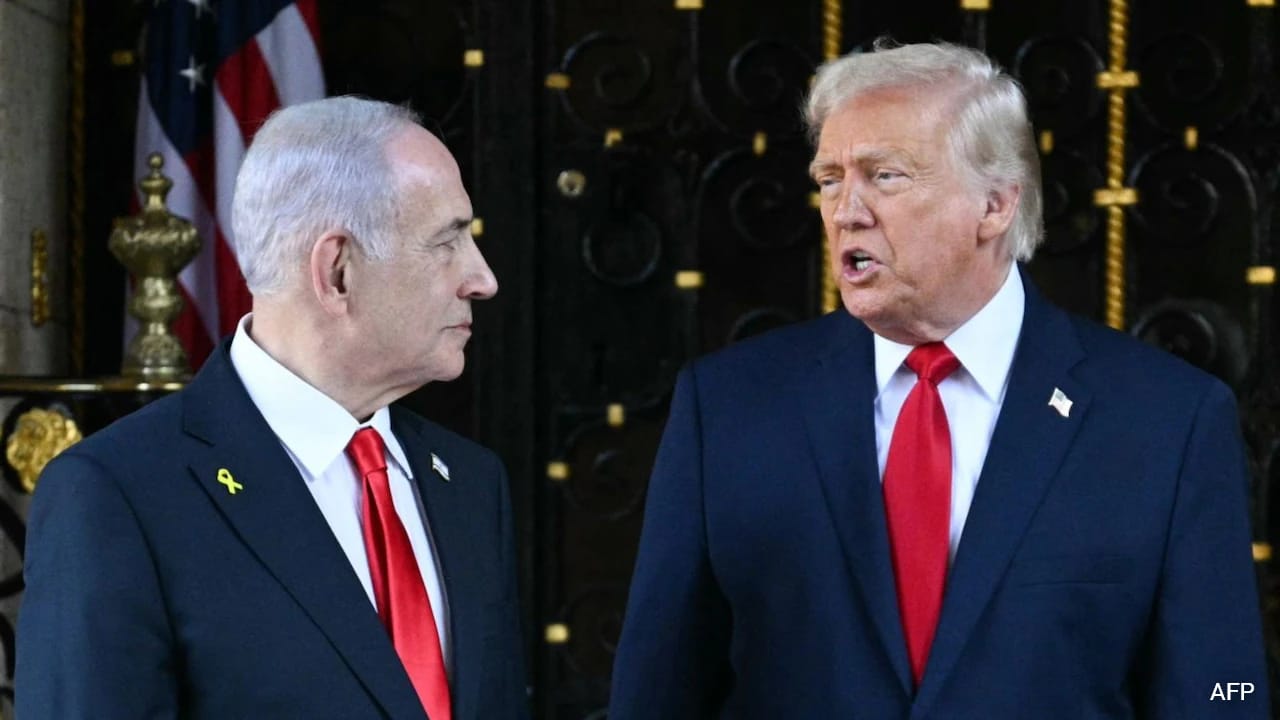
The phone rings at midnight, but the static on the line carries the weight of a thousand shifting borders. In Tel Aviv, the air conditioning hums a sterile tune, a stark contrast to the thick, humid heat of the Mediterranean outside. A leader sits at a desk cluttered with intelligence briefs, satellite imagery of Lebanon’s southern hills, and a secure receiver that connects him directly to Washington. On the other end of the line isn't just a political ally. It is a man who views the entire globe through the lens of a high-stakes real estate negotiation, where every concession is a loss and every bold play is a branding opportunity.
When Donald Trump speaks to Benjamin Netanyahu about Hezbollah, the conversation doesn't follow the traditional diplomatic script. There are no carefully drafted white papers or state department communiqués guiding the cadence. Instead, there is a blunt, unexpected directive: take a softer touch.
To understand why a political figure known for maximum pressure campaigns would advocate for a gentler hand in one of the world's most volatile flashpoints, we have to look past the cable news chyrons. We have to look at the human calculus of modern warfare.
The Friction of a Distant Front Line
Imagine a family in Kiryat Shmona, a northern Israeli town nestled against the Lebanese border. For months, their lives have been measured in the seconds it takes to reach a bomb shelter. The sky above them is a canvas of iron dome interceptions and the low, menacing growl of drones. For them, there is nothing abstract about Hezbollah. The militant group represents an existential threat carved into the very rocks of the hills overlooking their backyards.
Now, shift the perspective north across the blue line. Imagine a shopkeeper in Tyre, Lebanon. He looks at his crumbling storefront, squeezed by an economic collapse that has left his country paralyzed, terrified that the next spark will ignite a conflagration his homeland cannot survive. He does not support the rockets launched from his fields, but he is trapped in the geography of proxy warfare.
This is the backdrop against which global leaders play their geopolitical chess. When Washington signals a desire for a softer approach, it isn't out of sudden pacifism. It is out of a cold, calculated fear of the domino effect.
Consider what happens next if a full-scale war erupts. It does not stay contained to the valleys of southern Lebanon. It spills into regional shipping lanes. It drags global superpowers into a direct confrontation. It sends oil prices skyrocketing, destabilizing economies thousands of miles away from the blast radiuses. The request for a softer touch is a hand placed firmly on the lid of a pressure cooker that is dangerously close to cracking.
The Art of the Regional Deal
Donald Trump’s foreign policy has always been an extension of his business philosophy. In the boardroom, you don't always destroy your opponent. Sometimes, you squeeze them just enough to force them to the table, leaving them with just enough breathing room to sign the contract.
A total war with Hezbollah changes the math entirely. Hezbollah is not a stateless insurgent group operating out of caves. They are a heavily armed, disciplined conventional force with an arsenal of over 150,000 rockets, deeply embedded within the political fabric of Lebanon. Pushing them into a corner doesn't guarantee a clean victory. It guarantees a meat grinder.
The strategic logic behind the scenes is simple, even if the execution is incredibly messy. By urging Netanyahu to moderate the intensity of the strikes, the incoming American administration is attempting to preserve space for an ultimate deal. You cannot negotiate a grand bargain over a smoking ruin. The softer touch is an attempt to keep the theater of conflict predictable, to establish boundaries that prevent a localized border skirmish from mutating into an uncontrollable regional inferno.
But the real problem lies elsewhere, rooted in the psychology of the leaders themselves.
The Weight of the Historical Echo
Every leader fights the ghosts of their past political survival. For Netanyahu, the pressure to deliver total security to a traumatized nation is immense. Any sign of restraint can be interpreted by his domestic coalition as weakness, a fatal vulnerability in a region that rarely forgives hesitation. He operates under the belief that only overwhelming force can deter an adversary sworn to his country's destruction.
Yet, history is a brutal teacher when it comes to Lebanon.
In 1982, an Israeli intervention meant to secure the northern border ended in a decades-long entanglement that ultimately gave birth to Hezbollah itself. In 2006, a month of intense bombardment failed to neutralize the group's rocket capabilities, ending in a stalemate that both sides claimed as a victory. The lesson is clear, even if it is incredibly difficult to swallow: military force alone rarely solves political and ideological stalemates.
The vulnerability in this diplomatic dance is the sheer lack of certainty. No one truly knows where Hezbollah’s red line sits. Is it the assassination of a top commander? Is it a strike that ventures too far north into Beirut? The room for error is microscopic. A single miscalculated missile strike, a single stray drone hitting a civilian apartment complex, and the entire strategy of controlled escalation evaporates.
The Quiet Reality on the Ground
Away from the microphones and the grand declarations of victory, the true cost of this tension is paid in silence. It is paid by the soldiers who wait in assembly areas along the border, writing letters home because they don't know if the next order will send them across the frontier. It is paid by the children who have grown accustomed to the sound of sirens, their childhoods segmented into fifteen-second intervals of panic and relief.
The call for a softer touch is a recognition that the current trajectory is unsustainable. It is an acknowledgment that while the rhetoric of total destruction plays well to political bases, the reality of total war is a nightmare that no state, no matter how powerful, can easily contain.
The phone line eventually goes dead. The secure connection is severed, leaving the leader in Tel Aviv alone with his maps and his choices. The American president-elect has laid out his vision of the board—a vision where restraint is used as a tool to pave the way for a future agreement. But on the ground, where the scent of cordite lingers in the air and the horizon glows with the fires of a low-intensity war, the soft touch feels like a luxury that time is rapidly running out to afford.
The drones continue their patrol in the dark, their mechanical hum a constant reminder that peace is not merely the absence of war, but the precarious balance of fears.