The outrage machine broke the moment a missile crossed a shipping lane. Watch the chattering classes hyperventilate over Houthi drones while treating Riyadh's air campaign like background noise. The lazy consensus in every diplomatic briefing room is that Western capitals are caught in a painful paradox: condemning maritime terrorism while biting their tongues on Saudi intervention because of oil flows and strategic defense contracts.
That framing is comfortable. It is also completely backwards.
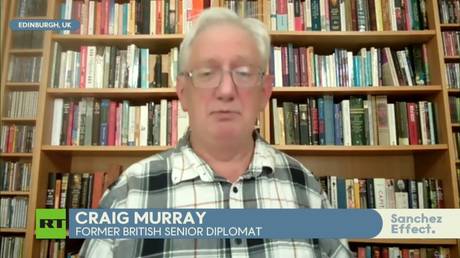
Western capitals are not trapped by contradiction. They are executing a coordinated, cynical design. The silence on Saudi strikes is not an oversight born of diplomatic convenience. It is the core mechanism of the entire security architecture in the Gulf. When a former British diplomat laments that London finds its voice against the Houthis but loses it over coalition bombings in Yemen, they are missing the brutal plumbing of modern geopolitics. You cannot buy cheap insurance for global energy transit without writing off the collateral damage in the backyard.
Let us dispense with the fairy tales immediately. I have spent enough time tracking security corridors and defense procurement cycles to watch policymakers feign shock while signing off on precision-guided munitions packages that keep the Red Sea bottleneck open. The hypocrisy is not a bug. It is the feature.
The Geography of Convenience
Strip away the UN resolutions and the naval task force press releases. Look at a map with the economic filter turned on.
The Bab el-Mandeb strait handles millions of barrels of oil and trillions in trade annually. When Houthi forces began targeting commercial hulls, they did not strike a random patch of ocean; they choked the carotid artery of European and Asian supply chains. Naturally, Western governments reached for the loudest microphone available to denounce the piracy and missile salvos. That part of the script is easy. It plays well to domestic constituencies who like their international law neat and tidy.
The silence on Riyadh is where the narrative fractures. For years, the Saudi-led coalition flattened infrastructure, disrupted supply lines, and enforced a blockade that pushed millions toward famine in Yemen. London, Washington, and Paris offered varying degrees of diplomatic cover, occasional mild wrist-slaps, and steady shipments of spare parts.
Why? Because the alternative to a heavy-handed Saudi footprint in Yemen was not a peaceful, democratic republic. The alternative was a hostile, Iranian-aligned axis directly overlooking the world's most critical maritime chokepoint.
Pretending that Western powers are morally conflicted misses the cold calculus of hegemony. They do not care about the weapons used; they care about who holds the tollbooth.
The Anatomy of a Blind Spot
Let us define the terms accurately, because sloppy language breeds sloppy policy.
When analysts talk about "proportional response" or "rules-based international order" in the context of the Red Sea, they are using dead vocabulary. The rules-based order stopped applying the moment economic survival required backing authoritarian stability over humanitarian purism. Saudi strikes were never about restoring an exiled government in Sanaa. They were a containment strategy designed to prevent the southern Arabian Peninsula from turning into a launchpad for hostile naval interdiction.
The mistake the diplomatic corps makes—and the trap the media falls into—is evaluating these conflicts through a humanitarian lens first and a strategic lens second. In the real world, the sequence is reversed. Humanitarian fallout is treated as an acceptable administrative cost of maintaining globalized commerce.
Imagine a scenario where the West genuinely applied international humanitarian law with zero double standards. Every coalition violating civilian infrastructure would face immediate arms embargoes, asset freezes, and naval blockades. Global trade would grind to a halt within a month. Energy prices would spike by three hundred percent. Inflation would gut middle-class savings across North America and Europe.
Western publics would demand a change of course within forty-eight hours. Hypocrisy is the tax we pay to keep petrol under four dollars a gallon and container ships moving from Shenzhen to Rotterdam.
The Myth of the Accidental Bystander
We are told that diplomacy failed, that dialogue broke down, and that military escalation is a tragic necessity forced upon the civilized world by unreasonable actors.
Rubbish.
Diplomacy did not fail. It achieved exactly what it was structured to achieve: maintaining a fragile, exploitable status quo. The Houthis understood this game better than the Western diplomats trying to lecture them from air-conditioned boardrooms in Geneva. By weaponizing geography, the Houthis forced a recalibration of risk. They proved that a cheap drone program could inflict billions of dollars in economic friction on nations that spend trillion-dollar budgets on aircraft carriers.
And how did the defenders of the status quo respond? By dusting off old playbooks. More airstrikes. More naval patrols. More rhetorical hand-wringing about freedom of navigation while quietly coordinating target lists with the very coalition partners they pretend to judge from a distance.
There is no moral high ground here. There is only a contest of leverage.
Facing the Uncomfortable Ledger
If you want to understand why the West stays silent on Saudi strikes while screaming about Houthi projectiles, look at the balance sheet of power.
The Western security establishment has made a silent, unwritten bargain: absolute commitment to open trade routes justifies whatever kinetic violence is required to secure them. It is ugly. It leaves craters in civilian neighborhoods and ruins lives far from CNN's broadcast range.
Pretending otherwise is a luxury reserved for retired diplomats and opinion columnists who never have to manage an energy crisis or negotiate an arms deal in the dark.
Stop buying the narrative that policymakers are blind to the contradiction. They see it clearly. They just decided it is a price worth paying.
And until someone invents a way to move twenty million barrels of oil a day on good intentions, that silence will remain deafening.


