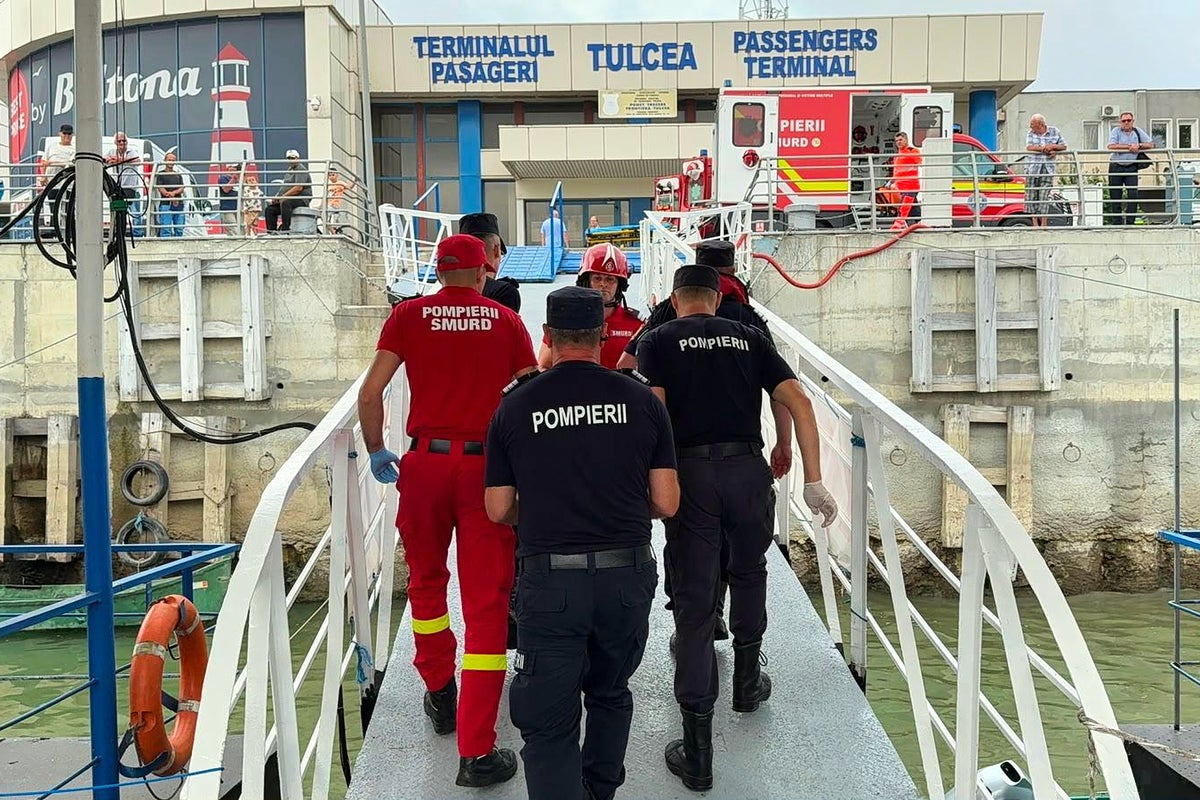
The headlines were predictably panicked. When a Russian missile slammed into a commercial gas tanker sitting near Romania’s maritime border, mainstream outlets immediately defaulted to their favorite playbook. They called it a reckless escalation, a dangerous provocation against NATO’s doorstep, and a desperate gamble by Moscow to choke off international energy trade.
They are completely missing the point.
This was not a military blunder, nor was it a desperate attempt to start a direct war with NATO over shipping lanes. It was an exercise in financial asymmetric warfare. Western analysts look at a struck tanker and see a missile strike. Naval strategists look at the exact same burnt hull and see a direct attack on Lloyd’s of London.
If you analyze maritime conflict through the lens of battlefield geography, you miss how modern grey-zone blockade strategies actually operate. Moscow does not need to sink every commercial vessel floating through the Black Sea. They do not even need to control the waters. They only need to manipulate risk pricing until commercial logistics companies pull out voluntarily.
The Insurance War Nobody Is Tracking
Commercial shipping runs on balance sheets, not brave declarations from diplomats. A shipowner does not care about geopolitical statements; they care about hull and machinery coverage, protection and indemnity clubs, and war-risk insurance surcharges.
When a vessel operates in a high-risk zone, its war-risk premium spikes instantly. A single strike near Romanian territorial waters does not just destroy cargo—it instantly recalculates the risk algorithms for every logistics firm operating in the region.
- War Risk Surcharges: Within 24 hours of an offshore strike, underwriters raise war-risk insurance rates by orders of magnitude across the entire sea corridor.
- Crew Cost Multipliers: Maritime unions mandate double hazard pay the moment a ship enters designated conflict coordinates, dramatically eroding operational margins.
- Charterer Abandonment: Major commodity traders abandon shipping routes long before physical blockades are established simply because the capital allocation no longer yields a profit.
I have spent years analyzing maritime logistics and supply-chain risk models. When you talk to global shipping executives behind closed doors, they do not talk about naval gunfire or coast guard patrols. They talk about underwriting margins.
By striking a high-value gas tanker just outside NATO's immediate maritime boundary, Moscow achieved maximum market disruption at minimum strategic risk. They proved that commercial vessels operating anywhere near Ukrainian trade corridors remain exposed, effectively forcing Western maritime insurers to enforce Russia's blockade for them.
The Delusion Of Western Escort Guarantees
Whenever a commercial ship gets hit in international waters, pundit commentary shifts to a familiar script: NATO warships must escort merchant vessels through the Black Sea.
This demand ignores fundamental naval economics and maritime law.
Naval escorts are a brilliant concept on paper and a logistical nightmare in execution. Placing military escorts alongside every commercial tanker entering Black Sea trade routes requires massive fleet deployments, permanent air-defense umbrellas, and an appetite for direct engagement that Western capitals simply do not possess.
More importantly, it fundamentally misinterprets the Montreux Convention. Turkey controls the Turkish Straits, and Ankara has strictly applied Article 19 to restrict warship passage for non-Black Sea belligerents and strictly limit naval buildup in the area. Expecting a steady fleet of Western escorts to patrol merchant traffic in the western Black Sea is a policy fantasy built on a complete ignorance of regional treaties.
Imagine a scenario where a Western frigate escorts a foreign-flagged commercial tanker, and an incoming anti-ship missile targets the tanker from a battery deep inside Russian-controlled territory. Does the frigate fire anti-air interceptors? Yes. Does the frigate then strike the mainland launcher to eliminate the threat? Doing so directly triggers the precise military confrontation every Western nation has actively sought to avoid.
Moscow understands this operational paradox intimately. They know that Western naval doctrine is structurally constrained by risk-aversion, political boundaries, and treaty law. The threat of targeted strikes against commercial traffic exploits this asymmetry flawlessly.
The Illusion Of Energy Starvation
Another popular media trope is that attacks on commercial gas carriers are intended to starve Europe of fuel. This argument belongs in a different era.
European natural gas infrastructure underwent a fundamental transformation over the past three years. LNG regasification capacity across Western Europe expanded rapidly. Storage facilities across the continent maintain regulated inventory floors. Supply lines shifted permanently toward North American LNG, West African exports, and Middle Eastern supplies.
Hitting an offshore gas tanker off the coast of Eastern Europe does not starve European consumers of heating fuel. Moscow knows this. The goal is not energy deprivation; it is economic friction.
Every time a tanker is hit or redirected, it forces energy traders to re-route cargoes, re-negotiate charter parties, and absorb transit delays. It injects volatility back into regional energy futures contracts. The casualty is not the physical supply of fuel to Western Europe; it is the financial predictability of regional logistics.
The Western commentariat continues to judge maritime attacks by how much tonnage sinks to the ocean floor. Modern economic warfare judges maritime attacks by how high it drives the baseline cost of regional commerce.
The Flawed Logic Of Safe Corridors
The popular counter-argument to this reality is the success of Ukraine's humanitarian sea corridor. After the collapse of the formal Black Sea Grain Initiative, Ukraine successfully established a coastal shipping lane hugging the territorial waters of Bulgaria and Romania, relying on coastal air defense and anti-ship missiles to deter naval interdiction.
Critics will point to this corridor as proof that Western-aligned maritime trade can survive and thrive despite Russian hostility.
That perspective ignores the operational difference between bulk agricultural carriers and liquid gas tankers.
- Cargo Volatility: Bulk grain carriers carry inert cargo. A hit on a bulk carrier is tragic, but it is rarely a catastrophic explosive event. A strike on a liquid gas or fuel carrier turns a commercial ship into a massive floating bomb with immense environmental and physical blast radii.
- Underwriter Exposure: Insurers view a grain freighter and a liquefied gas tanker through entirely different risk frameworks. The liability payout for a destroyed gas vessel and its high-value volatile cargo can wipe out an entire syndicate’s quarterly profits.
- Escalation Asymmetry: Striking a fuel or gas vessel near international waters sends a disproportionate shockwave through the global energy trade, far larger than striking an old, flagged bulk freighter.
By shifting targets to volatile energy carriers near European waters, Moscow explicitly destabilized the exact insurance mechanics that made Ukraine's coastal trade corridor viable over the last eighteen months.
How Economic Blockades Actually Succeed
The historical textbook definition of a blockade involves a line of battleships parked off an enemy port, physically turning away incoming merchant traffic. That definition is obsolete.
In the twenty-first century, a successful blockade requires only three components:
- A credible threat of precision weapon strikes against commercial vessels.
- High-profile target selection that maximizes media visibility and market panic.
- A financial ecosystem where private capital refuses to take uninsured risks.
Moscow does not need to control the seabed, deploy hundreds of naval vessels, or occupy Ukrainian ports to enforce a trade blockade. They simply need to make the financial equation impossible for commercial vessel operators.
When a gas tanker burns off the coast of a NATO nation, commentators waste time debating whether the strike violated maritime sovereignty. Meanwhile, risk analysts in London, Zurich, and Singapore quietly update their spreadsheets, pull underwriting capacity, and advise their clients to abandon Black Sea charters.
That is how modern blockades are won: quietly, digitally, and completely outside the physical battlefield.
Stop watching where the missiles land. Start watching where the underwriters withdraw.