The coffee at the diner down on Fourth Street costs four dollars and twenty-five cents now.
It used to cost three.
Maria knows this because she counts the quarters and dimes in her apron pocket every single Tuesday at two in the afternoon, right before the lunch rush dissolves into the quiet afternoon slump. She isn't an economist. She doesn't read the dense, jargon-laden white papers published by the central bank, nor does she parse the minute shifts in futures markets. But Maria understands inflation in her bones. She feels it every time she turns the key in the ignition of her sedan, watching the digital numbers spin upward at the pump faster than the gallons register.
Right now, across the country, millions of people are watching those exact same digital numbers.
Gas prices are climbing again. It is a slow, creeping burn that gnaws at the edges of household budgets, transforming a routine fill-up into a quiet calculation of what must be sacrificed. Do you skip the family dinner out? Do you delay buying new shoes for the kids? And hanging over this daily anxiety is a distant, sterile room in Washington, D.C., where a group of policymakers are preparing to push a button that will either ease the pressure or tighten the vice.
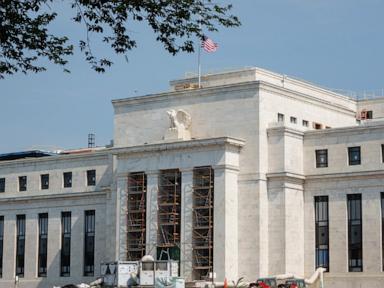
Today, the Federal Reserve is set to issue its latest interest rate decision.
To most, these announcements sound like foreign transmissions. A bunch of suits in dark wool suits talking about basis points, quantitative tightening, and cooling demand. They speak of the economy as if it were a massive, obedient machine that simply needs the right dial adjusted.
Except the machine is made of flesh and blood.
Consider Marcus, a freelance contractor living three states away from Maria. Marcus drives a 2018 pickup truck that is essentially his mobile office. Every ladder, every saw, every box of nails lives in the bed of that truck. When crude oil ticks upward and retail gas prices surge past three dollars and fifty cents—and then four dollars—Marcus does not have the luxury of absorbing the cost. He has to pass it on to his clients, or watch his profit margins evaporate entirely.
When the Federal Reserve raises interest rates, their stated goal is simple: cool down the economy. Make borrowing money more expensive. Slow down spending so that businesses stop raising prices. It is a blunt instrument, wielded with clinical detachment.
The trouble is that high interest rates do not instantly lower the price of crude oil traded on global exchanges. Gas prices are driven by geopolitical tensions, refinery capacities, seasonal demand, and supply chain friction. So, a person like Marcus gets squeezed from both sides. Borrowing money to replace a broken tool becomes costlier because of the Fed, while filling his gas tank becomes costlier because of global energy markets.
It feels unfair. That is because it is.
We are told that fighting inflation requires pain. Central bankers talk about the "necessary cooling of the labor market" as if they are discussing room temperature. But cooling the labor market means people stop getting raises. It means job openings dry up. It means Maria wonders if the diner will trim its staff, and whether her name will be near the top of the list.
The invisible stakes of today's interest rate decision are written in the quiet panic of kitchen table budgeting.
When the decision drops this afternoon, the stock market will react within milliseconds. Algorithms will parse the phrasing of the statement, looking for words like hawkish or dovish, transitory or persistent. Fortunes will shift in a flash of electronic trading.
Meanwhile, Maria will wipe down Formica tabletops, waiting for the three o'clock wave of customers. She won't be watching the ticker tape. She will be waiting to see if the price of eggs goes up again tomorrow.
We treat economics as a hard science, a discipline governed by immutable laws and clean equations. Yet it is fundamentally a study of human behavior under duress. Every rate hike is a heavy anchor dropped into a turbulent sea. Sometimes it stabilizes the ship. Sometimes it simply drags everyone down faster.
The tension between monetary policy and everyday survival is ancient. For decades, the script has remained identical. The invisible hand of the market tightens its grip, the cost of living inches upward, and ordinary people adjust their lives to accommodate the math of policymakers who have never had to count quarters in an apron pocket.
Yet, there is resilience in the margins.
Marcus still shows up at job sites before sunrise, his headlights cutting through the morning fog. Maria still smiles at her regulars, slipping an extra piece of pie to an elderly customer who looks like he needs the company. They do not wait for the Federal Reserve to save them. They navigate the shifting currents with a quiet, stubborn grace that no financial model can ever fully capture.
Later today, the headline will flash across television screens and smartphone notifications. Rates held steady. Or rates climbed a quarter point. The pundits will argue about whether the central bank moved too aggressively or too slowly.
The numbers will change. The screen will refresh.
And out there on the highway, beneath the towering digital signs flashing four dollars and fifty cents a gallon, the cars will keep driving, carrying people toward lives that refuse to be reduced to a footnote in a quarterly report.