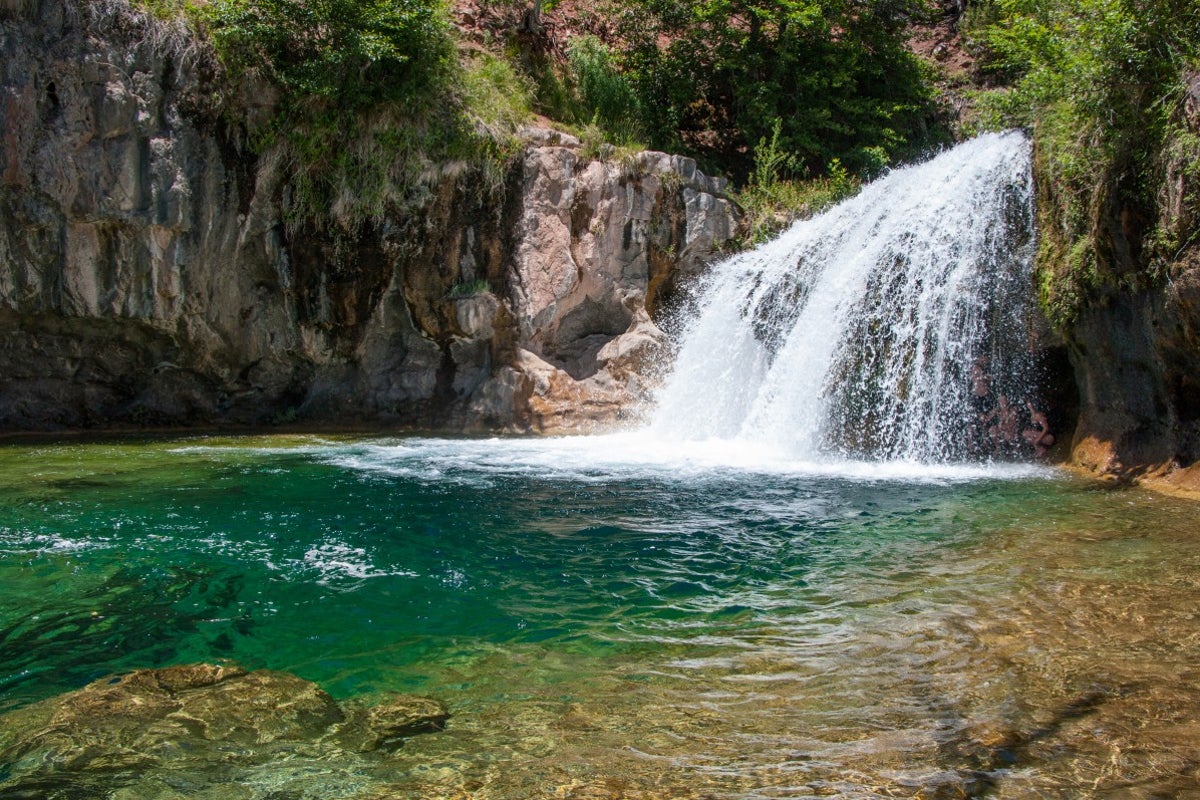
The air above a waterfall usually tastes like electricity and crushed ferns. It is a sensory overload, a roar that vibrates in your marrow, and for a certain type of person, that vibration feels like an invitation. You stand on the precipice, looking down at the churning basin fifteen feet below, and the world shrinks to the width of your own heartbeat. You don't see the hydraulic trap hidden beneath the foam. You see a moment of total, crystalline freedom.
But water is a deceptive architect. It builds rooms out of bubbles and walls out of pressure, and once you enter them, the door often locks from the outside.
We have a strange relationship with gravity. We spend our lives resisting it, yet we pay for the privilege of surrendering to it for a few seconds. Whether it’s a roller coaster or a limestone ledge in the backcountry, the thrill comes from the controlled fall. The problem with natural water features is that the control is a total illusion. The man who stepped off that fifteen-foot ledge wasn't looking for a tragedy. He was looking for the height of a summer afternoon. He was looking for the cold, sharp shock that makes you feel more alive than a week of sitting behind a desk ever could.
Then he hit the water, and the river stopped being a playground. It became a machine.
The Physics of the Washing Machine
To understand why a relatively short drop can become a tomb, you have to look past the surface. In a standard swimming pool, fifteen feet is a manageable height. You go deep, you kick, you rise. But a waterfall creates what rescuers call a "room of requirement" in the worst possible sense. When that volume of water strikes the basin, it doesn't just flow downstream. It curls.
It creates a "keep-hole" or a recirculating current.
Imagine a massive, liquid cylinder spinning vertically. The water at the surface moves back toward the falls, while the water at the bottom moves downstream. If you are caught in that cycle, every time you try to swim "away" from the danger, the surface current drags you back into the pounding weight of the drop. It is a treadmill of white water. The bubbles that make the water look so beautiful and inviting are actually your greatest enemy.
Aerated water—that frothy, white foam—is significantly less dense than "green" or solid water. It lacks the buoyancy required to keep a human body afloat. You can be a champion swimmer, a person with lungs like bellows, but if the medium you are swimming in is fifty percent air, your strokes gain no purchase. You sink. You reach for the surface, but the surface is a ghost. It is like trying to climb a ladder made of smoke.
The Invisible Stakes of a Summer Day
We often treat the outdoors as a backdrop for our digital lives. We see a location on a map or a photo on a feed, and we project our own capabilities onto it. We assume that because others have jumped and survived, the environment is static. It isn't. A heavy rain three miles upstream can change the flow rate of a waterfall by several hundred gallons per second. A submerged log can wedge itself into the basin, creating a "strainer" that pins a person against the rocks with the force of a freight train.
Consider the hypothetical case of a group of friends. They are laughing, the sun is high, and the bravado is thick. One person jumps. They disappear. For the first five seconds, the group cheers. By ten seconds, the cheering stops. By twenty seconds, the silence is a physical weight.
In those twenty seconds, the person in the water is experiencing a biological panic that the human brain isn't wired to handle. The "cold shock response" triggers an involuntary gasp. If your head is underwater when that gasp happens, you've already lost the primary battle. Your heart rate spikes. Your muscles, deprived of a steady oxygen flow and fighting the relentless pressure of the falling curtain, begin to turn to lead.
The tragedy isn't just the impact. It’s the exhaustion. It is the realization, mid-struggle, that the river has more endurance than you do.
The Geography of Risk
Rivers like these are often located in "black zones"—areas where emergency response is measured in hours, not minutes. When someone goes under at a remote waterfall, the clock starts at zero. By the time a bystander finds cell service, by the time a dive team assembles, by the time the equipment is hauled over slick rocks and through dense brush, the mission has shifted from a rescue to a recovery.
We tend to blame the individual. We call it "recklessness" or "poor judgment." But that is a defense mechanism. We say those things so we can convince ourselves that it could never happen to us because we are "smarter" or "safer." The truth is more unsettling. Nature doesn't care about your IQ or your experience level. It only cares about fluid dynamics and the law of averages.
The man at the fifteen-foot falls wasn't a statistic until the moment he was. He was a person with a family, a history, and a future that felt as wide as the horizon. One decision, made in the glow of a summer day, narrowed that future down to a few square feet of churning foam.
Respecting the Threshold
There is a specific kind of silence that falls over a river after an accident. The water keeps moving. The roar of the falls doesn't change its pitch. It is indifferent to the life it just claimed.
To live an adventurous life, you have to accept a certain level of risk, but you also have to learn to read the fine print written in the current. You have to look at the "boil line"—the point where the water begins to flow back toward the falls—and recognize it as a boundary as real as a barbed-wire fence.
The most dangerous part of any natural wonder is the part that looks the most fun. The deep pool, the rushing slide, the high ledge. We are drawn to these things because they offer a break from the mundane. They offer a chance to touch something raw and powerful.
But when you stand at the top of a waterfall, you aren't just looking at a view. You are looking at a living, breathing system that operates on a scale of power we can barely comprehend. The water isn't trying to hurt you, but it isn't trying to help you, either. It is simply going where gravity tells it to go, and it will take anything in its path along for the ride.
The weight of the water is a constant. Our ability to withstand it is the variable. When those two things collide, the outcome is rarely a matter of luck. It is a matter of physics.
The sun eventually sets on the basin. The foam turns grey in the twilight. The trees lean over the edge, casting long shadows across the spot where a life changed forever. The river continues its long, slow march toward the sea, carrying the memory of the weight it once held, while the air above remains thick with the scent of damp earth and the echoes of a leap that never ended.