The alarm does not ring. It rattles.
In a small concrete house perched just above the high-tide line, three miles outside a harbor that has seen better centuries, the sound cuts through the heavy air at three o'clock in the morning. Outside, the world is an inkwell. The ocean is not a view or a postcard; it is a dark, breathing presence that presses its weight against the pilings of the docks. It smells of rotting kelp, diesel exhaust, and the sharp, ferrous bite of cold salt.
Mateo does not stretch. He sits up immediately, his joints popping with the predictable rhythm of a fifty-year-old man who has spent thirty of those years standing on a rolling deck. His wife, Elena, is already awake, moving silently in the dim glow of a single overhead bulb. She hands him a plastic thermos of black coffee and a bundle wrapped in greaseproof paper—cold rice and fried mackerel from the night before. They do not speak. Words at this hour are a waste of breath, a luxury for people who have time to parse their feelings.
Mateo pulls on his rubber boots—heavy, stiff, smelling of fish scales that have dried and petrified into the rubber seams over successive seasons. He steps out into the wind.
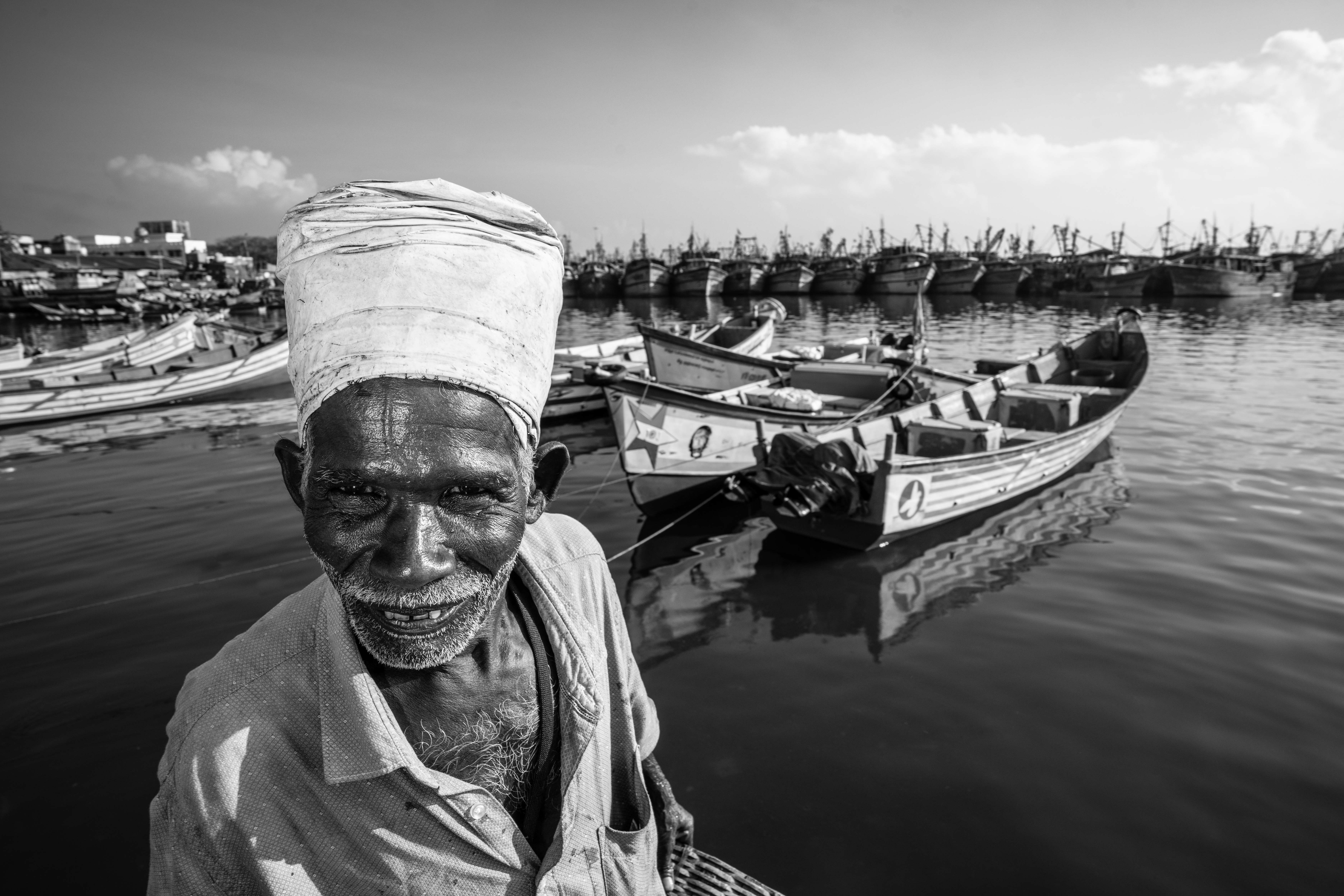
He is not alone. Up and down the coast, from open-air shacks to concrete stilt houses, thousands of men and women are waking to the same ritual. They are the artisanal fisherfolk, the coastal gatherers, the small-scale hunters of the deep who feed local markets while remaining invisible to the glittering tourist strips twenty miles inland. To look at them in a photograph—hunched over nets, skin weathered into topographical maps of wind and sun—is to see resilience. But resilience is often just another word for exhaustion that has nowhere else to go.
Consider what happens next.
The Arithmetic of the Horizon
The boat is a twenty-four-foot wooden hull named La Esperanza, though hope is a fragile anchor when the fuel prices jump overnight. Mateo pushes the bow off the shingle, wading knee-deep into water that feels like liquid ice even in summer. He climbs aboard, yanks the pull-cord of the outboard motor twice before it catches with a wet, suffocating cough that settles into a steady, concussive roar.
He steers out past the breakwater, navigating by memory and the jagged silhouette of the headland against a sky choked with salt mist. In school textbooks, fishing is described as an industry. In reality, it is a high-stakes, unhedged gamble played against a house that changes the rules every single day.
Every time Mateo casts his nets, he is making a bet with three separate entities: the ocean, the market, and time.
The ocean is unpredictable. A sudden squall can turn a calm fishing ground into a churning washing machine within twenty minutes. But the modern ocean is worse than unpredictable; it is depleted. Statistics from global fisheries organizations show that over thirty percent of assessed fish stocks are currently fished at biologically unsustainable levels. For a small-scale fisherman working coastal waters, this macro-trend translates into a terrifying micro-reality: he has to burn more fuel, travel farther out, and drop his nets deeper simply to catch half of what his father pulled ashore thirty years ago.
The market is equally unforgiving. When Mateo returns to the cooperative dock at nine in the morning, his catch is sorted under the harsh glare of fluorescent tubes. The middlemen are waiting. They hold all the cards—and all the ice. If the supply is high because a dozen other boats hit a school of sardines, the price plummets to pennies a pound. If the catch is low, the price goes up, but he has too few fish to make a living. Either way, the math rarely tips in his favor.
Debt is the invisible passenger on every small boat. Engines fail. Propellers shear against submerged rocks. Nets snag on discarded industrial cables and tear wide open, costing hundreds of dollars to replace. To cover these expenses, fishermen borrow from local buyers or informal lenders at punishing interest rates. They enter a cycle of debt that binds them to the shore just as surely as an anchor chain.
The Steel Giants on the Horizon
As the sun finally burns through the gray marine layer, painting the horizon in bruised shades of copper and violet, Mateo cuts the motor to check his drift nets. A mile to the southeast, a shape cuts across the dawn.
It is an industrial trawler.
To Mateo, the trawler looks like a floating fortress, a skyscraper laid on its side. It is a factory ship equipped with high-resolution sonar, massive winches, and miles of synthetic netting that sweep the sea floor clean, scooping up everything in its path—mature fish, juveniles, coral fragments, crabs, and rays. It operates with the cold efficiency of a corporate balance sheet.
For decades, coastal communities have watched these steel giants push closer and closer to the shore, legally or through lax enforcement of protected artisanal zones. When a trawler sweeps through an inshore breeding ground, it does not just catch today's fish; it steals tomorrow's livelihood.
The tension between small-scale fishers and industrial fleets is not merely economic. It is existential. Artisanal fishing is selective, seasonal, and localized. It respects the rhythms of the breeding cycles because a fisherman who overfishes his local bay knows he will starve by winter. Industrial fishing recognizes no seasons, no bays, and no limits beyond the capacity of its holds. It treats the ocean as a mine rather than a pasture.
When the trawler passes, it leaves behind a churned wake of displaced water and floating debris. Mateo watches it disappear into the haze. He does not shake his fist. He just turns back to his nets, his hands working with mechanical precision to untangle a half-dozen small mackerels.
The catch is light today. Too light.
The Warming Tide
The physical danger of the sea is something fishermen have always accepted. Waves crash, winds howl, boats capsize. But the invisible changes—the slow, creeping alterations of the water itself—are harder to fight because you cannot punch your way out of them.
The ocean is getting warmer. Marine heatwaves are no longer anomalies; they are the new baseline. As water temperatures rise, fish species that have inhabited specific coastal zones for generations are migrating toward the poles or diving into deeper, cooler water beyond the reach of small outboard boats. Coral reefs, which serve as the nurseries for coastal fisheries, are bleaching and dying, turning vibrant underwater cities into desolate underwater bone-yards.
At the same time, coastal erosion is eating away at the villages where these families live. Storm surges, supercharged by rising sea levels, regularly breach seawalls and flood concrete homes. Mateo’s cousin lost his kitchen to a winter storm two years ago. They rebuilt five feet further back, but everyone knows the ocean is winning an inch-by-inch war of attrition.
When you ask scientists about this, they speak in terms of tipping points, carbon PPMs, and pelagic trophic cascades. When you ask Mateo about it, he points to the bait-wells.
"Twenty years ago," he says, wiping salt spray from his weathered forehead, "we didn't have to go past the second reef for squid. Now? You go out twelve miles, and even then, your luck has to be baptized."
The Quiet Exodus
The most profound tragedy of the precarious life is not that the old men are dying poor. It is that the young men are leaving.
On the concrete pier, teenagers sit on upturned plastic crates, staring at the screens of cheap smartphones that connect them to a world of fast fashion, instant messaging, and urban dreams. They watch TikTok videos of city life, glittering malls, and office jobs that do not require waking up at three in the morning to smell of dead fish and diesel.
Mateo’s oldest son, nineteen-year-old Tomás, spent two summers on the boat. He learned how to mend a gillnet, how to read the clouds for an incoming gale, and how to spot a feeding frenzy of gulls three miles off the point.
Then he packed a single canvas bag and took a six-hour bus ride inland to the regional capital. Now he works the night shift in a windowless distribution warehouse for an online retailer, sorting cardboard boxes under fluorescent hum. He makes less money than he would like, but his boots stay dry, and he has Sundays off.
"Why stay?" Tomás told his father before leaving. "The sea is angry, the buyers are thieves, and there is nothing out there but water and debt."
Mateo didn't argue. What could he say? He knew the boy was right. The romance of the sea is a myth invented by people who eat shrimp in air-conditioned restaurants; to those who live it, the sea is an unyielding taskmaster that demands everything and returns barely enough to keep the engine running.
When Tomás left, a piece of the village went with him. Across the coast, fishing communities are aging in reverse. The middle generation is stretched thin between debt and declining catches, while the younger generation is migrating away, leaving behind ghost villages where retired nets hang rotting from rafters like forgotten tapestries—no, like dusty cobwebs in abandoned rooms.
The Return Through the Mist
By noon, La Esperanza is back at the slipway.
The morning catch is unloaded into plastic crates. It is a meager haul: a few dozen mackerel, a handful of rockfish, and a stray octopus that clings tenaciously to the side of the tub with suction cups that still flex with residual life. The buyer checks the weight with an expression of practiced indifference, hands Mateo a crumpled wad of cash, and walks away without a word.
After buying fuel and setting aside a fraction for engine maintenance, the money left over will pay for rice, cooking oil, and a bag of potatoes. There is nothing left for savings. There is nothing left for a rainy day, which is ironic, given how many rainy days define their existence.
Mateo ties off the mooring lines, wraps the heavy canvas tarp over the outboard motor, and begins the slow walk up the gravel path toward the village. His boots crunch against the shell-paved lane.
In the distance, the sun is high and bright, washing the whitewashed walls of the houses in a blinding glare. The tourist buses are rolling down the coastal highway now, filled with families heading to resort hotels for a week of seafood dinners and sunset cocktails. They will eat the fish Mateo caught, garnished with lemon and parsley on white porcelain plates, unaware of the fuel smell, the cold pre-dawn awakening, or the silent arithmetic of survival that brought those silver bodies from the dark water to the table.
Mateo reaches his gate, pauses for a moment, and looks back toward the grey expanse of the Pacific. It stretches outward, flat and glittering and indifferent, hiding its depleted depths beneath a mask of serene blue.
He unlatches the gate, steps inside the courtyard, and leaves his salt-crusted boots on the porch, ready to sleep for four hours before the alarm rattles again.