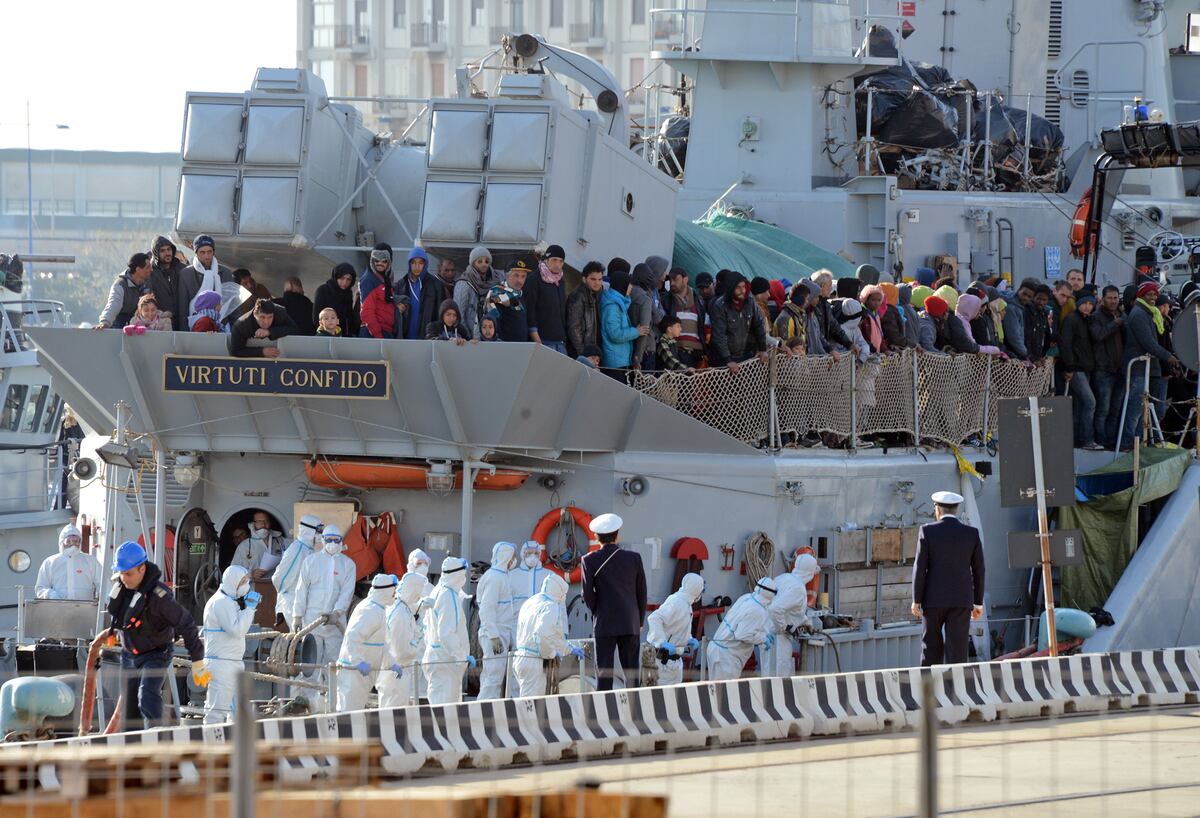
The television hums in the corner of a diner in Ohio, casting a flickering blue light over half-eaten plates of eggs and cold coffee. On the screen, a map of the Middle East pulses with red icons, indicating missile strikes and troop movements. For most of the patrons, it is a distant flicker, a geopolitical chess match played by people in suits thousands of miles away. But for the woman sitting in the corner booth, her hand trembling slightly as she grips a ceramic mug, it is anything but abstract. Her son is a specialist in the 101st Airborne. To her, every headline is a heartbeat.
The data points tell us that 51 percent of Americans now believe the recent military actions in Iran were not worth the cost. It is a slim majority, a hairline fracture in the national psyche, but it represents a profound shift in how we weigh the price of power. We are no longer a country that views intervention through the rose-colored lens of "mission accomplished." Instead, we have become a nation of skeptics, haunted by the ghosts of two decades of "forever wars" that promised stability and delivered a vacuum.
Military action is often presented to the public as a surgical necessity, a clean strike against a clear threat. We talk about "strategic assets" and "deterrence." These words are designed to be cold. They are meant to strip away the human element so that the math of war feels logical. But the math is failing to add up for more than half the population.
The Ledger of Invisible Costs
When a drone strikes a target in the desert, the immediate cost is calculated in fuel and munitions. The secondary cost is measured in diplomatic fallout. But the true cost—the one that sits heavy in the stomachs of American families—is the long-term instability that follows.
Consider a hypothetical young officer named Elias. Elias grew up watching the towers fall in 2001. He joined the service believing in the absolute clarity of the mission. Now, two decades later, he finds himself explaining to his own children why the same maps are still glowing red. This is the fatigue of the American spirit. It is the realization that a tactical "win" on a Tuesday can lead to a decade of unintended consequences by Friday.
The poll numbers aren't just about Iran. They are a referendum on the concept of the "quick fix." Americans have learned, through painful trial and error, that there is no such thing as a vacuum in geopolitics. You pull a thread in Tehran, and the fabric of the entire region begins to fray.
- Financial Drain: Billions of dollars diverted from domestic infrastructure to overseas theaters.
- Human Toll: Not just the casualties, but the psychic weight carried by veterans returning to a country that can't quite remember why they were sent there.
- Global Reputation: The precarious balance of being a global leader versus being a global enforcer.
The 51 percent majority isn't a sign of cowardice. It is a sign of memory.
The Disconnect in the War Room
There is a fundamental gap between the way a strategist views a conflict and the way a citizen feels it. In the high-ceilinged rooms of the Pentagon, a strike against an Iranian commander is a data point in a game of regional dominance. It is a move to check an opponent.
But back at that diner in Ohio, the patrons aren't thinking about regional dominance. They are thinking about the price of gas, the stability of their retirement accounts, and whether their neighbors' kids are going to come home in one piece. When 51 percent of people say it wasn't worth it, they are saying that the "check" on the opponent didn't make their lives or their country feel any safer.
Security is a feeling, not just a statistic. If a military action increases the threat of cyberattacks on our power grids or sparks retaliatory strikes against embassies, the average American doesn't feel "deterred." They feel exposed.
The skeptics are looking at the ledger and seeing a deficit. They see a cycle where action begets reaction, and the "worth" of the original move is swallowed by the chaos that follows. It is the exhaustion of a runner who realizes the finish line is being moved every time they get close to it.
The Ghost of Precedents Past
History isn't a straight line; it’s a circle that we keep walking until we learn to step off the path. The skepticism toward Iranian intervention is rooted in the deep, unhealed scars of the Iraq War. We were told that intervention would be a "cake walk," that we would be greeted as liberators, and that the cost would be covered by the very resources we were "stabilizing."
None of it was true.
The American public has developed a sophisticated "nonsense detector." They hear the same rhetoric—the talk of "imminent threats" and "necessary force"—and they compare it to the reality of the last twenty years. The result is a profound lack of trust. When the government says a strike was "worthwhile," the public looks at the empty chairs at Thanksgiving tables and the trillion-dollar debt and asks: "Worth it for whom?"
We are witnessing the death of the "blank check" era of foreign policy.
The Human Scale of 51 Percent
Behind every percentage point is a person who has stopped believing in the efficacy of the sledgehammer.
Think of a school teacher in a suburb who sees the local VA hospital struggling to keep up with the influx of patients. To her, "military action" isn't a headline; it’s the reason her brother-in-law can’t sleep through a thunderstorm. When she says the action wasn't worth it, she isn't making a partisan statement. She is making a human one.
The 51 percent represents a growing consensus that our strength should be measured by our ability to prevent conflict, not just our capacity to win the first thirty minutes of one. We have become a nation of people who understand that once the first shot is fired, the story is no longer in our control. The narrative is hijacked by the unpredictable, the tragic, and the long, slow grind of history.
It is a sobering reality.
The blue light of the diner TV continues to flicker. The map changes. The news cycle moves on to a celebrity scandal or a weather report. But the woman in the booth stays. She stares at the screen, her mind drifting to a dusty base half a world away. She is part of that 51 percent. Not because she is a policy expert, but because she knows that "worthwhile" is a word used by people who don't have skin in the game.
The shadow of the next conflict is already stretching across the floor, long and dark and hungry. We are finally beginning to wonder if we have the strength to keep standing in its way, or if we are simply waiting for it to swallow us whole.