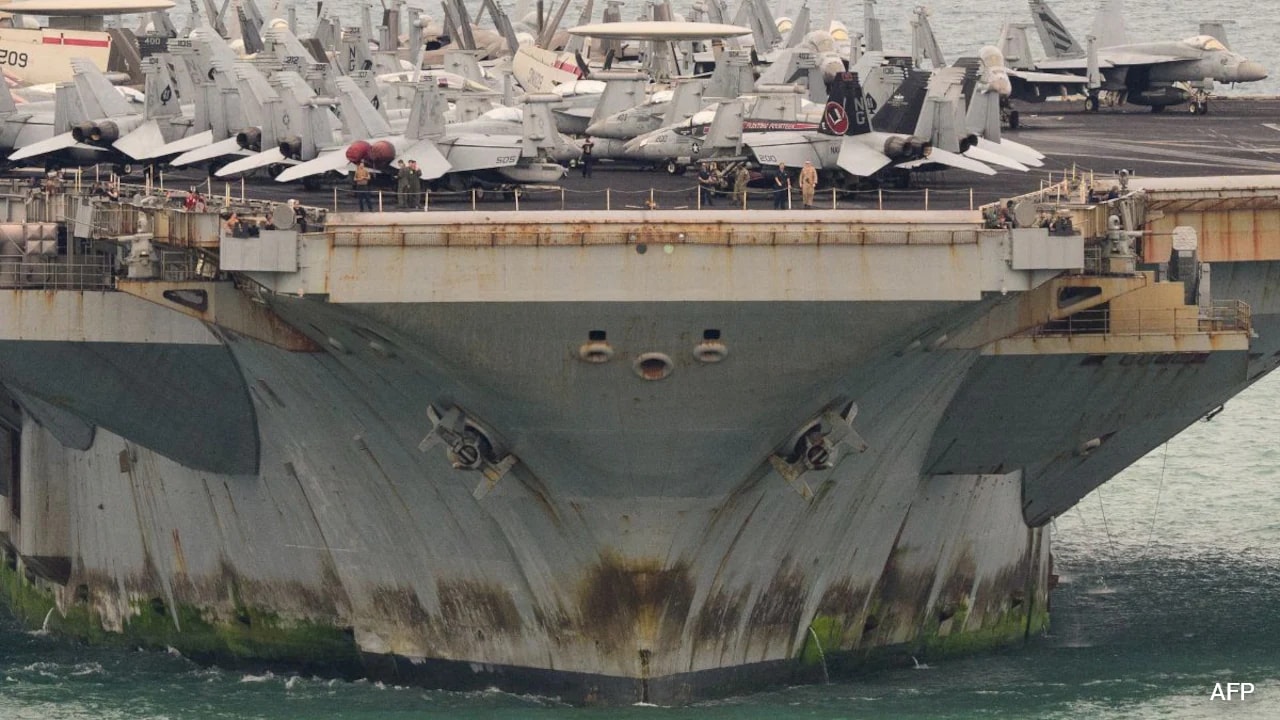
Saltwater does not care about geopolitical posturing. It does not read intelligence briefings, nor does it check the daily polling numbers of a shifting administration. It simply rises, falls, and exerts an unyielding pressure against the steel hulls of floating cities.
On the flight deck of the USS Abraham Lincoln, the air smells of JP-5 jet fuel, hot exhaust, and the sharp, coppery tang of the Arabian Sea. It is a place where a single miscalculation turns a human being into a footnote. Read more on a related issue: this related article.
When reports surfaced regarding eight suicide bids—incidents of severe psychological crisis, self-harm ideation, or desperate acts amidst the relentless grind of a Middle East deployment under the Trump administration's "maximum pressure" campaign—the headlines treated them as data points. Statistics in a quarterly review. Metrics of operational strain.
Numbers do not bleed. They do not leave behind empty bunks, silent locker rooms, or shipmates staring at the bulkhead wondering what they missed in the stale fluorescent light of a midnight watch. Additional journalism by NPR explores similar views on this issue.
To understand what happens when a carrier strike group lingers in the crucible of the Persian Gulf, you have to look past the grey hull and into the minds of the people who maintain the aircraft.
Imagine a nineteen-year-old airman apprentice. Three months ago, he was eating cereal in Ohio while watching highlights of his favorite football team. Now, he stands on a vibrating deck that stretches eighty acres, surrounded by screaming F-35s and Super Hornets, running on four hours of broken sleep. The sky above is a bleached, suffocating white. The water below is a dark, indifferent mirror.
The deployment was supposed to end. Then it was extended. Then another threat assessment arrived via encrypted teletype, and the horizon moved further away.
That is the hidden anatomy of maritime exhaustion. It is not a sudden explosion. It is the slow erosion of time.
During the heightened tensions between Washington and Tehran, the Lincoln became a floating chessboard piece. Decisions made in air-conditioned conference rooms five thousand miles away materialized on the flight deck as an endless loop of catapult launches and arrested recoveries. The physical danger of Iranian fast boats or anti-ship missile threats was real, tangible, and loudly discussed. But the quiet danger—the one that creeps in through the cracks of isolation and relentless pressure—was far more corrosive.
Human beings are not built to live inside floating steel boxes under continuous threat for months on end without an anchor to the ordinary world. When mail drops are delayed, when internet bandwidth is throttled for operational security, when the news from home is filled with division and uncertainty, the psychological perimeter begins to shrink.
For some, that perimeter narrows until there is nowhere left to stand.
Military leadership often talks about readiness in terms of hardware. Flight hours. Sortie generation rates. Maintenance man-hours per flying hour. Yet, the most critical component of any carrier strike group is the fragile neural network inside the skulls of the sailors operating it.
When an aircraft carrier deploys, it carries a miniature city of roughly 5,000 souls. Among them are young men and women grappling with identity, financial stress back home, broken relationships, and the existential dread of a conflict that feels both entirely avoidable and terrifyingly close.
When the strain becomes absolute, the mind looks for an exit hatch. Sometimes, in the darkest corners of the ship, sailors make choices that shake the entire command structure to its core.
The public reaction to such incidents follows a predictable script. Outrage. Calls for investigation. Statements about mental health resources. But the reality on the water is far more complicated. In a culture built on stoism, where showing weakness can mean losing your clearance, your job, or the respect of the people standing beside you in a crisis, asking for help feels like an admission of treason.
You do not want to be the reason your division fails inspection. You do not want to be the weak link in the chain of command. So you smile. You lock down. You run another diagnostic on an electronic warfare pod. You tell yourself you can make it another week.
Until you cannot.
The administration’s policy of maximum pressure against Iran was designed to alter geopolitical behavior through economic strangulation and military deterrence. Every action has an equal and opposite reaction, not just in physics, but in human cost. The pressure applied in boardrooms and Oval Office briefings trickled down, molecule by molecule, until it rested squarely on the shoulders of sailors sleeping three-tier racks deep in the bowels of the ship, listening to the constant, low-frequency thrum of the screws pushing through the water.
History will record the Lincoln's deployment as a chapter in the long, tense chess match of Middle Eastern diplomacy. Analysts will parse the strategic utility of carrier strike groups in deterring regional proxies. But the true legacy of those months at sea is written in the private grief of families who received the dreaded notification from a casualty assistance officer.
The ocean remains deep, dark, and indifferent. The carriers will continue to sail, their grey towers cutting through the swell, carrying the immense weight of empire and the fragile, breathing lives of the people who keep the engines turning.
Look closely at the horizon. The steel is formidable, but the human heart inside it is always holding its breath.