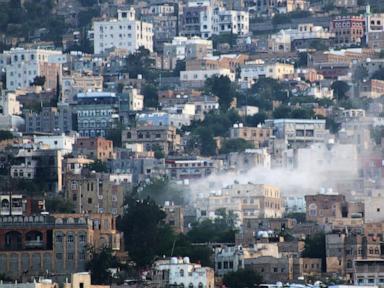
In Taiz, Yemen’s third-largest city, water has replaced artillery as the primary instrument of siege warfare. While Houthi rebels control the surrounding highlands where the city’s major aquifers and pumping stations sit, hundreds of thousands of residents inside the government-held urban core face a chronic, engineered drought. Drinking water supplies are dwindling not because the rain stopped falling, nor merely because aging pipes broke down under years of neglect. They are vanishing because physical control over water infrastructure has been systematically converted into military and economic extortion.
For nearly a decade, the blockade of Taiz has lingered in the margins of international headlines, overshadowed by broader geopolitical flare-ups in the Red Sea and shifting truce negotiations in Sanaa. Yet the slow-motion dehydration of an entire metropolis represents one of the most calculated resource wars in modern conflict. To understand why taps in Taiz run dry for weeks at a time, you have to look beyond the front lines and examine the hydrology, the shattered electrical grid, and the predatory water economy that thrives in the vacuum left by state collapse. Recently making waves in this space: Stop Calling Floods Natural Disasters Because Our Zoning Laws Built Them.
The Geography of a Chokehold
Taiz sits in a rugged highland basin in southwestern Yemen, surrounded by mountains that dictate both military strategy and water flow. Before the civil war escalated in 2015, the city relied on a network of deep wells located primarily in the outlying plains—most notably in areas like Al-Hawban and Al-Dabab. Gravity and high-powered electric pumps moved millions of liters uphill into municipal reservoirs, which then distributed water to neighborhoods across the valley.
When Houthi forces surrounded the city, they did not need to breach every neighborhood to exert control. They simply occupied the elevated terrain and the peripheral wellfields. By holding the source, the besieging forces gained an off-switch for civilian survival inside the enclave. Further insights on this are explored by Al Jazeera.
This geographic asymmetry defines daily life in Taiz. The main arterial roads connecting the city to the rest of the country remain mined, cratered, or blocked by military checkpoints. When water cannot flow through municipal pipes, it must be hauled in by tanker trucks navigating treacherous mountain bypasses that turn a twenty-minute drive into a six-hour ordeal. Fuel costs skyrocket along these detours, turning a basic human necessity into a luxury commodity priced far beyond the reach of families whose public-sector salaries have gone unpaid for years.
How a Municipal Grid Dies
A modern urban water system is not a passive collection of pipes; it is a pressurized, energy-dependent machine. When war fractures that machine, the damage compounds exponentially.
First comes the loss of power. Yemen’s national electrical grid collapsed early in the conflict, leaving municipal water authorities dependent on industrial diesel generators to pull water from aquifers hundreds of meters below ground. Diesel must pass through blockades, taxes, and black-market markups. When fuel runs out, the pumps stop.
Second comes the physical degradation of unpressurized pipes. Water mains are designed to remain full and pressurized. When they sit empty for months, air enters the system, seals dry out and crack, and shifting earth crushes weakened conduits. Worse, when water is intermittently pumped back into compromised pipes, negative pressure draws raw sewage and surface contaminants directly into the drinking supply.
Third is direct targeting. Water towers, desalination units, and booster stations sit on high ground—the exact same high ground prized by snipers and artillery spotters. Over the years, shelling has perforated storage tanks and destroyed electrical transformers across Taiz. Repair crews attempting to reach damaged valves near front-line zones like Kalaba or Osayfira face sniper fire and unexploded ordnance.
The Rise of the Tanker Cartels
Where public utilities fail, private markets rush in—often with brutal efficiency. In Taiz, the collapse of the state water network birthed an entrenched, unregulated industry of private water trucking and borehole drilling.
Wealthy landowners and armed actors with access to fuel and drilling rigs have sunk hundreds of unauthorized wells across the Taiz basin. Without state oversight, these private operators pump groundwater relentlessly, accelerating the depletion of an already stressed aquifer. Yemen was already facing one of the world’s most severe water crises prior to the war, largely driven by the water-intensive cultivation of qat, a mild narcotic leaf chewed daily by a majority of the population. The war stripped away the few regulatory guardrails that existed.
Residents inside the city now spend upwards of thirty to forty percent of their meager household income just to buy water from private trucks. The water sold by these vendors is rarely tested for salinity or biological contamination. Families are forced into an impossible calculation: spend money on questionable trucked water, or send children with plastic jerrycans to queue for hours at charity-run distribution points and leaking municipal standpipes.
The Hidden Toll on Women and Children
In Yemen, fetching water is overwhelmingly the responsibility of women and children. As neighborhood taps dried up, the daily search for water pushed civilians closer to active combat zones.
Humanitarian monitors and local clinics have documented a steady stream of casualties among civilians struck by sniper fire or landmines while carrying jerrycans along contested streets. Beyond the immediate physical danger, the time required to secure water has gutted school attendance. Girls, in particular, are pulled from classrooms to wait in lines at neighborhood tanks, trading their education for twenty liters of brackish water.
Why Humanitarian Aid Hits a Wall
International aid agencies and local organizations have spent millions of dollars trucking water into Taiz, rehabilitating damaged wells, and installing solar-powered pumping systems. Solar energy, in theory, offers a breakthrough by bypassing the need for expensive, blockaded diesel.
Yet technical fixes cannot solve a political blockade. Even when solar arrays are installed, the water still has to move across front lines or through territories controlled by rival factions. Aid convoys require permits, security clearances, and negotiations with local commanders who view water distribution as a lever of political legitimacy.
In several instances, agreements brokered by the United Nations to reopen key water wells on the outskirts of Taiz have stalled over revenue sharing, maintenance access, and military positioning. For armed factions on the ground, relinquishing control over a major wellfield means giving up a strategic asset that keeps the opposing population weak, distracted, and desperate.
Furthermore, emergency water trucking—while essential to prevent immediate mass dehydration—acts as a band-aid that inadvertently sustains the crisis. Donors pour funds into paying private truckers to haul water, which enriches the very same unregulated water market draining the local aquifers, while the core municipal infrastructure continues to rot.
Disease Follows the Drought
When clean water disappears, waterborne pathogens take over. Yemen has already suffered the largest cholera outbreak in modern recorded history, and Taiz consistently ranks among the worst-affected governorates.
The mechanism is straightforward. Without enough water for basic hygiene, handwashing stops. Families store whatever water they can afford in open plastic barrels, creating breeding grounds for Aedes aegypti mosquitoes that transmit dengue fever and chikungunya. Meanwhile, hospitals inside Taiz struggle to maintain sterile surgical wards or run dialysis machines because they lack reliable water pressure.
Doctors in the city’s besieged hospitals frequently treat patients for acute watery diarrhea and kidney failure directly linked to contaminated, overly saline groundwater. When residents drink from shallow, unmonitored urban wells—the only sources left inside the blockade—they ingest heavy metals, agricultural runoff, and biological waste.
The Illusion of Local Truces
Every few months, diplomatic announcements tout progress on opening roads into Taiz or easing restrictions on civilian movement. On the ground, little changes. A single dirt track may open temporarily, only to close again when shelling resumes or checkpoints impose prohibitive transit fees.
The water crisis in Taiz exposes a fundamental flaw in how outside observers analyze modern sieges. Peace negotiators often treat water and electricity as secondary humanitarian files to be resolved after a comprehensive political settlement is signed. On the ground, however, control over resources is the conflict.
Until the wellfields surrounding Taiz are demilitarized and neutral engineering teams are guaranteed safe, permanent passage to repair and operate the municipal grid, the city remains trapped in a slow-motion emergency. Every unmaintained pipe that corrodes, and every meter the water table drops under unregulated drilling, pushes Taiz closer to a point of ecological no return—where even if the guns fall silent tomorrow, there will be nothing left underground to pump.