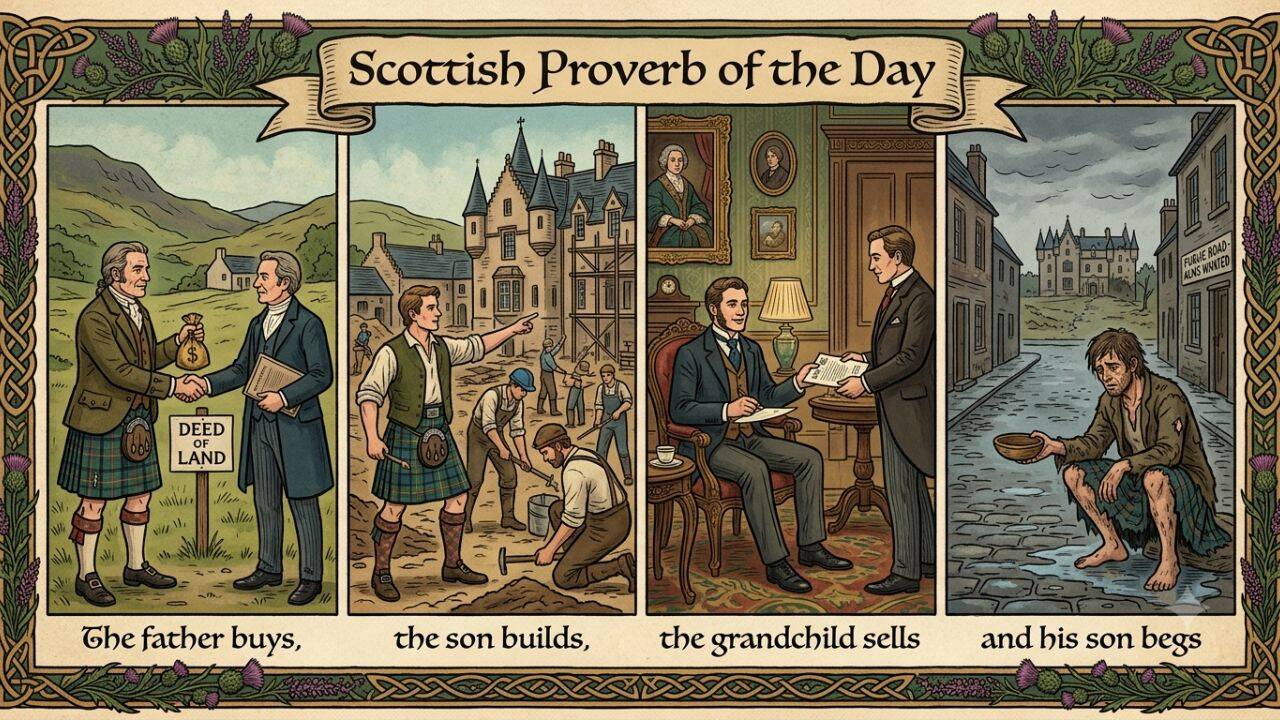
Money leaves faster than it arrives. The old Scottish proverb pointing out that the father buys, the son builds, the grandchild sells, and the great-grandchild starves is not just folklore. It is an economic reality repeated across centuries. Family fortunes evaporate with shocking predictability.
Most wealth preservation strategies fail because they focus on protecting assets instead of protecting the competence of the people holding them. Markets shift, tax laws change, and inflationary pressures quietly erode capital. Yet the primary catalyst for the destruction of generational wealth is human behavior.
The Wealth Creation Cycle
Every family enterprise starts with a founder. This individual possesses a specific tolerance for risk, an acute awareness of market gaps, and an obsessive drive born often from necessity or scarcity. They build the foundation from nothing. They make mistakes, lose sleep, and adapt quickly because failure means total ruin.
The second generation inherits the operation while the memory of the struggle remains fresh. They often professionalize the enterprise. They install management layers, formalize processes, and expand operations into safer, more predictable territories. They are builders. They consolidate the gains made by the founder and institutionalize the business.
Then comes the third generation. They enter a world insulated from scarcity. They are handed the keys to an engine they did not build and do not fully understand how to repair. For them, the business is not a lifeline or a personal crusade. It is a dividend check.
The Dilution of Ownership
As generations multiply, equity splinters. A single founder owns one hundred percent of a venture. By the time grandchildren divide the spoils, dozens of cousins hold fractional stakes.
Fractional owners want liquidity. They want cash for real estate, venture investments, or lifestyle expenses. When a significant block of shareholders demands payouts rather than reinvestment, the core business starves for capital.
"Capital cannot compound if it is constantly being extracted to fund the lifestyles of passive inheritors who view the enterprise as an annuity."
💡 You might also like: The Silent Conquest of American Shipping
This fragmentation creates a structural vulnerability. Competitors with concentrated ownership and aggressive reinvestment strategies easily outmaneuver a fractured family board paralyzed by conflicting personal financial goals.
The Psychological Trap of Inherited Privilege
Comfort breeds fragility. When children grow up surrounded by abundance, the psychological armor forged by hardship never develops. They miss the formative experiences that teach resilience under pressure.
Financial literacy education inside wealthy households often fails. Parents shield their children from the brutal realities of balance sheets, debt loads, and market downturns, attempting to protect their innocence. That protection acts as a handicap.
When those children take the reins, minor setbacks trigger panic. They lack the historical perspective to realize that market contractions are cyclical. Instead of weathering a storm, they liquidate assets at the bottom or sell the entire enterprise to private equity firms looking for distressed acquisitions.
The Danger of Yes-Men
Founders are rarely surrounded by agreeable subordinates. They test ideas against harsh market feedback.
Heirs, conversely, often build echo chambers. Wealth buys compliance. Advisors, board members, and family members hesitate to deliver hard truths to beneficiaries who control their retainers or employment.
This insulation from reality causes strategic drift. Markets evolve rapidly. Consumer preferences shift. A company anchored by nostalgia and managed by committee becomes obsolete while leadership congratulates itself on tradition.
Structural Safeguards That Actually Work
Families who successfully preserve wealth across centuries do not rely on luck. They treat wealth management as an institutional discipline rather than a birthright.
Separating Ownership from Management
The most critical structural firewall is a strict separation between family membership and operational control. Bloodline does not guarantee executive competence.
Successful multi-generational dynasties implement rigid governance rules. Family members must meet external qualifications, hold outside work experience, and compete against non-family talent to secure leadership positions. If no family member qualifies to run the company, an outside chief executive takes command while the family retains board oversight.
Trust Structures and Governance Boards
Modern family offices utilize sophisticated legal and governance mechanisms to prevent impulsive liquidations.
- Family Constitutions: Formal documents outlining shared values, behavioral expectations, and rules for entering or exiting the family enterprise.
- Discretionary Trusts: Legal vehicles that protect assets from creditors, divorces, and short-sighted distribution demands by individual beneficiaries.
- Family Councils: Structured forums where younger generations learn financial literacy, governance, and capital allocation before receiving voting power over major assets.
Even the most ironclad trust cannot compensate for a complete collapse of shared purpose. Legal frameworks buy time, but they cannot manufacture competence or drive.
The Inevitability of Creative Destruction
Capitalism is inherently hostile to preservation. Markets reward constant adaptation and punish complacency, regardless of a surname.
When a family business fails to innovate, the market corrects the inefficiency. Assets transfer from passive inheritors to aggressive operators who can extract higher value from them. From a macroeconomic perspective, the dissolution of a family fortune is simply capital reallocating to more productive uses.
The Scottish proverb remains a stark reminder. Wealth is a temporary custody, not a permanent possession. Those who treat it as a garden to be constantly tended might defy the cycle. Those who treat it as a permanent inheritance will inevitably watch it vanish.