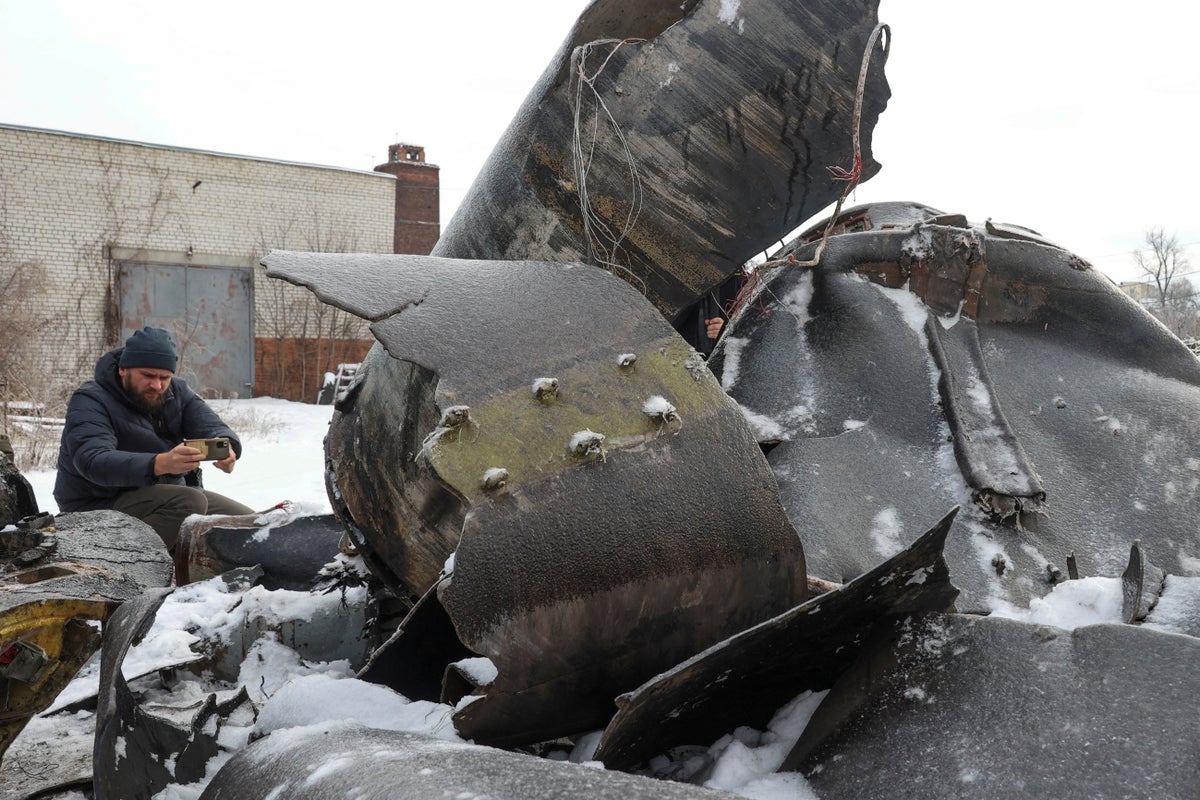
The headline is lazy. North Korea sends missile unit to Russia as Putin tries to exploit Ukraine weakness. That is the standard narrative humming through every mainstream newsroom and think tank briefing room from DC to Brussels. It paints a picture of a desperate Moscow scraping the bottom of the geopolitical barrel, ringing up Pyongyang out of pure exhaustion, dragging third-rate artillerymen into a European meatgrinder because the mighty Russian war machine is gasping for air.
It is a comfortable fiction. It lets Western policymakers sleep at night by framing every adversary move as an act of weakness.
I have spent the better part of two decades watching foreign policy analysts misread transactional security partnerships because they refuse to look past their own ideological mirrors. I have watched defense budgets swell based on assumptions that turned out to be hollow. When you operate under the delusion that your opponents are inherently incompetent, you miss the structural mechanics of why they are winning.
Pyongyang did not dispatch units to Europe as a charity case. Moscow did not accept them out of desperation. This deployment is not a sign of weakness on either side. It is a live fire masterclass, a terrifyingly efficient laboratory session, and a terrifying preview of a post Western dominated military architecture.
Stop viewing this through the lens of humanitarian aid or bilateral charity. This is an acquisition of combat data.
The Myth of the Desperate Moscow
Let us dismantle the core premise of the mainstream consensus: the idea that Vladimir Putin is operating from a position of acute vulnerability regarding conventional munitions and manpower.
When western intelligence agencies leak reports about dwindling artillery stocks, they are describing a throughput problem, not an existential collapse. Industrial capacity takes years to retool. NATO took thirty months just to figure out how to ramp up 155mm shell production without bankrupting domestic contractors through cost plus inefficiencies.
Russia solved its volume problem by outsourcing the friction of cold war era production scaling to a nation that has spent seventy years perfecting the art of keeping a command economy running on starvation rations. North Korea does not have supply chain bottlenecks because its entire economic output is dedicated to military readiness.
When North Korean missile units and engineering elements deploy alongside Russian forces, they are not acting as cannon fodder. They are interns in the most advanced electronic warfare and missile guidance testing ground of the twenty first century.
Think about the calculus. For decades, North Korean hardware has been theoretical. Their KN series ballistic missiles, their long range artillery systems, their command and control architectures have been evaluated by analysts using satellite imagery and defector debriefs. They were untested against modern western air defense systems like Patriot batteries, NASAMS, and HIMARS counters.
Now, Pyongyang has a front row seat to how its hardware performs against NATO supplied electronics. They are watching real time telemetry on flight profiles, radar cross sections, and terminal guidance failure rates against modern jamming.
If you think Kim Jong Un is paying for this deployment with troops for free, you do not understand the brutal pragmatism of statecraft. North Korea is getting paid in hard currency, raw materials, advanced aerospace technology, and most importantly, combat data that would take forty years of domestic testing to acquire.
Putin is not exploiting weakness. He is trading low cost real estate in a proxy logistics market for high fidelity tactical validation.
The Bureaucratic Paralysis of NATO
The reason this partnership terrifies Washington isn't because North Korean soldiers are superhumans. It terrifies Washington because it exposes the sclerotic, bureaucratic nightmare of modern Western defense procurement.
I have seen defense contractors burn half a billion dollars on software iterations while a procurement officer demands a three hundred page environmental impact study for a drone component. Meanwhile, Pyongyang and Moscow sign a napkin agreement and put boots on the ground within a fortnight.
We live in a world where western military power is bound by legalistic friction, congressional oversight committees, and risk adverse doctrine. Our adversaries operate in a frictionless environment where failure is just another data point rather than a career ending congressional hearing.
When people ask why Ukraine is struggling to hold lines despite billions in aid, the lazy answer blames political infighting in Capitol Hill. The structural answer is much darker. Western aid arrives in drips and drabs, wrapped in political caveats, restricted from striking targets across borders, and encumbered by complex maintenance chains that require civilian contractors to service advanced gear.
North Korea sends hardware and personnel with zero red tape. They do not care about Geneva convention optics in the same way, they do not answer to human rights watchdogs, and their logistics do not require legislative approval.
That is not weakness. That is an asymmetric advantage born of total ruthlessness.
The New Axis of Transactional Realism
We need to redefine what an alliance looks like in the modern era. The old model of ideology driven blocs died when the Soviet Union collapsed. Today, we are in an era of transactional utilitarianism.
Russia, North Korea, Iran, and to a more calculated extent, China, form an informal clearinghouse of sanctioned states. They have learned how to insulate themselves from western financial punishment by creating parallel banking networks, shadow tanker fleets, and direct barter economies.
When a country like North Korea sends military units abroad, it is graduating from an isolated hermit kingdom to an active exporter of security services. They are monetizing their standing army.
Consider the downstream consequences. Once North Korean personnel return from the Russian front lines, they will bring back hardened combat experience. They will have operated alongside drone swarms. They will have observed modern counter battery radar in action. They will have trained with encrypted digital communications that survived heavy NATO grade electronic suppression.
These veterans will become the cadre for the next generation of Korean People's Army doctrine. The unit that goes home to the DMZ will not be the same parade ground outfit your grand strategy textbooks described in the nineteen nineties.
And what does Moscow get? They secure a reliable, sanctions proof supplier of high volume munitions that bypasses the global financial grid entirely.
To call this a sign of weakness is to misunderstand the evolution of modern warfare. It is a consolidation of the sanctioned world.
Dismantling the People Also Ask Fallacy
If you search for queries regarding this deployment, you will inevitably find variations of questions like: Does North Korea's troop deployment mean Russia is losing the war? Or, Can Ukraine withstand the influx of foreign personnel?
These questions are fundamentally flawed because they assume a zero sum binary where one side must be winning cleanly while the other collapses. War in the twenty first century is an attrition grind, an economic endurance test, and a technology proving ground all at once.
Russia is not winning the war because of North Korean troops; Russia is sustaining the friction of the war by tapping into external industrial and human capital reserves that the West pretended did not exist. Ukraine is not losing because of a lack of courage; Ukraine is straining against a mathematical reality where industrial capacity and demographic scale matter more than moral high ground.
Pretending that North Korean involvement is a desperate, pathetic last gasp of a failing dictator is a comforting sedative for western populations who refuse to face the reality of global industrial realignment.
The Uncomfortable Truth About Western Complacency
The uncomfortable truth is that the liberal international order built after nineteen forty five is being eaten alive from the inside out by efficiency.
Authoritarian regimes are finding ways to cooperate with frictionless speed while western democracies drown in red tape, political polarization, and defense industrial decay. We spend years debating whether to send a specific tank model while our adversaries build cross continental supply chains for drones, artillery, and personnel.
The deployment of North Korean units to the European theater is a warning shot. It proves that distance no longer insulates theaters of conflict, that sanctions are leaking like a sieve, and that autocracies can pool their resources faster and cleaner than democracies can coordinate a joint press release.
If Washington continues to dismiss these developments as signs of weakness, the next surprise won't be a contingent of foreign troops on a distant front line.
It will be an integrated coalition that has learned everything it needs to know about your defenses by watching you ignore them.
Stop reading the headlines for comfort. Start reading them for the threat assessment they actually are.