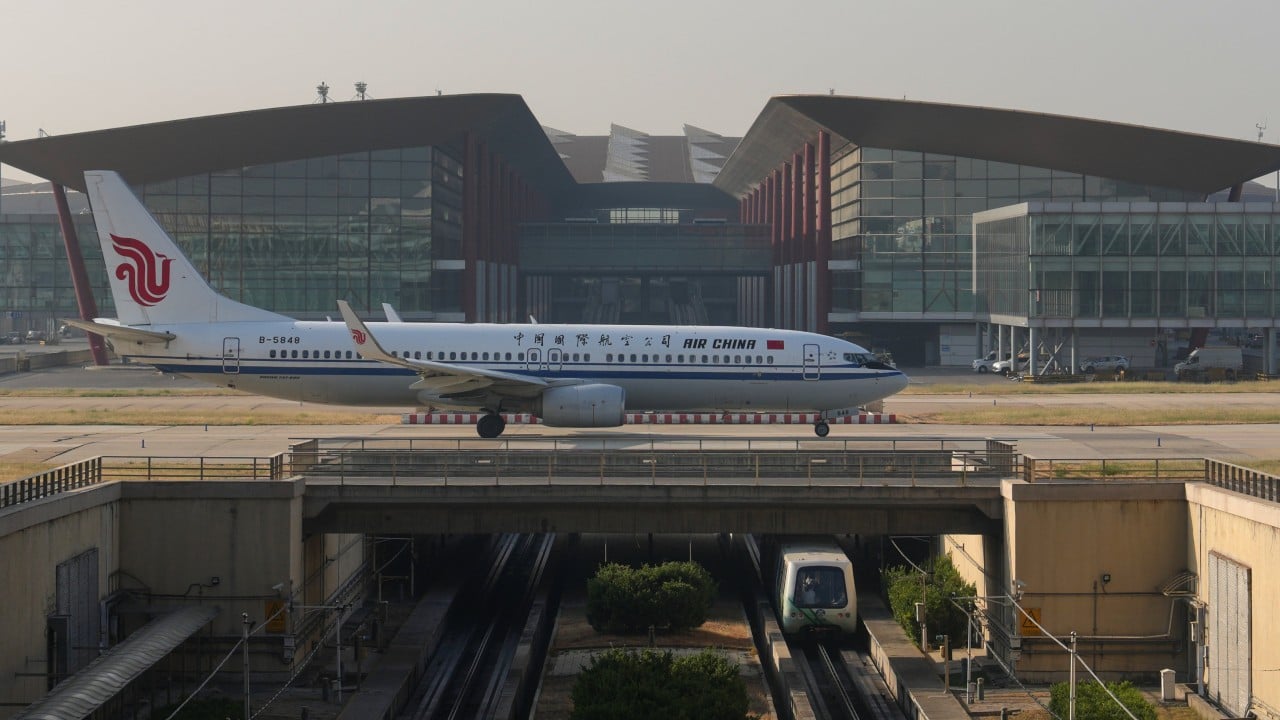
Everyone covering the US Department of Transportation’s silence on Air China’s request for extra flights ahead of Xi Jinping’s visit is reading the tea leaves backward.
The mainstream aviation press wants you to believe this is simple diplomatic foot-dragging. They frame the DOT’s non-ruling as petty bureaucratic stalling—a cheap bargaining chip held back before a high-stakes summit. Some commentators even argue that denying extra capacity hurts American consumers by keeping transpacific airfares artificially high.
That narrative is lazy, naive, and completely ignores the brutal economics of international aviation.
Washington isn't stalling out of spite. The DOT is holding the line because rubber-stamping Air China’s request without strict reciprocity would hand Chinese state-backed carriers an insurmountable structural advantage over American airlines. If you think this is about diplomacy, you don't understand how bilateral air service agreements, Russian airspace closures, and sovereign state subsidies actually work.
The Myth of the "Free Market" in Transpacific Aviation
When aviation pundits complain about restricted flight caps between the US and China, they treat the market as if United, Delta, and American are competing on a level playing field against Air China, China Eastern, and China Southern.
They aren't. Not even close.
International aviation has never been a true free market. Since the 1944 Chicago Convention, cross-border routes have been governed by strict bilateral treaties. Every single frequency, every gauge change, and every fifth-freedom right is negotiated government-to-government. When the DOT drags its feet on an ad-hoc schedule amendment—especially one tied to a diplomatic delegation—it is exercising the only real regulatory leverage it has left.
I’ve watched airline network planners tear their hair out over transpacific route economics over the last three years. When a US carrier flies from Newark to Beijing or Detroit to Shanghai, it isn't just competing against another airline's balance sheet. It is competing against the balance sheet of the People's Republic of China.
Chinese state-owned carriers do not answer to impatient institutional shareholders demanding quarterly margin expansion. They answer to Beijing. During the pandemic and the subsequent recovery, the Big Three Chinese airlines absorbed tens of billions of dollars in cumulative losses while receiving direct capital injections, low-interest state loans, and municipal route subsidies to maintain international connectivity.
Meanwhile, American carriers have to pay market rates for capital, adhere to strict labor contracts with unionized pilots and mechanics, and turn an actual profit on every widebody aircraft they deploy. A Boeing 777-300ER or Airbus A350-900 costs roughly $15,000 to $20,000 per block hour to operate. You cannot burn cash indefinitely on ultra-long-haul routes when Wall Street is breathing down your neck.
The Elephant in the Stratosphere: Russian Airspace
If you want to understand why the DOT refuses to casually wave through extra Air China frequencies—even temporary ones tied to a leadership summit—look at a polar route map.
Following the invasion of Ukraine in 2022, Western sanctions barred Russian airlines from US and European skies, and Moscow retaliated by banning US and European carriers from Russian airspace.
Chinese airlines were not banned.
Let that sink in. Air China can fly the great circle route directly over Siberia, cutting straight across the Arctic to reach the US East Coast. United Airlines cannot.
What does that mean in real operational terms?
- Flight Time: A US carrier flying from New York or Washington to Beijing has to detour south over the Pacific or skirt around Russian territory, adding anywhere from 90 minutes to over three hours of flight time depending on seasonal winds.
- Fuel Burn: An extra two hours in a widebody jet burns roughly 15 to 20 metric tons of jet fuel. At modern Jet-A prices, that is tens of thousands of dollars in additional fuel expense per single flight leg.
- Crew Costs and Duty Limits: Longer block times push flights past standard crew duty limits. US airlines often have to carry an extra relief pilot—four pilots instead of three—just to legally operate the return leg.
- Payload Restrictions: Carrying extra fuel to fly the longer route means sacrificing cargo weight or leaving seats empty to stay under maximum takeoff weight (MTOW) limits. Belly cargo is often the difference between a profitable transpacific flight and a money-loser.
Imagine a scenario where two runners enter a marathon, but one is allowed to take a shortcut through the park while the other has to run around the perimeter carrying a 30-pound backpack. Then, the race officials ask why the second runner isn't entering more heats.
That is the exact dynamic between US and Chinese carriers right now. In 2023, the DOT explicitly conditioned approvals for additional Chinese frequencies on those flights avoiding Russian airspace—a rule that created a tense standoff before Washington reluctantly allowed limited increases. Every time China asks for more frequencies, whether permanent or for a special diplomatic window, it is asking to expand capacity while enjoying a massive geographic and cost monopoly that US carriers cannot legally replicate.
Why "Diplomatic" Extra Flights Are Never Just Diplomatic
Critics of the DOT’s silence argue that Xi Jinping’s visit is a special circumstance. Heads of state travel with massive entourages—ministers, security details, trade delegations, state media, and corporate executives. Air China is China's flag carrier and operates the VIP fleet for top leadership. Shouldn't Washington just grant the temporary slots as a gesture of goodwill?
No. Because in aviation regulation, temporary exceptions become permanent precedents.
In international air transport, "ad-hoc" or "extra-section" charters for state visits are routinely used to test regulatory boundaries and absorb commercial overflow. When a flag carrier requests extra widebody frequencies around a major diplomatic event, those aircraft rarely carry only government officials. They sell commercial belly cargo space. They transport state-affiliated business delegations who would otherwise have had to buy high-yield business class tickets on existing scheduled flights—including flights operated by US carriers.
Even more importantly, granting unilateral capacity increases without extracting concrete concessions weakens the US negotiating position for the next round of bilateral talks.
Consider the numbers. Before 2020, US and Chinese airlines operated more than 300 round-trip flights per week between the two countries. Today, the bilateral cap sits at a fraction of that—just 50 weekly round-trips per side.
Why haven't US airlines rushed to use every single slot they are theoretically entitled to, or pushed to return to 300 weekly flights? Because the demand profile has fundamentally broken.
- Corporate Travel Has Collapsed: The days of American tech, finance, and manufacturing executives flying weekly to Shanghai and Shenzhen in $12,000 Polaris or Delta One suites are gone. Supply chains have diversified to Vietnam, India, and Mexico. Corporate travel budgets to China are down drastically compared to 2019.
- Leisure Demand Is One-Sided: Post-pandemic outbound tourism from China to the US has recovered at a snail's pace due to visa backlogs, economic headwinds in China, and geopolitical friction. Meanwhile, American tourists are flocking to Tokyo, Seoul, and Europe instead.
- Yields Are Under Pressure: Without high-margin corporate travelers filling the front cabin, flying ultra-long-haul routes around Russian airspace becomes mathematically unviable for US carriers.
Airlines for America (A4A), the primary lobbying group representing United, Delta, and American, has repeatedly warned the White House and the DOT against approving additional Chinese frequencies until the competitive imbalance is addressed. The DOT's silence isn't administrative incompetence. It is deliberate strategic restraint backed by the entire US airline industry.
Dismantling the "Consumer Harm" Fallacy
Whenever the government restricts airline capacity, populist commentators immediately cry foul on behalf of travelers. They point to $2,500 economy tickets between San Francisco and Shanghai and claim that blocking Air China from adding flights is a tax on families and students.
Let's be brutally honest about how airline pricing works.
Yes, restricted supply keeps fares higher than they were in 2019, when airlines were dumping capacity onto the Pacific and losing money on economy seats just to chase market share. Back then, you could fly from Los Angeles to Beijing for $450 round-trip. That wasn't a healthy market; it was a subsidized price war funded by Chinese local governments throwing $100,000-per-flight subsidies at airlines to launch vanity routes from second-tier cities like Chengdu and Wuhan to the US.
If Washington capitulates and floods the market with unrestricted Chinese capacity while US carriers remain locked out of Russian airspace, fares might drop in the short term. And what happens next?
US airlines will be forced to abandon their remaining mainland China routes altogether. They will redeploy their Boeing 777s and 787s to Tokyo Haneda, Taipei, Seoul, London, and Frankfurt—markets where they can actually make money without flying three-hour detours.
Once American carriers exit the market, Chinese state carriers will hold a near-monopoly on nonstop US-China travel. Do you really think ticket prices stay cheap when a state-controlled oligopoly owns 90% of the nonstop seats? Or that American travelers benefit when their only nonstop options lack US safety oversight, consumer protection standards, and frequent flyer integration?
Cheap tickets funded by foreign state subsidies are a sugar high. Once the competition is driven out of business, the bill always comes due.
What People Get Wrong About Aviation Diplomacy
If you search for news on US-China flights, you will see the same tired questions repeated across travel forums and financial blogs. Most of them start from a completely flawed premise.
Is the US violating bilateral treaties by delaying Air China’s approval?
Not at all. Bilateral Air Services Agreements explicitly grant aeronautical authorities the right to review, condition, or deny schedule filings that undermine fair and equal opportunity to compete. The phrase "fair and equal opportunity" is baked directly into the US-China Civil Air Transport Agreement. When one side enjoys an artificial structural advantage—like exclusive access to Russian airspace and state bailouts—withholding extra approvals isn't a treaty violation. It is treaty enforcement.
Won't denying extra flights ruin the atmosphere of Xi Jinping’s visit?
Diplomatic summits are staged down to the millimeter. A head of state's personal aircraft (Air China's specially configured Boeing 747-8) and core diplomatic transport receive diplomatic clearances through the State Department, completely separate from commercial schedule filings at the DOT. Holding back commercial extra sections does not strand a single diplomat. It simply prevents commercial opportunism from hitching a ride on state protocol.
Why don't US airlines just fly over Russia too?
Because Moscow banned them, and even if Russia lifted the ban tomorrow, no US airline executive in their right mind would fly an American-registered aircraft packed with 300 US citizens over Russian territory right now. The geopolitical, insurance, and diversion risks are astronomical. If a US jet had a mechanical emergency and had to make an unscheduled landing in Siberia, the diplomatic and security nightmare would make international headlines for months. Aviation insurers wouldn't even underwrite the war-risk coverage at a viable rate.
The Downside of Washington’s Hardball Strategy
Taking a hard line isn't without real costs, and pretending otherwise would be dishonest.
By holding the cap at 50 weekly flights and stalling extra requests, the US government is intentionally choking off connectivity between the world's two largest economies. That friction has consequences:
- Third-Country Hubs Are Stealing the Traffic: Instead of flying nonstop on US or Chinese airlines, passengers are routing through Tokyo (ANA and JAL), Seoul (Korean Air and Asiana), Taipei (EVA Air and China Airlines), and Hong Kong (Cathay Pacific). Foreign carriers are happily capturing the connecting revenue that used to belong to American hubs like San Francisco, Chicago, and Newark.
- US Airlines Are Losing Long-Term Presence: Every year that American carriers stay away from second-tier Chinese cities, they lose corporate contracts, brand recognition, and slot momentum in Asia's largest aviation market. Rebuilding that commercial infrastructure later will be expensive and slow.
- Retaliation Risk: Beijing rarely absorbs a regulatory snub without responding. China's Civil Aviation Administration (CAAC) can easily make life miserable for US carriers operating their existing flights—delaying ground handling approvals, restricting airport slot times at Beijing Capital (PEK) or Shanghai Pudong (PVG) to terrible 3:00 AM arrivals, or tightening crew visa rules.
Those are legitimate strategic trade-offs. Every serious aviation negotiator at the State Department and DOT knows the risks. They have simply calculated that absorbing short-term friction is far better than locking in permanent structural disadvantage.
How Smart Travelers and Businesses Should Play This
If you are an executive, a logistics manager, or a frequent flyer waiting for US-China nonstop flights to return to normal, stop holding your breath. The 2019 schedule map is dead, and no diplomatic summit is going to resurrect it.
Stop booking direct on restricted routes where a single cancellation leaves you stranded for four days because there are no backup frequencies. Instead, route through major Asian connecting hubs—Seoul Incheon, Tokyo Haneda, or Taipei. You get daily frequencies, better onboard products, alliance protection across Star Alliance, Oneworld, and SkyTeam, and actual rebooking options when weather or mechanical delays hit.
And if you are watching the headlines around Air China’s regulatory filings, stop reading them as a barometer of diplomatic warmth. Read them as a balance sheet battle. Until US and Chinese airlines face the same airspace realities, the same capital costs, and the same rules of engagement, Washington has every reason to keep the gate locked.


