Friday marks the expiration of the 60-day window mandated by the War Powers Resolution of 1973. By midnight, the executive branch enters a period of legal ambiguity that has defined American foreign policy for half a century. The law is clear on paper. If the President sends troops into hostilities without a formal declaration of war, those forces must be withdrawn within 60 days unless Congress grants a specific authorization. Yet, history shows that this deadline is rarely a wall. It is usually a suggestion.
The current friction centers on whether modern military engagements—specifically drone strikes, naval intercepts, and "advise and assist" missions—trigger the statute at all. The administration argues they do not. Constitutional scholars argue the opposite. This standoff isn't just a bureaucratic quirk. It represents a fundamental breakdown in the system of checks and balances designed to prevent "forever wars" started by a single pen stroke.
The Fiction of Non Hostilities
The primary tool used by every administration since the Vietnam War to bypass the 60-day clock is the narrow definition of the word hostilities.
Government lawyers often claim that if US forces are not engaged in sustained "interchange of fire" or if there are no ground troops at risk of casualties, the War Powers Resolution does not apply. We saw this play out in 2011 during the intervention in Libya. The Obama administration argued that because the mission was primarily aerial and maritime, it did not constitute hostilities. This logic creates a massive loophole. If a drone can fire a missile but a soldier isn't on the ground to receive a return shot, the White House essentially claims it can fight a war indefinitely without ever asking Congress for permission.
This semantic gymnastics effectively guts the 1973 Act. The law was written specifically to stop the "imperial presidency" from committing the nation to conflict without public debate. By redefining war as "kinetic actions" or "limited support," the executive branch has built a private reservoir of military power that exists outside the reach of the legislative branch.
Congress and the Art of Strategic Silence
While it is easy to blame the White House for overreach, the reality is that Congress is often a willing accomplice in its own marginalization.
Legislators frequently prefer the safety of the sidelines. Taking a vote on a war is risky. If the war goes well, they can claim credit through appropriations; if it goes poorly, they can blame the Commander-in-Chief for acting unilaterally. This cowardice has led to a vacuum of leadership on Capitol Hill. Instead of forcing a floor vote when the 60-day clock hits zero, leadership often lets the deadline pass in silence.
There are three ways this usually plays out when the clock stops:
- The Funding Loophole: Congress continues to pass defense budgets that fund the specific operations they haven't technically authorized. In the eyes of the courts, this is often interpreted as "implicit authorization."
- The Rebranding Strategy: The mission is slightly altered—moving from "combat" to "training"—to reset the clock or argue the original engagement has ended.
- The Judicial Shrug: If a member of Congress sues the President to enforce the 60-day rule, the courts almost always dismiss the case. They view it as a "political question" that the two branches must settle between themselves.
The result is a ghost ship of a law. It has all the appearance of a hard limit, but it lacks any mechanical teeth to actually stop a kinetic operation.
The 2001 and 2002 AUMF Overhang
The most significant barrier to the War Powers Resolution today isn't a lack of law, but an excess of old ones. The Authorization for Use of Military Force (AUMF) passed after the September 11 attacks and the 2002 authorization for the Iraq War are still on the books.
Think of these as "zombie authorizations." They were intended for specific enemies—Al-Qaeda and the regime of Saddam Hussein—yet they have been stretched to cover operations against groups that didn't even exist twenty years ago. When a President faces a 60-day deadline, the legal team simply points to the 2001 AUMF and claims the current target is an "associated force." This allows the executive branch to bypass the 1973 Act entirely.
Attempts to repeal or replace these aging authorizations usually die in committee. National security hawks fear that a new, more specific authorization would "tie the hands" of the military. Civil libertarians argue that without a sunset clause, the US remains in a permanent state of global conflict. Until these two documents are wiped from the ledger, the 60-day clock remains largely decorative.
Financial and Diplomatic Fallout
When the deadline passes without authorization, the ripple effects extend beyond the Pentagon. It creates a crisis of legitimacy with international allies.
If the US is operating in a legal gray zone at home, foreign partners become hesitant to commit their own resources. They worry about the stability of the mission. They wonder if a sudden shift in political winds or a successful legal challenge will force an immediate American withdrawal, leaving them exposed. This uncertainty weakens the very coalitions the US claims to lead.
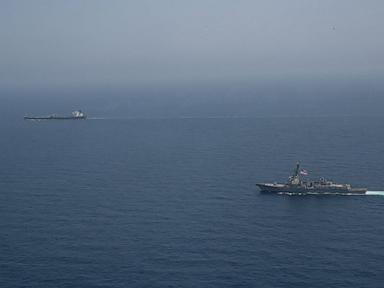
On the domestic front, the lack of a formal authorization means there is no clear definition of "victory" or an "end state." Without a Congressionally approved mandate, missions tend to drift. They expand in scope because nobody has defined what the finish line looks like. We see this in the current maritime operations in the Red Sea and the lingering presence in Eastern Syria. These aren't wars, the public is told, yet they require billions of dollars and constant naval presence.
The Brinkmanship of the Budget
If Congress actually wanted to stop a mission after 60 days, they have one weapon that works: the power of the purse.
Article I of the Constitution gives Congress the sole power to fund the government. They could, in theory, pass a spending bill that explicitly prohibits any funds from being used for a specific operation after the 60-day mark. This is the only move that forces the President’s hand. However, this is the "nuclear option" of domestic politics. Defunding a mission while troops are in the field is seen as a political death sentence, leaving the President free to keep the engines running on borrowed time.
The reality of this Friday is that the deadline will pass, the planes will continue to fly, and the ships will continue to patrol. The only thing that truly expires is the illusion that the War Powers Resolution still governs the way America goes to battle.
The executive branch has learned that as long as they don't call it a war, they can fight it as long as they want. Congress has learned that as long as they don't take a vote, they can't be held responsible for the outcome. The only parties left in the dark are the American taxpayers, who continue to fund a military machine that operates on a loop of permanent, unauthorized engagement.
Watch the appropriations committee, not the floor debates. Money is the only language the Pentagon speaks, and as long as the checks keep clearing, the 60-day clock is nothing more than a ghost in the machine.


