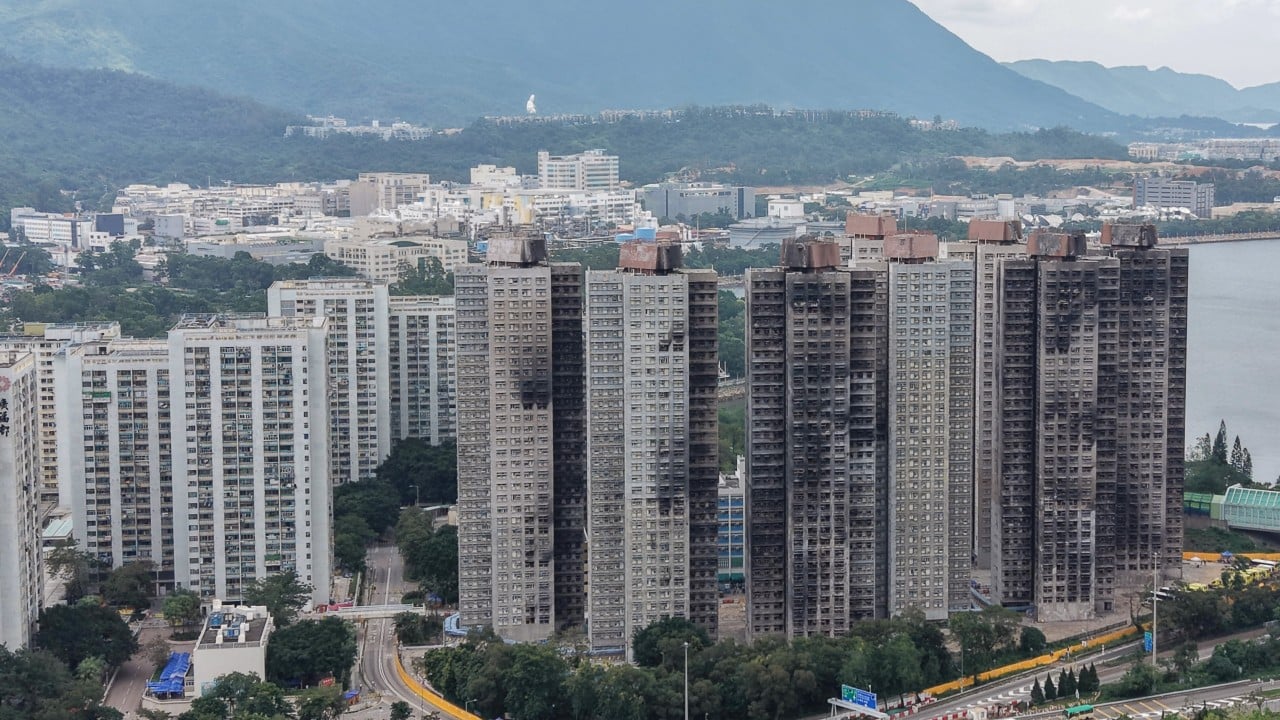
Evidential hearings exploring Hong Kong’s deadliest residential blaze in decades are sending shockwaves through the commercial insurance market. The ongoing independent inquiry into the November 2025 Wang Fuk Court fire—which burned for over 43 hours, claimed 168 lives, and consumed seven housing blocks in Tai Po—has exposed deep regulatory voids and widespread human error. Now, underwriters are realization-bound. Standard risk evaluation models for multi-story residential estates are fundamentally broken. While insurers have already paid out over US$65 million in preliminary claims, the final distribution of financial liability hinges entirely on the ongoing tribunal findings. Property owners and corporate policyholders across the region face a dramatic shift in how risks are assessed, priced, and litigated.
The financial fallout is no longer just about rebuilding costs. It is about a structural failure of accountability that spans government bureaus, independent checking units, and private renovation contractors.
The Paper Trail of Shifting Blame
For decades, the underwriting of high-rise residential properties relied on a basic assumption. If a building possessed statutory safety certifications, the risk was considered manageable. The Wang Fuk Court hearings have completely upended this premise.
Evidence presented before the independent committee, led by Judge David Lok, revealed that the HK$336 million renovation project at the estate was a disaster waiting to happen. For months leading up to the tragedy, residents submitted detailed complaints regarding safety violations. Workers were photographed smoking on scaffolding, and highly flammable styrofoam was left exposed near lightwells.
The regulatory response was a masterclass in bureaucratic buck-passing.
The Labour Department, the Fire Services Department, and the Housing Bureau’s Independent Checking Unit spent months shuffling emails between offices. Each entity claimed the hazard fell outside its specific jurisdiction. When inspectors finally visited the site, they simply noted that no active violations were observed at that exact moment and closed the files.
For the insurance industry, this exposure is terrifying. Actuarial models cannot accurately price risk when local regulatory oversight is purely performative. If compliance certificates can be issued based on outdated or allegedly forged documentation—as the inquiry heard regarding the flame-retardant status of the scaffolding nets—then traditional risk assessment forms are effectively useless.
The Illusion of Building Maintenance Compliance
Property insurance policies contain standard warranties requiring the insured to maintain the premises in a safe, compliant condition. When a claim of this magnitude occurs, forensic investigators look for breaches of these conditions to determine if coverage can be voided or reduced.
The Wang Fuk Court disaster presents an unprecedented legal gray area.
- The Scaffolding Chimney Effect: The 43-hour blaze spread with unnatural speed because flammable refurbishment netting acted as a vertical fuse, pulling fire up the exterior facade.
- Systemic Mechanical Failure: On the day of the fire, nearly every active life-saving system failed. Dry risers lacked pressure, fire doors were compromised, and alarms remained silent.
- The Question of Corporate Fraud: The public inquiry has focused heavily on whether city surveyors and renovation contractors engaged in bid-rigging or intentional deception regarding material safety during the tendering process.
If the tribunal establishes that the building's management corporation or its hired contractors willfully ignored safety standards or used fraudulent certificates, insurers will use these findings to deny secondary liabilities. The initial HK$510 million in payouts processed by the Hong Kong Insurance Authority mostly covered immediate relief, life insurance, and temporary displacement costs. The multi-billion-dollar battle over long-term property reconstruction and structural indemnity is where the hearing results will dictate the terms.
Subrogation Battles on a Massive Scale
Insurance companies do not like absorbing massive losses quietly. When an insurer pays a claim caused by third-party negligence, they launch subrogation proceedings to claw back those funds from the parties actually responsible.
The Wang Fuk Court hearings are providing a literal roadmap for these lawsuits. Corporate lawyers are tracking every transcript. When a government lawyer explicitly denies a conspiracy between surveyors and contractors, or when a bureau representative admits an inspection report was unclear, they are laying down evidence that will be weaponized in civil courts for the next decade.
+------------------------------------+------------------------------------+
| Traditional Underwriting Metrics   | Post-Wang Fuk Reality             |
+------------------------------------+------------------------------------+
| Rely on government compliance certs| Certifications require independent |
|                                    | third-party verification           |
+------------------------------------+------------------------------------+
| Standard liability caps for fire   | Skyrocketing premiums for external |
| renovation scaffolding             | refurbishment projects             |
+------------------------------------+------------------------------------+
| Broad indemnity for structural     | Strict exclusion clauses for open  |
| management corporations            | regulatory complaints              |
+------------------------------------+------------------------------------+
The scale of the disaster means no single contractor has the balance sheet to absorb the looming subrogation demands. Insurers will target the professional indemnity policies of the engineering firms, the public liability insurance of the main contractors, and the deep pockets of statutory authorities.
A Permanent Shift in Risk Premium
The immediate consequence for the broader real estate market is an inevitable spike in premium costs. Refurbishment projects for older high-density blocks are suddenly high-risk endeavors.
Insurers are already rewriting policy terms for aging residential estates. Moving forward, property owners should expect underwriters to demand full transparency regarding all unresolved complaints submitted to local building authorities. If an estate has a history of ignored maintenance warnings or unresolved fire hazard notices, coverage will either be denied outright or priced at prohibitive rates.
Furthermore, the standard practice of allowing contractors to self-certify the safety of construction materials is coming to an end. Underwriters are beginning to insist on independent, third-party laboratory testing for all exterior netting and scaffolding components before a policy becomes active.
The Wang Fuk Court tragedy proved that a single discarded cigarette, combined with systemic regulatory neglect and sub-standard materials, can obliterate an entire community in less than two days. The financial markets have taken note. The era of treating building safety compliance as a mere paper exercise ended when the first witness took the stand in Tai Po. Property management groups that fail to adapt to this new reality will find themselves entirely uninsurable.