In high-frequency trading, a millisecond is an eternity. When the sitting president of the United States can shift the price of crude oil or erase billions in stock market value with a single social media post, waiting for your phone to buzz with a standard notification is a financial death sentence.
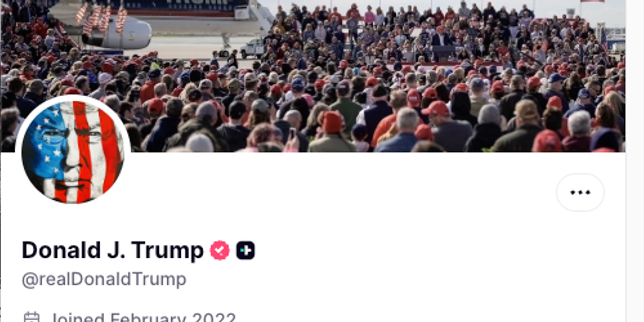
That is the raw mathematical reality behind Trump Media & Technology Group's new high-speed data feed. Dubbed Truth API (sometimes referred to as Truth PSI), the service offers institutional investors and algorithmic trading firms direct, ultra-fast access to posts from the platform's most influential accounts—most notably, Donald Trump. Recently making headlines lately: The Anatomy of Wartime Technocracy: A Brutal Breakdown of Ukraine's Energy and Economic Hardening Under Serhii Koretskyi.
For the first time in modern history, a sitting president's primary communication channel is being monetized as a premium, low-latency financial terminal feed. It is a move that sits at the volatile intersection of market mechanics, corporate survival, and unprecedented ethical gray areas.
The Cost of a Delay
To understand why a trading firm would pay undisclosed, premium rates for a data feed of social media posts, you have to understand how modern markets digest information. Further insights into this topic are explored by Investopedia.
Algorithmic trading systems do not read posts the way humans do. They use natural language processing (NLP) to scan incoming text feeds for keywords—like "tariffs," "oil," "Iran," or specific ticker symbols—and execute trades in fractions of a second.
Before this update, Wall Street firms had to rely on scraping the public interface of Truth Social, a process plagued by delays, server lag, and technical friction. If a post takes three seconds to load on a standard web browser, a high-frequency trader relying on manual scraping has already lost the trade.
The Truth API bypasses the public-facing application entirely. It delivers the platform's "Truths" directly to subscriber servers in milliseconds. It is essentially a financial fast lane for political discourse.
The commercial logic is obvious. In March, oil traders allegedly placed massive bets on crude just fifteen minutes before Trump posted about "productive" discussions with Iran. The resulting post sent prices tumbling. For firms holding millions of dollars in options, knowing about those policy shifts even half a second faster is worth a massive premium.
Monetizing the Bully Pulpit
This launch is not just a technological upgrade; it is a desperate bid for revenue.
Trump Media & Technology Group (TMTG) has struggled under massive financial pressure. The company posted a net loss of $405 million in the first quarter of the year. Meanwhile, its stock price has cratered, dropping roughly 70 percent since Trump took office.
Advertising revenue on Truth Social has never been enough to sustain the company's lofty market valuation. By shifting focus to data licensing—a high-margin, recurring revenue model used by financial giants like Bloomberg and exchanges like the NYSE—TMTG is trying to build a stable balance sheet.
Interim CEO Kevin McGurn made the strategy clear, noting that the data feed represents a way to "monetize proprietary assets through a high-margin, recurring revenue stream".
The proprietary asset in question, of course, is the president's unfiltered thoughts.
The Unprecedented Ethics Dilemma
While other social platforms like X (formerly Twitter) and Reddit charge hefty fees for API access, the ethical landscape of Truth Social is fundamentally different.
Trump is not just a public figure; he is the sitting president, the policymaker-in-chief, and the majority shareholder of TMTG.
Legal experts and ethics watchdogs have quickly raised concerns. The central criticism is that the president is effectively selling early access to government information and policy intent for personal financial gain. Because Trump maintains his massive stake in the parent company, any successful monetization of this API directly increases his personal net worth.
Typically, modern presidents place their assets into blind trusts to avoid even the appearance of a conflict of interest. Trump's decision to bypass this tradition means his social media activity is simultaneously a tool of statecraft and a corporate product.
What This Means for Everyday Investors
If you are a retail investor trading from a standard brokerage account, this development widens an already massive gap.
High-frequency trading firms have always held a structural advantage, but the Truth API formalizes a tiered system of access to presidential announcements. Public policy statements, tariff threats, and geopolitical updates will be digested and acted upon by algorithmic systems before the general public even sees the notification pop up on their phones.
For anyone actively trading individual stocks or commodities sensitive to political headlines, the message is clear. Trying to trade the immediate aftermath of a presidential post is a losing game. The machines will have already adjusted the price before you finish reading the first sentence.
If you want to protect your portfolio, the best move is to reduce exposure to highly volatile, headline-sensitive assets—like specific oil futures or companies directly caught in the crosshairs of tariff debates—right before major legislative or geopolitical decision points. Let the algorithms fight over the milliseconds while you focus on broader, structural market trends.