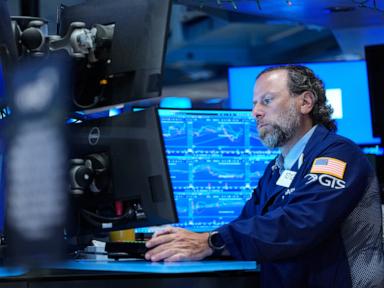
Financial journalists love a lazy narrative. The consensus machine looks at a green day on the Nasdaq, glances over at a sea of red in Seoul, and panics. They call it a paradox. They scream about "mixed world markets" and wonder why South Korean equities are slumping despite a massive, AI-led surge in New York tech stocks.
They are asking the wrong question.
The premise that a software-driven hype cycle in Silicon Valley should automatically lift manufacturing-heavy Asian indices is fundamentally flawed. Wall Street is currently trading on dreams, multiple expansions, and retail FOMO. Seoul trades on physical reality, global trade volumes, and margin compression. The decoupling isn't a glitch. It is the natural order of things.
The Myth of the Global Tech Monolith
When Nvidia or Microsoft ticks up 4% in New York, financial commentators expect Samsung Electronics and SK Hynix to follow suit like obedient puppies. They assume "tech" is a singular, unified global industry.
It isn't.
Wall Street is bidding up the software and design layer. These are capital-light businesses with massive gross margins that scale exponentially on paper. Conversely, East Asian markets—specifically South Korea and Taiwan—are dominated by the hardware layer. This is a capital-intensive, cyclical, asset-heavy business model.
I have watched fund managers burn billions expecting hardware suppliers to capture the same premium valuation as the software giants they supply. It never happens. When the US market rallies on AI optimism, it is often because investors expect American platforms to capture 90% of the value creation, leaving the physical manufacturers to fight over the scraps.
Software/AI Layer (US):   High Margins -> Low CapEx -> Multiple Expansion
Hardware/Foundry Layer (Asia): Low Margins -> High CapEx -> Cyclical Choke Points
South Korean shares aren't slumping despite the Wall Street AI rebound. They are slumping because the market is realizing that building factories and refining silicon is a brutal way to make a buck, even in an AI boom.
Dismantling the Supply Chain Delusion
Let's address the flawed logic head-on. The common consensus states that higher demand for AI chips must equal higher stock prices for the companies making them.
Here is the brutal reality: Memory chips (DRAM and High Bandwidth Memory, or HBM) are still commodities.
Even during an AI supercycle, the broader consumer electronics market dictates the health of Asian tech giants. If global smartphone shipments stagnation continues and PC sales lag, a marginal increase in high-end AI server demand cannot offset the macro drag on standard DRAM. SK Hynix and Samsung cannot survive on HBM orders alone when their core legacy business faces oversupply.
Furthermore, the capital expenditure required to stay competitive in next-generation chip manufacturing is astronomical. Every time TSMC or Samsung updates its node, they spend tens of billions of dollars. This massive CapEx eats into free cash flow. Wall Street rewards companies that buy back stock with cheap money; Asian markets punish companies that have to build multi-billion-dollar fabrication plants just to keep running in the same place.
The Misunderstood Role of Currency Markets
International investors frequently ignore the macroeconomic plumbing. A surging Wall Street draws global liquidity away from emerging and developed Asian markets.
When US tech stocks go parabolic, capital flies out of peripheral markets and back into the US dollar. A weakening Korean Won makes foreign capital flight from the Kospi a self-fulfilling prophecy. International funds liquidate their positions in Seoul not because they hate Korean tech, but because they need to chase the momentum in US equities and protect themselves against currency depreciation.
If you are tracking global market health by looking at the correlation between the S&P 500 and the Kospi, you are tracking a ghost.
Stop Buying the "Mixed Markets" Narrative
Next time you read that world markets are "mixed" because Asia failed to copy New York's homework, ignore it.
The structural divergence between software-driven valuation bubbles and hardware-driven cyclical realities is widening. If you want to trade Wall Street, buy the hype. If you want to trade Asian markets, ignore the AI headlines and look at hard data: global shipping container rates, inventory levels in Chinese warehouses, and domestic consumer confidence.
Stop expecting the factory floor to trade like the boardroom.