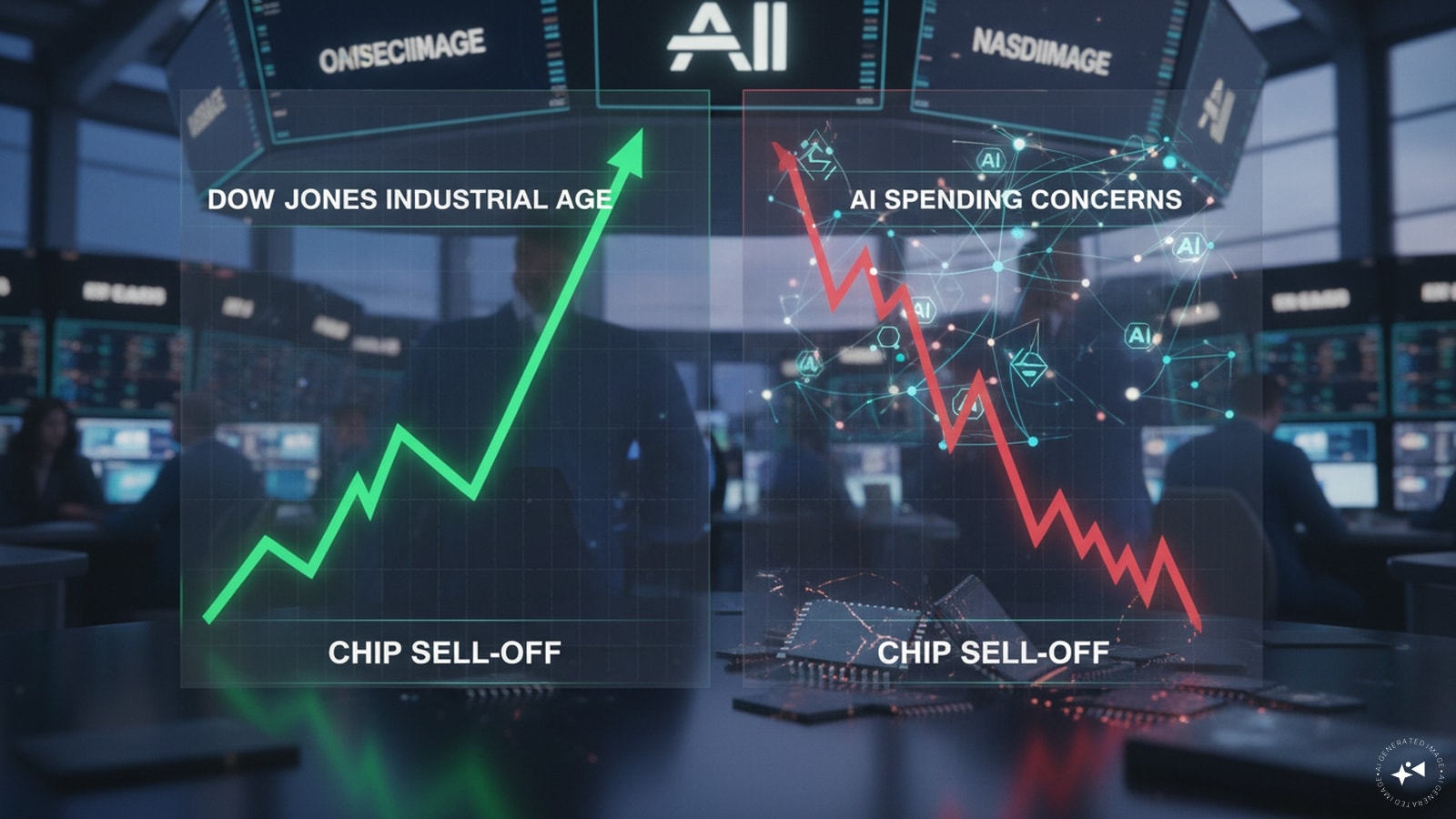
Wall Street is experiencing a massive rotation. Investors are dumping high-flying artificial intelligence bets and rushing back to safe consumer hardware. Apple just touched an intraday high of $342.89, briefly pushing its market capitalization past the historic five trillion dollar mark.
Only one other company has ever crossed that threshold. Nvidia achieved it last October, riding an unprecedented wave of semiconductor demand. Now, the tide has turned. While chipmakers and data center operators face a severe correction, Apple's refusal to engage in a reckless infrastructure spending spree has suddenly turned into its greatest financial shield.
The Cost of the Data Center Arms Race
Look at what is happening to big tech cash flows. Companies like Google and Microsoft are burning through billions to buy chips, build server farms, and fund massive energy grids. Google recently reported negative free cash flow for the first time ever, torching nearly six billion dollars in a single quarter while pushing capital spending projections toward $205 billion.
Wall Street is getting nervous. Investors are waking up to the reality of circular financing models, where artificial intelligence firms essentially fund one another's growth. Borrowing money to build infrastructure that may take a decade to monetize is no longer viewed as visionary. It is viewed as a financial liability.
Apple played things differently. Instead of spending billions building proprietary frontier models from scratch, the company leaned on partnerships—integrating Alphabet's technology for features like a revamped Siri. By sitting out the most expensive parts of the infrastructure race, Apple kept its balance sheet pristine while competitors drained their reserves.
Product Demand Beats Speculation
The market correction is hitting hardware hard. South Korea's Kospi index recently tumbled over ten percent as memory chip giants like SK Hynix and Samsung Electronics absorbed heavy losses. US chip stocks like Intel, AMD, and Western Digital have all slid significantly.
Yet Apple's core business keeps printing cash. Strong consumer demand for the iPhone has defied broader economic anxieties. When Apple held smartphone prices steady while raising costs on MacBooks and iPads, it pulled waves of buyers forward. Consumers kept upgrading.
Analysts at firms like Bank of America and Melius Research have raised price targets toward $380 and $385, pointing to an upcoming product super-cycle centered on user-facing artificial intelligence features rather than heavy server infrastructure. When you control the device in the user's hand, you do not need to own the data center to make money.
What This Means For Your Portfolio
The era of blind faith in tech hype is over. Valuations matter again. If you are rebalancing your holdings, look closely at companies generating actual free cash flow instead of those promising futuristic returns funded by massive debt. Cash is king once more. Watch for tightening margins across the semiconductor sector, and pay attention to how consumer brands handle rising component costs without crushing volume.
Keep your focus on strong balance sheets and proven product demand. Stop chasing speculative infrastructure plays.