Kevin Carter’s lens didn't kill Kong Nyong. Your comfort-driven demand for a "hero narrative" is what actually rots the core of photojournalism.
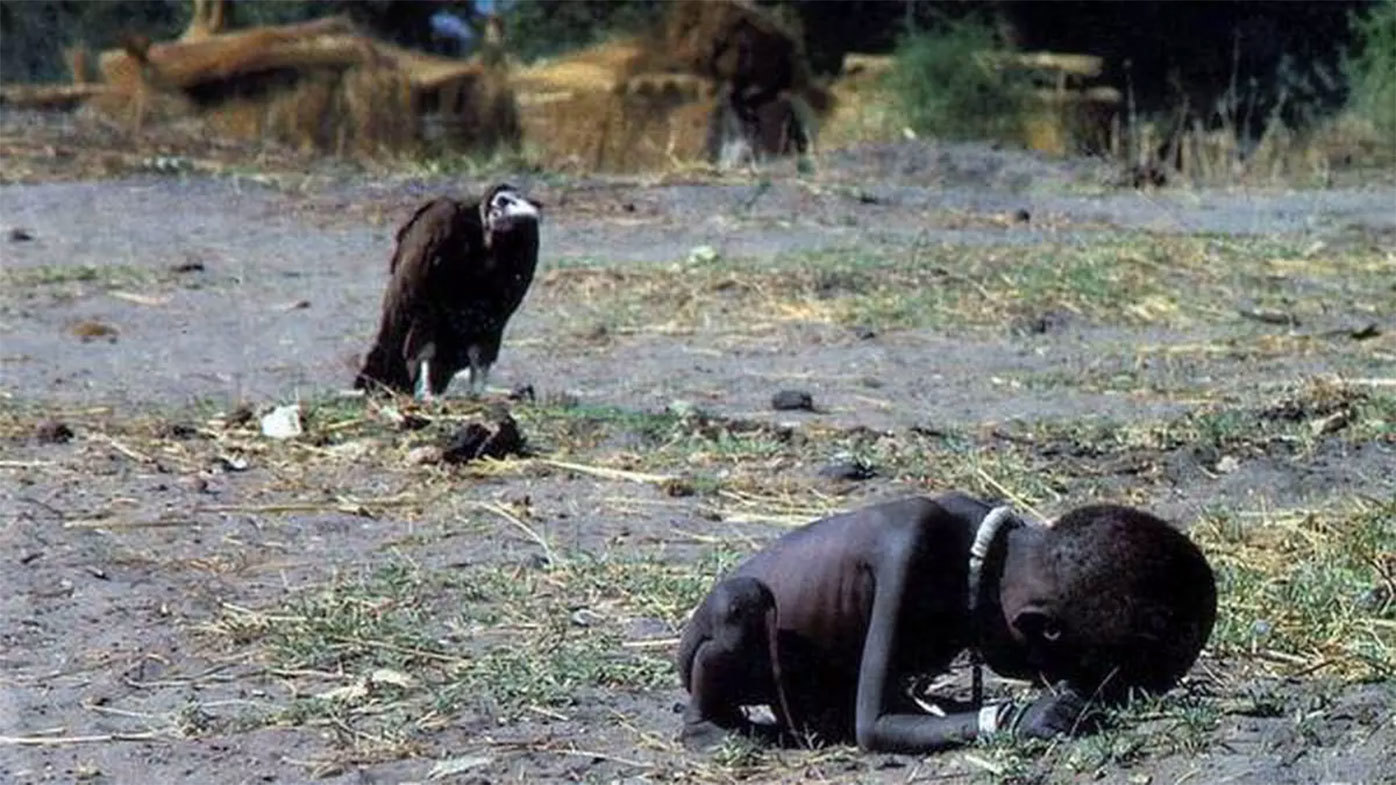
For thirty years, the world has looked at the 1993 photograph of a Sudanese toddler collapsed under the gaze of a vulture and asked the same pedestrian question: Why didn't the photographer help? It’s a question born of a safe, air-conditioned reality where morality is as simple as a binary switch. You want a savior. You want a story where the white knight with the Nikon drops the glass to scoop up the victim.
But if Carter had dropped the camera, you wouldn't know Sudan existed. You wouldn't have felt the visceral, gut-punching realization of what famine actually looks like. You would have been spared the discomfort, and in being spared, you would have remained indifferent.
The "lazy consensus" suggests that Carter was a predator, a second vulture waiting for a frame. St. Petersburg Times wrote that he was "another predator, a vulture on the scene." This is a fundamental misunderstanding of the utilitarian burden placed on the witness.
The Myth of the Neutral Observer
The industry loves to talk about "objectivity," but that's a lie we tell students to keep them from losing their minds. There is no such thing as a neutral observer in a war zone or a famine. There is only the documentarian and the participant.
When you demand that a photojournalist intervene, you are asking them to cease being a journalist. You are asking them to trade a global impact for a localized, momentary fix. Imagine a scenario where every frontline reporter dropped their gear to provide basic first aid. We would have zero records of the Holocaust, zero evidence of the Khmer Rouge, and zero visual proof of the Myall Massacre.
The math is brutal, but it's correct. One child fed for a day vs. ten million people forced to look at the reality of systemic starvation. Carter chose the ten million.
The tragedy isn't that Carter took the photo. The tragedy is that we require a child to be on the brink of death to even pay attention to the geopolitical failures of the Global North.
The Logistics of Despair
Let's talk about the "battle scars" of the Bang-Bang Club. I’ve seen how these environments operate. You don't just "help" one person. In Ayod, where the photo was taken, there were hundreds of children in the same state. Thousands. Carter was surrounded by a sea of slow-motion death.
To pick up one child is to ignore the five hundred others within your line of sight. It creates a "God complex" that is unsustainable and ultimately leads to the exact psychological collapse that took Carter’s life in 1994.
The critics who sat in their suburban offices in Florida and New York didn't understand the physical constraints of the 1993 Sudan famine:
- The Proximity Rule: Carter was told not to touch the victims because of the high risk of spreading disease—a standard protocol in 90s famine zones.
- The "Feeding Center" Reality: The child was not abandoned. The parents had momentarily left to collect food from a UN plane that had just landed. The "vulture" was a scavenger, yes, but the child was part of an organized, albeit desperate, relief effort.
- The Professional Mandate: A journalist’s weapon is the image. If the weapon isn't fired, the mission fails.
Why Your Empathy is Performative
Most people asking "Why didn't he help?" are doing so to alleviate their own guilt. By making Carter the villain, the viewer becomes the moral superior. You can look at the starving child, feel a twinge of horror, and then pivot to blaming the man behind the lens. It's a neat, cognitive trick to avoid the fact that your own lifestyle is subsidized by the very instability that creates these famines.
The public's obsession with Carter’s "inaction" is a distraction from the action they refuse to take.
- You ask: "How could he wait 20 minutes for the bird to spread its wings?"
- The reality: He was waiting for the perfect composition to ensure the world couldn't look away.
Professionalism in the face of horror isn't heartlessness; it's discipline. We need the coldness. We need the person who stays behind the viewfinder when everyone else is screaming or running. If the witness breaks, the record is lost.
The Cost of the "Hero" Narrative
When we prioritize the "heroic intervention" over the "brutal documentation," we get sanitized news. We get "safe" imagery that doesn't offend, doesn't disrupt, and doesn't change policy.
The backlash against Carter's Pulitzer-winning work created a chilling effect that still haunts the industry. Modern editors are terrified of "confronting" photos. They want "empowering" shots. They want "resilience." But sometimes, there is no resilience. Sometimes, there is only a child in the dirt and a bird waiting for the end.
If you want to look at something beautiful, go to a gallery. If you want to understand the state of the world, you have to accept the existence of the vulture.
The truth is that Kong Nyong (the child in the photo) actually survived that day. He lived for another 14 years before dying of "fevers"—likely malaria. Carter, haunted by the "vivid memories of killings & corpses & anger & pain," took his own life just months after winning the Pulitzer.
The world got the photo. The world got its moral outrage. The world got its Pulitzer. And the man who gave it to them was destroyed by the very people who claimed to care about the "ethics" of the frame.
Stop asking why the photographer didn't drop the camera. Start asking why you only care about the victim once they've been framed, lit, and delivered to your doorstep.
The vulture isn't the bird in the background. The vulture is the audience, waiting to pick apart the bones of the man who dared to show them the truth.
Buy the book. Look at the gore. Sit in the discomfort. Or shut up and admit you prefer the lie.