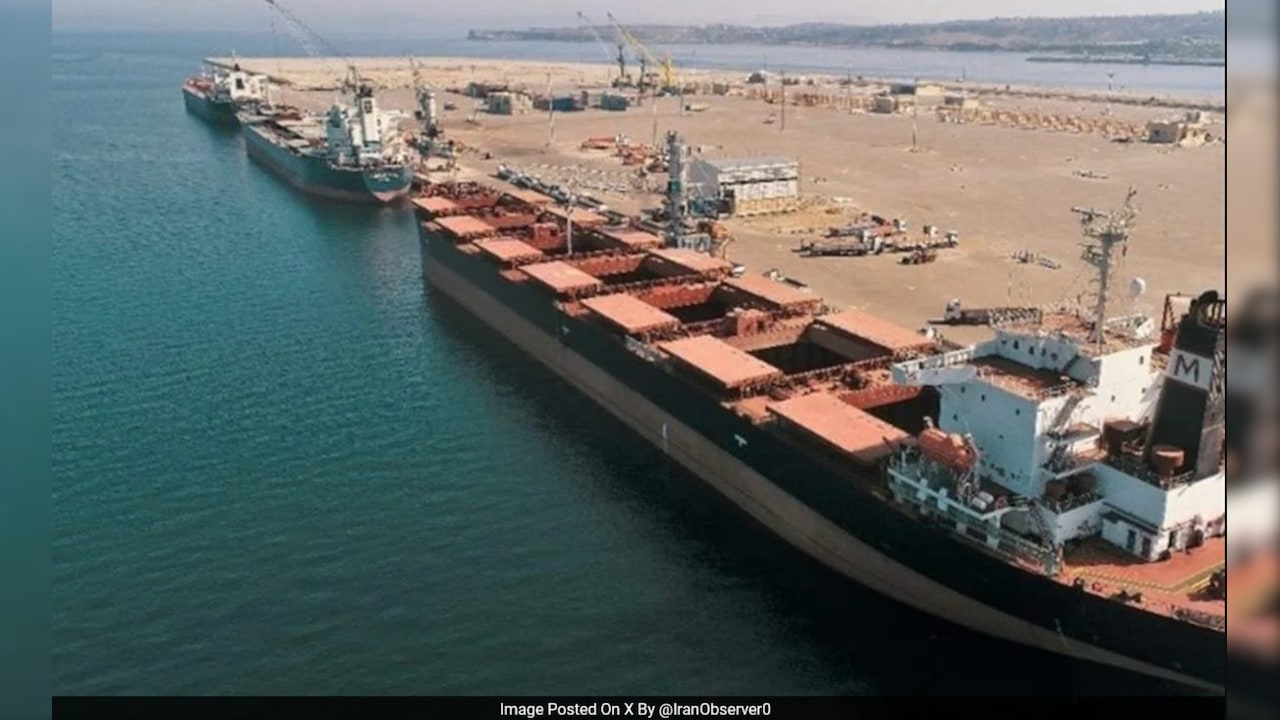
The physical destruction of surveillance infrastructure at Iran's Chabahar port by US military strikes exposes a structural flaw in India's multi-alignment grand strategy. For two decades, New Delhi treated the Shahid Beheshti terminal at Chabahar as a hedged asset—a sovereign maritime bridge to Afghanistan and Central Asia designed to bypass Pakistani land transit restrictions while maintaining operational distance from Western sanctions regimes. Recent military escalations and the expiration of United States Office of Foreign Assets Control (OFAC) waivers demonstrate that non-aligned infrastructure investment in active conflict zones yields compound counterparty risk rather than strategic freedom.
When extraterritorial sanctions collide with kinetic naval targeting, third-party logistics corridors collapse regardless of diplomatic intent. To salvage its commercial reach across Eurasia, India must move past piecemeal exemptions and apply a quantitative framework to its foreign infrastructure deployment.
The Tri-Factor Exposure Framework of Foreign Infrastructure
Overseas capital deployment in contested sea lines of communication is governed by three interdependent vectors: jurisdiction risk, operational continuity, and security exposure. Evaluating the Chabahar investment through this framework reveals why the project succumbed to external leverage.
1. Jurisdiction Risk
India Ports Global Limited (IPGL) operated the Shahid Beheshti terminal under a ten-year bilateral concession. However, the legal architecture rested on temporary US regulatory exemptions rather than binding international treaties. When Washington's foreign policy shifted toward maximum pressure, the regulatory baseline shifted overnight.
- Sanctions Friction: The termination of OFAC waivers introduced secondary sanction exposure for Indian banking channels, marine insurers, and shipping lines.
- Asset Segregation: To protect parent entities, Indian state enterprise directors were forced to restructure holdings and temporarily assign operational control to domestic Iranian counterparties.
2. Operational Continuity
Multimodal transport networks require frictionless movement across maritime, rail, and customs nodes. The International North-South Transport Corridor (INSTC) depends on Chabahar as its primary oceanic entry point.
- Financial Settlement Interruption: The exclusion of Iranian institutions from global financial messaging systems forced trade settlement into clearing mechanisms that increased transaction overhead by 8% to 12%.
- Supply Chain Bottlenecks: Container terminal operations require specialized gantry cranes and automated tracking systems. Sanctions prevented the importation of Western-manufactured heavy port machinery, limiting throughput capacity far below initial projections.
3. Security Exposure
Geopolitical nodes situated near major chokepoints—such as the Strait of Hormuz—are inherently vulnerable to kinetic action between primary belligerents.
+-----------------------------------------------------------------------+
|                       GEOPOLITICAL EXPOSURE LOOP                      |
+-----------------------------------------------------------------------+
|  Primary Conflict  -->  Kinetic Strikes on Shared Infrastructure      |
|                                  |                                    |
|                                  v                                    |
|  Supply Chain Disruption <--  Secondary Sanctions & Capital Flight    |
+-----------------------------------------------------------------------+
Even when sovereign terminals escape direct hits, the collateral destruction of adjacent military and surveillance assets degrades the entire port ecosystem, driving maritime insurance premiums to punitive levels.
The Cost Function of Deferred Strategic Sovereignty
India's historical approach to Chabahar relied on strategic patience, absorbing operational delays in exchange for keeping a regional toehold. This approach created three compounding costs:
Capital Inefficiency: Capital locked in uncertain overseas concessions yields minimal real economic returns while tying up diplomatic bandwidth that could be allocated to alternative trade routes.
Transit Vulnerability: Relying on a single non-sanctioned gateway across the Gulf of Oman leaves Indian trade routes exposed to military friction between Washington and Tehran.
Opportunity Cost in Central Asian Markets: Delays in completing the Chabahar-Zahedan rail line allowed competing regional trade initiatives—including China's Belt and Road infrastructure in Central Asia—to capture market share in landlocked Eurasian trade.
The assumption that economic infrastructure can remain isolated from broader regional conflict is fundamentally flawed. When foreign military forces strike targets adjacent to commercial berths, the operational distinction between civilian transport nodes and military installations disappears for commercial shipping operators.
Re-Engineering India's Eurasian Connectivity Strategy
To eliminate vulnerability to third-party sanctions and military actions, Indian foreign economic policy must adopt a three-phase operational realignment.
Phase 1: Diversification of Maritime Gateways
Single-node dependence in volatile sea lanes introduces systemic risk. New Delhi must distribute trade transit across multiple geography-hedged corridors.
- Red Sea and Mediterranean Rerouting: Accelerate institutional frameworks for the India-Middle East-Europe Economic Corridor (IMEC), establishing contractual safeguards across multiple sovereign territories.
- Central Asian Overland Networks: Expand logistics integration with Armenia and Georgia to secure direct access to the Black Sea, reducing reliance on Persian Gulf terminals.
- Russian Far East Maritime Links: Institutionalize the Chennai-Vladivostok Eastern Maritime Corridor to secure energy and resource imports via stable northern sea routes.
Phase 2: Structural Insulative Finance
Overseas infrastructure investments require financial architecture insulated from Western banking clearinghouses and messaging systems.
- Local Currency Clearing mechanisms: Expand rupee-dirham and rupee-ruble bilateral trade settlement structures to cover port usage fees, freight charges, and logistics tariffs.
- Sovereign Marine Reinsurance: Form a dedicated domestic reinsurance pool backed by sovereign guarantees to underwrite commercial vessels operating in high-risk foreign ports where Western syndicates revoke coverage.
Phase 3: Contractual Hardening and Sovereign Immunity
Future foreign port management contracts must incorporate strict force majeure clauses and mandatory asset-transfer provisions. If external political actions interrupt operations, contractual ownership must automatically transition to neutral holding entities, protecting domestic operators from corporate liability.
Quantifying Regional Infrastructure Risk
Evaluating foreign maritime investments requires structured risk-weighting protocols. The matrix below outlines how strategic planners must evaluate regional trade assets before allocating capital.
| Risk Index Vector | Chabahar Port (Iran) | Haifa Port (Israel) | Gwadar Port (Pakistan) |
|---|---|---|---|
| Primary Risk Driver | US Sanctions / Kinetic Escalation | Regional Conflict Vulnerability | Sovereign Debt / Security Threat |
| Financial Settlement Vulnerability | Critical (Severe OFAC Restriction) | Low (Western Banking Integration) | Moderate (IMF Program Oversight) |
| Kinetic Interdiction Risk | High (Targeting of Host Infrastructure) | High (Missile / Drone Exposure) | Moderate (Insurgent Threat) |
| Operational Control Retention | Low (Temporary Domestic Offloading) | High (Long-term Private Lease) | Moderate (State-backed Concession) |
The metrics demonstrate that diplomatic hedging cannot offset high physical and regulatory risk. Strategic autonomy requires building transport nodes where operational legal rights and physical security can be independently maintained.
The Strategic Realignment
India's strategic interest lies not in managing third-party sanctions or defending vulnerable foreign concessions, but in securing uninterrupted trade corridors to Central Asia and Europe. The destruction of port infrastructure in the Gulf of Oman marks the end of passive multi-alignment in maritime infrastructure development.
Moving forward, Indian logistics investments must prioritize structural insulative finance, multi-node routing redundancy, and strict legal asset protection. Capital should be reallocated from vulnerable single-point terminals to scalable, multi-country trade networks that remain resilient regardless of external geopolitical conflicts.