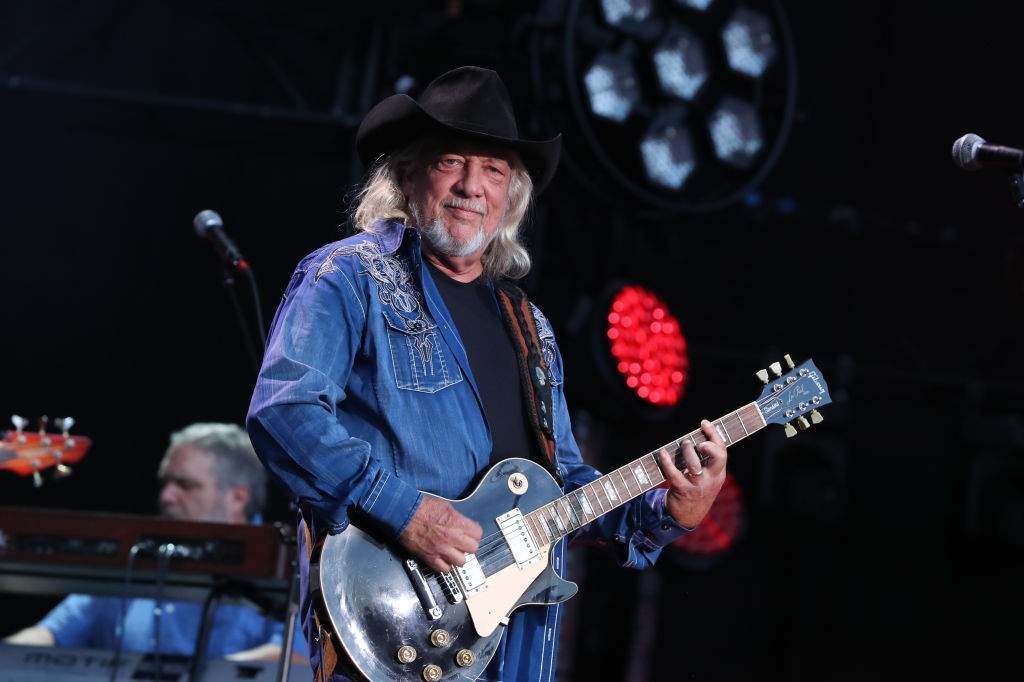
Silence.
When a voice like John Anderson's goes quiet at seventy-one, the room does not merely lose sound; it loses a measure of gravity, the kind that holds a wooden dance floor steady beneath a hundred scuffed boots while the neon beer signs hum overhead.
A headline tells you a name, an honor, a number, and an ending. It says a Country Music Hall of Famer died at seventy-one. Clean. Brisk. Efficient. Yet efficiency is the enemy of memory. You cannot compress four decades of gravel, heartache, honky-tonk brass, and unvarnished Florida grit into ten words without leaving the most important parts behind on the cutting-room floor. When we read a bare obituary, we often scroll past with a faint, automatic sadness—the same reflex we have when we hear a distant siren in a city we do not know. We nod. We move on. Then three days later, a four-note guitar lick or a lonesome vocal bend catches us off guard in a grocery aisle or a dusty pickup truck, and suddenly our throat tightens for a man we never met.
I know that sudden ambush of memory well. Years ago, sitting on the back tailgate of a parked truck after a long, rain-soaked week of hauling timber and listening to a buddy complain about bills that arrived faster than paychecks, a song drifted out of a cracked speaker—the kind of record that sounds like it was pressed inside an old pine box during a thunderstorm. Nobody in that yard was talking about music theory or record sales or industry politics. We were talking about pride, about trying to keep your head above water without begging anybody for mercy, about how strange it feels to grow older and realize the songs you sang as a kid now sound like warnings from a friend who saw the curve in the road before you did.
That is the invisible stake whenever a voice rooted in working-class truth disappears. It is not just a loss to country music history, though country music owes John Anderson an enormous debt. It is the thinning of a specific kind of witness—someone who sang about ordinary people without looking down at them from a glossy magazine cover or turning their struggles into a punchline.
To understand why his passing hits harder than a standard news bulletin lets on, let us set up a hypothetical scenario. Picture a twenty-four-year-old songwriter sitting on a cramped couch in East Nashville on a Tuesday night, cold coffee beside a spiral notebook, staring at a chorus that sounds too polished, too slick, too eager to please an algorithm or a radio programmer. In this hypothetical scene, the writer reaches for a record from the late seventies or early eighties—not to copy it note for note, because imitation is a trap, but to check its pulse. What comes through the speakers is raw, nasal, soulful, unafraid of a wobble or a rasp, anchored in real rhythm and real sorrow. That record acts like a plumb line against a crooked wall. It reminds the writer that honesty does not need four layers of studio gloss to hit the ribs.
That is the role artists like Anderson play long after their peak chart runs end. Even when mainstream radio chases shinier trends, older catalogs sit in the background like iron rails under a prairie. You only notice how vital the track is when a train has to cross a canyon.
Let us step back and look at what John Anderson actually built over the course of his career, using verified touchstones of country music history rather than guesswork. Born in Apopka, Florida, in 1954, he came up through a world where country music was not a sanitized lifestyle brand—it was survival music, honky-tonk music, blue-collar music played in rooms where sweat smelled like cedar and stale tobacco. In the late 1970s and 1980s, as Nashville frequently swung between lush country-politan strings and sleeker crossover production, Anderson stood squarely in a tradition that honored traditional country storytelling while still firing shots straight at the charts.
Think of the songs that made him unmistakable: "1959," a wistful, aching look back at innocence and simpler days; "Wild and Blue," a tender, slightly bruised ballad that proved a tough-sounding singer could break hearts with quiet restraint; "Swingin'," a buoyant, infectious, horn-driven juke-joint anthem that turned a straightforward groove into a cultural staple. Those tracks did not arrive by accident, nor did they succeed because he smoothed off his edges to fit polite company. They worked because his phrasing had swing, grit, and conviction. When he sang a line, you believed he had paid for every syllable with lived experience.
And then came the 1990s—a decade when country music exploded commercially, filled arenas, and brought millions of new listeners into the tent, yet also saw many veteran voices pushed toward the margins as youth and flash took center stage. Anderson did not vanish into nostalgia. In 1992, he returned with Seminole Wind, an album that felt less like a comeback gimmick and more like a reckoning with land, heritage, and endurance. Its title track—haunting, cinematic, mourning the draining of the Florida Everglades and the displacement of the Seminole people—showed a range that went far beyond Saturday-night beer-drinking songs. That is a crucial distinction worth keeping straight: Anderson was never merely a novelty or a party singer. He was a serious stylist and interpreter with a deep streak of conscience.
Later, in 2020, his induction into the Country Music Hall of Fame recognized what longtime fans had known for decades: that his influence ran deep beneath the surface of modern country. A Hall of Fame plaque is a fitting tribute, though let us be honest—trophies have a funny way of looking colder than the warm breath of a crowd singing along to a chorus in a crowded hall.
Still, I will admit something that might surprise people who love classic country: even for lifelong fans, keeping track of every twist in a legacy artist's later years can feel confusing and heavy. Health scares, quieter touring stretches, shifting radio formats, and sudden news alerts leave you wondering whether a singer you admired is resting peacefully at home or fighting a quiet battle out of the spotlight. Mortality has a way of making every timeline feel fragile. You tell yourself you will catch the next show, buy the vinyl reissue next month, read that interview someday—and then time quietly calls your bluff.
Consider what happens next in a fan's mind when that news lands: first disbelief, then a scramble through memory to find the exact song that first hooked you. For one person, it might be "Seminole Wind" playing on a drive past cypress swamps and drainage canals, making the landscape feel haunted and sacred all at once. For another, it might be "Swingin'" cracking open a tense room and making strangers smile across a bar. For someone else, it is simply the unmistakable timbre of his voice—that rich, elastic, slightly crooked warmth that refused to sound like anyone else on the dial.
We can think of a great singer's catalog like an old timber-frame barn—a metaphor for how a lasting body of work holds up under weather. A barn built with cheap nails and thin boards looks fine on a sunny afternoon, yet buckles the first time a hard gale hits. A timber-frame barn joined with heavy oak pegs and seasoned beams takes longer to raise, asks more of the builder, and stands through decades of wind and rain because every joint carries real weight. John Anderson's recordings were joined with oak pegs. Even when trends shifted, the structure held.
What makes that craftsmanship matter today is how fast disposable sound moves. Modern listening habits often treat music like fast food—brightly wrapped, engineered for a thirty-second hook, gone before you finish chewing. There is nothing wrong with fun, catchy songs; music has always had room for joy and release. Yet when everything is engineered for instant frictionless consumption, we lose our appetite for songs that linger, ache, or ask us to sit still with a feeling until it finishes speaking.
Listening to Anderson's work pushes back against that rush. His delivery had a patient, unhurried authority. He knew how to lean behind a beat, how to let a syllable hang in the air just long enough to feel lonely, how to snap into rhythm without losing his soul. Those are skills born of thousands of nights in front of microphones and real audiences, not shortcuts.
If you want to carry something forward from a moment like this—beyond a sad post on a feed—put on a full album from start to finish with no other screen glowing in front of you. Start with Seminole Wind or dig into his classic 1980s run. Listen to the arrangements, the space between the notes, the way his voice bends around heartbreak and humor alike. Notice what happens inside your own chest when you give a song your undivided attention instead of treating it as background noise while you answer emails.
That is the quiet gift a great artist leaves behind: a standard for paying attention. When a voice like John Anderson's goes still at seventy-one, the music does not stop playing in the heads of the people who loved it—it keeps echoing off old highways, front porches, and honest rooms, reminding us what a true country voice sounds like when it refuses to fake a single note.
A lone guitar rings out over a quiet Florida marsh at dusk, and the wind carries the melody past the cypress trees without asking permission to stay.


