The afternoon heat in the valley doesn't just sit; it breathes. It’s a thick, wet weight that clings to the back of your neck while you’re trying to clear the gutters or water the hydrangeas. For most of us, this humidity is just an inconvenience. For a specific kind of guest, however, it is an invitation.
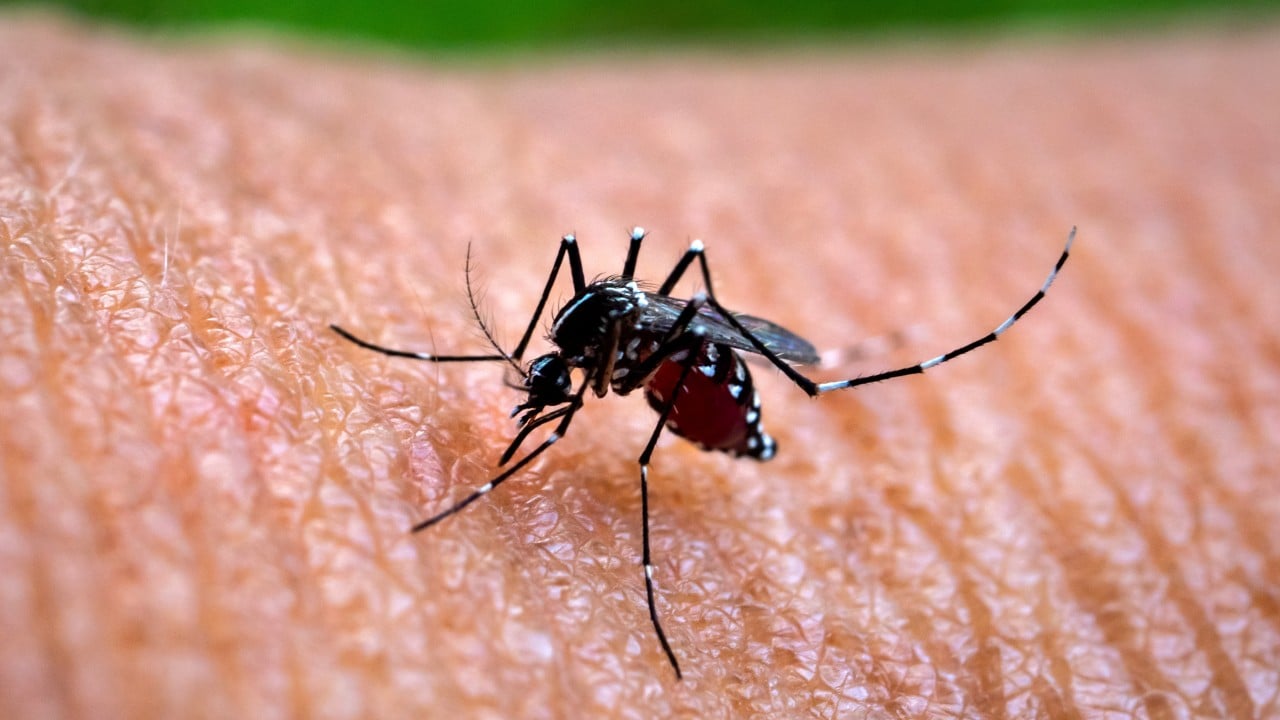
She arrives without a sound. She doesn't have the heavy, clumsy buzz of a bumblebee or the frantic zip of a fly. She is small, dark, and decorated with delicate white lyre-shaped markings on her thorax. This is the Aedes aegypti mosquito. She isn't looking for honey or light. She is looking for you.
When a health official stands at a podium and announces the "first local case of dengue," the words usually fall flat. They sound like bureaucracy. They sound like something happening to someone else, somewhere far away. But "local" is a terrifying word when you understand the biology of the spread. It means the chain has started. It means the virus isn't just arriving in the blood of a traveler; it has found a home in our own backyard.
Consider a person we will call Elena. Elena hasn't been to the tropics. She hasn't been on a plane in years. She spends her Saturday mornings weeding her garden and her evenings sitting on her porch. One day, a mosquito—one that was hatched in a forgotten saucer of water beneath a flowerpot three houses down—bites Elena. That mosquito was carrying the dengue virus, having picked it up from a neighbor who recently returned from a vacation.
Five days later, Elena feels like her bones are literally snapping.
The Fever That Breaks the Body
Dengue is often called "breakbone fever." It is a name earned through agony. The sensation isn't just a flu-like ache; it is a deep, grinding pain in the joints and behind the eyes that makes every movement feel like a betrayal of the skeletal system. When the first local case is identified, the clock starts ticking because Elena is now a reservoir.
Every mosquito that bites Elena during her first week of illness becomes a carrier. They fly off, they wait a few days for the virus to incubate in their own tiny bodies, and then they find the next person. This is how a single case becomes ten, then a hundred, then a localized epidemic.
The official warning isn't just a piece of data. It is a forecast of a coming storm. We are currently in the "quiet" phase, the window of time where the numbers are low enough to be ignored but the conditions are perfect for an explosion. The moisture from recent rains has pooled in places we don't think to look: the folds of a discarded plastic tarp, the hollow of a decorative stone, the tray inside a birdfeeder.
The Arithmetic of an Outbreak
Why now? Why is this year different? The answer lies in the shifting boundaries of our climate. The warmth is staying longer. The nights aren't getting cold enough to kill off the larvae. We have inadvertently created a sanctuary for a tropical predator.
Health experts track these movements with a sense of rising dread because they know the math. A single female mosquito can lay hundreds of eggs in her short lifetime. Those eggs don't need a lake. They don't even need a puddle. A bottle cap full of water is a nursery.
When we talk about an "outbreak in the coming months," we are talking about a saturation point. We are talking about the moment when the density of infected mosquitoes matches the density of the human population. At that point, the virus moves faster than the public health response can keep up with. It becomes a game of catch-up played with hospital beds and blood platelet counts.
Dengue isn't a simple monster. It comes in four different flavors, or serotypes. If you get lucky and recover from the first one, you are immune to that specific version for life. But there is a cruel twist in the viral code. If you are later bitten by a mosquito carrying a different serotype, your own immune system can turn against you. This is known as Antibody-Dependent Enhancement. Instead of protecting you, your previous antibodies actually help the new version of the virus enter your cells more easily.
This is when the "breakbone" pain turns into something much more dangerous: Dengue Hemorrhagic Fever. This is the invisible stake we are playing for. This is why the first local case is a flare sent up into a darkening sky.
The Geography of Risk
It is easy to assume that the city or the county will "handle it." We expect trucks to roll through the streets spraying mist, or teams in vests to treat the sewers. While those things happen, they are the secondary line of defense. The primary line is much more intimate. It’s your patio. It’s your neighbor's gutters.
The Aedes mosquito is a homebody. She rarely travels more than a few hundred yards from where she was born. If you have them in your yard, you likely grew them yourself. This realization is uncomfortable. It moves the responsibility from a distant government agency to the palm of your hand.
Imagine the water in the base of a forgotten umbrella stand. It looks still. It looks harmless. But beneath that surface, a microscopic war is being prepared. If we don't tip that water out today, we are effectively inviting the fever into our homes three weeks from now.
The Silence Before the Swarm
The coming months will be a test of our collective attention. The news cycle will move on to other things. The sun will continue to beat down, and the humidity will continue to rise. We will forget about the "first local case" because, for a while, nothing will seem to happen.
But the virus is a slow burn. It moves through the neighborhood one bite at a time, hidden in the blood of people who think they just have a summer cold or a touch of heat exhaustion. By the time the hospitals see a spike in admissions, the window for easy prevention has slammed shut.
We have a choice right now. We can treat the official warning as a footnote in a busy day, or we can recognize it as the moment the rules changed. The visitor in the yard is already here. She is patient. She is hungry. And she is counting on us to stay exactly as we are: complacent, distracted, and still.
The water is still sitting in the saucer. The air is still warm. Somewhere, three houses down, a tiny set of wings begins to beat for the first time.