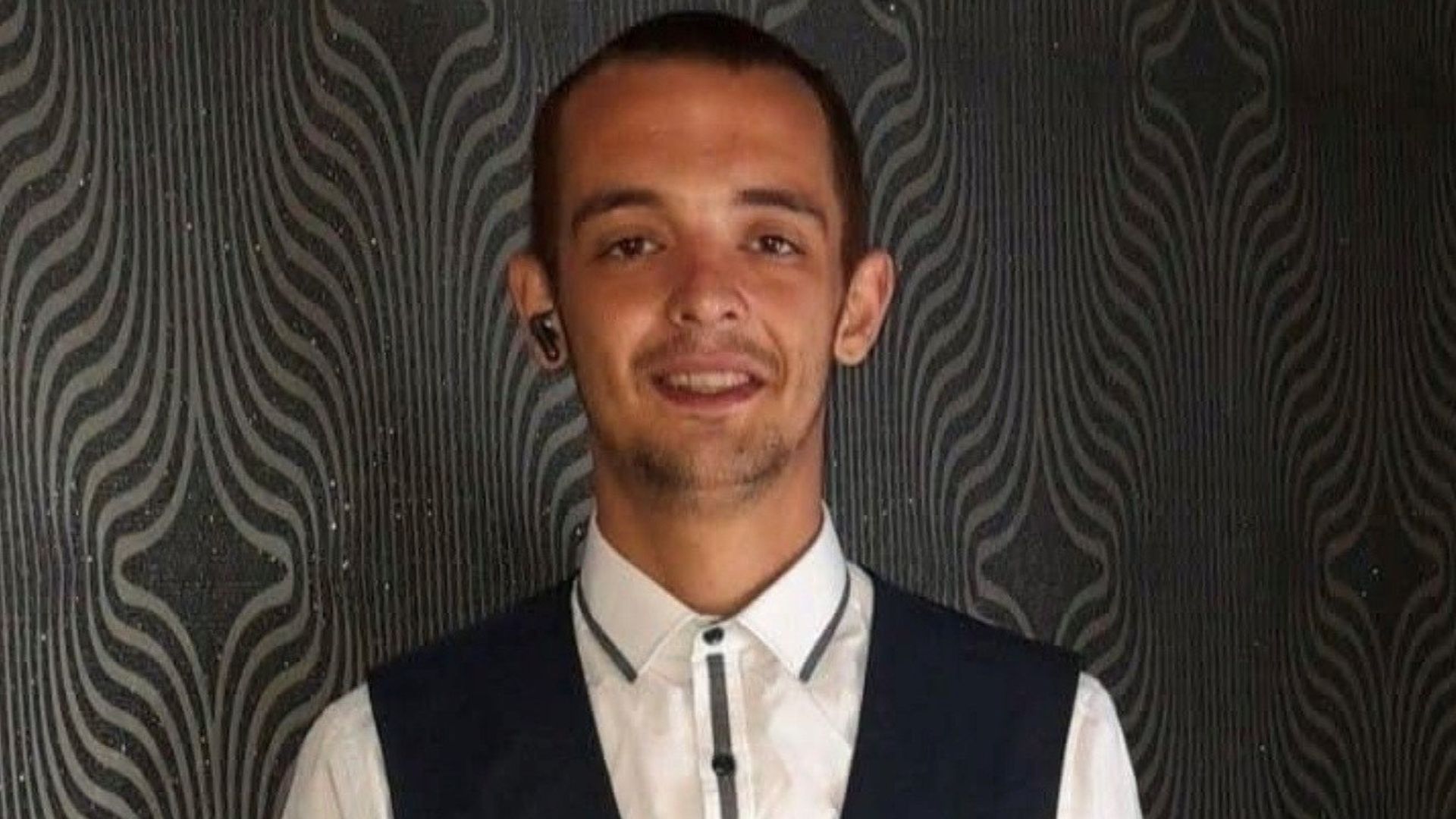
The headlines are always the same. A second man stands in a dock. A charge sheet is read. A young father is dead. The public consumes these updates like clockwork, convinced they are witnessing the wheels of justice turn. They aren't. They are watching a high-stakes, taxpayer-funded stage play that prioritizes the optics of "closure" over the mechanics of prevention.
Standard reporting focuses on the "who" and the "what." It dwells on the tragedy of the victim and the coldness of the accused. While emotionally resonant, this narrow lens obscures the structural decay that makes these fatal shootings a statistical certainty rather than a shocking anomaly. We are obsessed with the post-mortem of violence, yet we remain willfully ignorant of the pipeline that produces it.
The Illusion of Individual Accountability
The media treats every murder charge like a standalone moral failure. It’s a convenient narrative. If we can point to a "bad man" and lock him in a cage, the problem is solved, right? Wrong.
When a second man is charged in a fatal shooting, it rarely signals a breakthrough in public safety. Instead, it highlights the networked nature of modern violence. In high-crime corridors, violence isn't an individual choice; it’s a localized economy. Charging "Man A" or "Man B" is like trying to stop a flood by catching individual drops of water in a bucket.
The courtroom procedure is designed to isolate the act from the environment. The defense will argue about proximity and intent. The prosecution will lean on forensics and witness testimony. Neither side will address the fact that in many of these neighborhoods, the local infrastructure provides more pathways to a handgun than to a living wage. By focusing solely on the individual, we give the system a free pass for failing the collective.
The Data Gap in "Swift Justice"
We are told that quick arrests deter future crimes. The data suggests otherwise. Criminologists like David Kennedy have long argued that "focused deterrence" only works when the community believes the system is legitimate.
When the press trumpets a "second arrest," they ignore the clearance rate reality. In many urban centers, the clearance rate for homicides has plummeted over the last decade. A single high-profile arrest provides a veneer of efficacy while hundreds of other files gather dust.
- The Statistical Reality: Arrests do not equal convictions.
- The Feedback Loop: Aggressive, broad-net policing often alienates the very witnesses needed to secure long-term safety.
- The Resource Drain: We spend millions on the trial and incarceration of one individual, while the social programs that could have intervened years ago are gutted to balance the budget.
Imagine a scenario where we treated gun violence like a viral outbreak. You wouldn't just treat the person who is already sick; you would look at the water supply. Our current legal system is obsessed with the patient and oblivious to the poison.
The Fetishization of the "Young Father" Trope
Journalists love the "young father" descriptor. It’s a shorthand for innocence and lost potential. It’s meant to tug at the heartstrings, and it works. But using this label is a form of lazy empathy that actually does a disservice to the complexity of the crisis.
Every victim is someone’s child, someone’s friend, or someone’s parent. When we only highlight the "young fathers," we create a hierarchy of victims. We imply that the death of a young man who wasn't a father, or who had a "complicated" past, is somehow less of a tragedy.
This moral grading of victims allows the public to distance themselves from the reality of the violence. It turns a systemic failure into a Lifetime movie. We should be outraged because a human life was extinguished in a hail of lead, not because the victim met a specific societal standard of "worthiness."
Courtroom Performance vs. Actual Results
Watch any video of a murder arraignment. The suspects are led in, often looking dazed or defiant. The families of the victims weep in the gallery. The cameras flash. It is a spectacle of pain.
But what happens after the cameras leave?
- The case enters a multi-year limbo of motions and delays.
- The initial "win" for the police fades from public memory.
- The underlying conditions that led to the shooting—the illegal arms trade, the lack of mental health support, the failed education systems—remain untouched.
I have sat in these courtrooms. I have watched the "insiders" check their watches during the reading of charges. For the lawyers and the judges, this is Tuesday. For the public, it’s a morality play. For the community, it’s just another day where the body count stayed the same or climbed.
Stop Asking if They Caught Him
The question shouldn't be "Did they catch the second man?" The question should be "Why was there a second man available to take the shot in the first place?"
We are addicted to the "true crime" element of news. We want the chase, the handcuffs, and the gavel. We want the catharsis of a "guilty" verdict. But catharsis is not a strategy.
If we actually wanted to stop these shootings, we would stop over-funding the back-end (prisons) and start over-funding the front-end (early childhood intervention and violence interrupters). We don't do that because it’s not "exciting." It doesn't make for a punchy headline. It takes years to show results, and our political cycle operates in minutes.
The Failure of the "Safety" Narrative
Politicians will stand behind a podium and claim that this arrest makes the streets safer. It’s a lie.
Removing two people from a gang or a neighborhood conflict doesn't dissolve the conflict. It creates a power vacuum. History shows that when you take out the leadership or the "enforcers" of a violent group without addressing the root cause, the resulting struggle for power often leads to more violence, not less.
The "second man" is just a placeholder. Until we change the game, there will always be a third, a fourth, and a fifth man ready to step into that dock.
We are not winning. We are just keeping score in a game that should have been cancelled decades ago.
Stop cheering for the arrest and start demanding a world where the arrest isn't necessary.